
Alli Weight Loss Diet Pills Review 2026
Weight-loss pills are everywhere, but Alli is a slightly different case. It is not another trendy capsule built around vague claims about metabolism, detoxification or “fat-burning ingredients.” Alli contains orlistat 60 mg, an FDA-approved over-the-counter weight-loss medication designed to reduce the amount of dietary fat absorbed by the body.
That makes the product interesting, but it also means the usual question of whether a weight-loss pill “works” needs a little more context.
The Amazon listing reviewed here is the Alli Weight Loss Diet Pills, Orlistat 60 mg Capsules, Non-Prescription Weight Loss Aid, 120 Count Refill Pack.
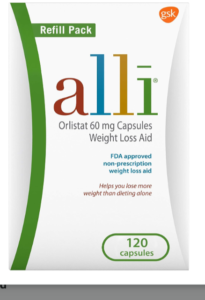
According to the current DailyMed consumer drug information, the active ingredient is orlistat 60 mg.
Alli also has something many weight-loss products cannot claim. Its active ingredient has been studied in randomized clinical trials.
But that does not mean every advertisement or customer experience should be taken at face value.
So, does Alli actually help people lose body fat, or is the weight loss mainly water and temporary scale movement? What is actually inside the capsules? Are the side effects worth it? And after all the hype surrounding weight-loss pills, is Alli still worth considering?
Alli Weight Loss Diet Pills Ingredients
The main ingredient in Alli is orlistat 60 mg per capsule.
Orlistat is a gastrointestinal lipase inhibitor. In simple terms, it interferes with enzymes responsible for breaking down dietary fat so that some of that fat cannot be absorbed.
The FDA-approved Alli labeling states that Alli is intended for weight loss in overweight adults aged 18 and older when used with a reduced-calorie, low-fat diet.
The inactive ingredients listed in the current label include
- FD&C Blue No. 2
- Gelatin
- Iron oxide
- Microcrystalline cellulose
- Povidone
- Sodium lauryl sulfate
- Sodium starch glycolate
- Talc
- Titanium dioxide
- Edible ink
The important ingredient, however, is orlistat.
There is no long list of exotic botanical extracts hiding behind the label. The pharmacological action comes primarily from orlistat 60 mg.
That is an important distinction when comparing Alli with the many weight-loss supplements sold online.
Alli Weight Loss Diet Pills Claims About Blocking Fat
One of the major claims surrounding Alli is that it blocks the absorption of some dietary fat.
This claim has a genuine pharmacological basis.
According to an FDA clinical pharmacology review, the 60 mg dose of orlistat inhibited approximately 25% of dietary fat absorption under the studied conditions.
That does not mean Alli blocks 25% of all calories.
It specifically affects dietary fat.
This is why the product is intended to be used with a reduced-calorie, low-fat eating plan. Taking Alli while continuing to eat large amounts of fried foods, heavy sauces and other high-fat meals is not a clever way to “cancel out” those calories.
In fact, doing so can make the digestive side effects much worse.
Alli Weight Loss Diet Pills Advertisement Claim About Not Being Just Water Weight
This is probably one of the more interesting claims to examine because the scale can be deceptive.
Whenever someone loses weight rapidly, some of the initial change can come from water, glycogen and intestinal contents. That is true of weight loss generally. A scale by itself cannot tell you exactly how much of the lost weight came from body fat.
However, there is actual evidence that orlistat-associated weight loss can involve reductions in fat mass, meaning the results cannot simply be dismissed as water loss.
A randomized controlled study published in Obesity found that people taking orlistat 60 mg experienced reductions in body weight and fat mass compared with placebo. The study is available through PubMed.
Another randomized study examining body composition found that orlistat treatment produced greater reductions in body weight and fat mass compared with placebo during the first year. The findings are also indexed in PubMed.
Research has also examined visceral adipose tissue. A randomized placebo-controlled trial found that orlistat treatment was associated with a greater reduction in visceral adipose tissue compared with placebo. (PubMed)
So the statement that Alli’s weight loss is not simply water weight is broadly consistent with the clinical evidence.
But there is an important catch.
That does not mean every pound shown on someone’s bathroom scale represents fat loss. Initial water fluctuations still happen, particularly when someone changes calorie and carbohydrate intake.
The more accurate conclusion is that clinical research demonstrates genuine reductions in body fat with orlistat-based weight-management programs.
Alli Weight Loss Diet Pills Effectiveness
The evidence for orlistat is much stronger than what you typically see with internet weight-loss supplements.
A large systematic review and meta-analysis of randomized clinical trials found that orlistat was associated with greater weight loss than placebo. The analysis found an average additional weight reduction of approximately 2.6 kg at one year compared with placebo.
The research is available through PubMed.
A separate randomized controlled trial examining low-dose orlistat found greater weight loss among participants receiving orlistat compared with placebo. (PubMed)
These numbers are useful because they put the marketing into perspective.
Alli can work.
But “can work” is very different from “will make you dramatically thin.”
The expected benefit is generally modest and depends heavily on the person’s overall diet, calorie intake, physical activity and adherence to the treatment plan.

Alli Weight Loss Diet Pills and Body Fat Loss
There is another reason the water-weight argument does not tell the whole story.
Weight-loss studies involving orlistat have measured body composition rather than relying exclusively on bathroom scales.
One study found greater reductions in total fat mass among orlistat-treated participants, while another reported reductions in visceral adipose tissue with orlistat 60 mg. (PubMed)
That matters because visceral fat is metabolically active fat stored around internal organs.
So if an advertisement presents Alli as producing “real” weight loss rather than simply making the scale temporarily lighter through water loss, the underlying concept has some scientific support.
The advertisement should not, however, be interpreted as a guarantee that every user will lose a particular amount of body fat.
Alli Weight Loss Diet Pills Safety
This is where the review becomes considerably more serious.
Alli is not a harmless candy-like slimming supplement.
The current DailyMed Alli label says not to use it if you have an organ transplant, take cyclosporine, have problems absorbing food, are allergic to the ingredients or are not overweight.
The label also recommends speaking with a healthcare professional before use if you have a history of gallbladder problems, kidney disease or kidney stones, or pancreatitis.
Medication interactions are also important.
Orlistat can affect the absorption or effectiveness of certain medicines, meaning people taking prescription medication should check with a doctor or pharmacist before starting it.
This is one reason calling Alli simply a “diet pill” can be misleading.
It is an FDA-approved medication.
Alli Weight Loss Diet Pills Side Effects
The most notorious part of Alli is not actually the capsule itself.
It is what can happen afterward.
Because Alli prevents some dietary fat from being absorbed, that unabsorbed fat remains in the digestive tract and can affect bowel movements.
Users may experience
- Oily stools
- Oily spotting
- Gas with oily discharge
- Loose stools
- Increased bowel movements
- Sudden bowel urgency
- Difficulty controlling bowel movements
- Abdominal discomfort
The National Library of Medicine’s MedlinePlus information on orlistat also lists gastrointestinal effects associated with the medication.
These effects are particularly associated with higher-fat meals.
This is why the low-fat diet recommendation is not just marketing language. It is closely connected to how the drug works.
For someone who eats a relatively balanced, moderate-fat diet, the experience may be manageable.
For someone eating heavily fried meals and taking Alli in the hope that the capsule will simply remove the fat afterward, the bathroom may become an unexpectedly important part of the weight-loss journey.
Alli Weight Loss Diet Pills and Vitamins
Another issue that should not be overlooked is vitamin absorption.
Because orlistat interferes with dietary fat absorption, it can also reduce absorption of fat-soluble vitamins.
These include
- Vitamin A
- Vitamin D
- Vitamin E
- Vitamin K
- Beta-carotene
The current Alli labeling recommends taking a multivitamin containing fat-soluble vitamins at least two hours before or after Alli, or at bedtime.
This is another reason I would not place Alli in the same category as a casual “detox” or wellness supplement.
It has a real mechanism, real benefits and real limitations.
Alli Weight Loss Diet Pills and the 2026 Kidney Safety Warning
There is also a major safety update that older Alli reviews may completely miss.
In June 2026, the FDA approved changes to the Alli Drug Facts label to warn about rare cases of acute kidney injury, hyperoxaluria, calcium oxalate kidney stones and oxalate nephropathy associated with orlistat.
The FDA identified 12 reported cases of kidney complications associated with Alli use between its approval in 2007 and the end of 2023. Eight of the reported cases involved acute kidney injury, and five patients required dialysis.
The FDA also noted important limitations in the reports, including incomplete medical information and other possible explanations for some kidney problems.
This does not mean kidney injury is a common outcome of taking Alli.
The FDA describes it as a rare adverse effect.
But it is now part of the official safety information, and anyone with previous kidney disease or kidney stones should discuss Alli with a healthcare professional before using it.
Alli Weight Loss Diet Pills Customer Reviews
The customer feedback surrounding Alli is mixed, which is actually more useful than pretending every buyer has the same experience.
The Amazon listing for the product reviewed here has accumulated a substantial volume of customer feedback.
Positive reviews commonly describe weight loss when Alli is combined with dietary changes and exercise. Some customers also appreciate that it does not operate like a stimulant and therefore does not have the same type of jittery sensation associated with some stimulant-based products.
The negative reviews tend to revolve around two issues.
The first is digestive side effects.
The second is expectations.
Some customers report noticeable weight loss, while others say the product did little for them despite taking it for weeks or months. Other reviews mention oily bowel movements, increased bathroom trips and difficulty managing the gastrointestinal effects.
That variation is not particularly surprising.
Alli is not an appetite suppressant in the traditional sense. It works by reducing dietary fat absorption, so the person’s diet remains a major part of the equation.
Alli Weight Loss Diet Pills Customer Review Patterns
Looking across available customer feedback, several patterns appear repeatedly.
Positive experiences
Some users report measurable weight loss, particularly when combining Alli with diet and exercise.
Some users like the absence of stimulant-style sensations.
Some report that the product makes them more conscious of the fat content of their meals.
Negative experiences
Some users experience oily stools and urgent bowel movements.
Some report that the side effects outweigh the perceived benefit.
Some users report little or no noticeable weight loss.
A few reviews describe very large amounts of weight loss, but those individual testimonials should not be treated as evidence of what an average customer should expect.
That distinction is important.
A single customer saying they lost dozens of pounds is a personal experience, not a clinical guarantee.
Alli Weight Loss Diet Pills Pros and Cons
Alli Weight Loss Diet Pills Pros
- Contains a clinically studied active ingredient
- Uses orlistat 60 mg
- FDA-approved as an OTC weight-loss aid in the United States
- Has evidence supporting modest additional weight loss
- Clinical studies demonstrate reductions in fat mass
- Does not rely on stimulant-based fat burning
- Large volume of customer feedback is available
- Can be used alongside diet and physical activity
Alli Weight Loss Diet Pills Cons
- Weight loss is generally modest
- Gastrointestinal side effects can be unpleasant
- High-fat meals can make side effects worse
- May interfere with absorption of fat-soluble vitamins
- Has important medication interactions
- Is unsuitable for certain medical conditions
- Current FDA labeling includes a rare kidney injury and kidney stone warning
- Individual customer results vary considerably
Alli Weight Loss Diet Pills Buyer Checklist
Before buying the 120-count refill pack, I would look at more than the Amazon rating.
Check the following.
1. Is the product actually Alli orlistat 60 mg?
The active ingredient should clearly state orlistat 60 mg. The official DailyMed label is useful for verifying the ingredients and directions.
2. Are you actually overweight?
The product is not intended for people who simply want to lose a few pounds despite having a healthy weight.
3. Are you prepared to follow a lower-fat diet?
This is arguably one of the most important points.
4. Do you take prescription medication?
Check for possible interactions with a pharmacist or doctor.
5. Do you have a history of kidney disease or kidney stones?
This deserves particular attention following the FDA’s 2026 safety update.
6. Are you expecting dramatic weight loss?
If the answer is yes, expectations probably need adjusting.
7. Are you prepared for possible gastrointestinal side effects?
Because Alli’s mechanism involves unabsorbed dietary fat, this is not a minor detail.
Alli Weight Loss Diet Pills Effectiveness Compared With the Hype
This is where consumers need to separate scientific credibility from marketing hype.
Alli is not fake.
The active ingredient has been studied extensively. Randomized clinical trials have demonstrated additional weight loss compared with placebo, and body-composition research shows that weight loss with orlistat can involve actual reductions in fat mass.
The Cochrane review indexed in PubMed provides a broader look at the clinical evidence surrounding orlistat and weight loss.
At the same time, Alli is not a magic fat-destroying capsule.
The average benefit is relatively modest.
The medication works best as part of a structured weight-management program rather than as permission to eat whatever you want and expect the capsule to handle the consequences.
And the side effects are very real.
Alli Weight Loss Diet Pills Final Verdict
Alli is one of those products where the hype needs to be separated from the actual pharmacology.
There is legitimate science behind it.
Orlistat 60 mg really does reduce dietary fat absorption. Clinical trials have found additional weight loss compared with placebo, and studies have demonstrated reductions in body fat rather than simply temporary water loss.
But that does not make Alli a miracle weight-loss solution.
The expected weight-loss advantage is generally modest, and the gastrointestinal effects can be a serious inconvenience. The updated 2026 FDA kidney-safety information also makes it even more important to consider personal medical history before starting the medication.
The customer reviews tell a similar story.
There are plenty of people who report that Alli helped them lose weight, particularly when they changed their diet at the same time. There are also plenty who found the side effects unpleasant or felt the weight loss was not worth the trouble.
So, is Alli worth the hype?
The evidence supports Alli as a legitimate weight-management medication, but the hype should be kept in check. It can contribute to real fat loss, but it is not a shortcut around calorie control, dietary quality and physical activity.
For consumers considering the Amazon refill pack, the bigger question is not simply whether Alli works.
It is whether its modest expected benefit and digestive trade-offs fit their particular weight-management needs and health situation.
Frequently Asked Questions About Alli Weight Loss Diet Pills
Does Alli Weight Loss Diet Pills really work?
Alli contains orlistat 60 mg, which has clinical evidence supporting modest additional weight loss when combined with a reduced-calorie, low-fat diet. The evidence is summarized in research available through PubMed.
Is Alli Weight Loss Diet Pills weight loss just water weight?
No. Although any weight-loss program can produce some initial water-weight changes, clinical studies of orlistat have documented reductions in fat mass and visceral adipose tissue. (PubMed)
How does Alli Weight Loss Diet Pills work?
Orlistat inhibits gastrointestinal lipases, reducing the amount of dietary fat that gets broken down and absorbed. FDA clinical data found that the 60 mg dose inhibits approximately 25% of dietary fat absorption under studied conditions.
Does Alli Weight Loss Diet Pills burn fat?
Not in the way stimulant-based “fat burners” are commonly advertised. Alli works primarily by preventing some dietary fat from being absorbed.
What is the active ingredient in Alli Weight Loss Diet Pills?
Each capsule contains 60 mg of orlistat. The full ingredient information is available in the DailyMed Alli label.
Does Alli Weight Loss Diet Pills cause diarrhea?
It can cause loose stools, oily stools, increased bowel movements, urgency and other gastrointestinal effects. These effects can become more noticeable after high-fat meals.
Can Alli Weight Loss Diet Pills affect vitamins?
Yes. Because orlistat reduces fat absorption, it can reduce absorption of fat-soluble vitamins such as A, D, E and K. The labeling recommends taking a multivitamin at a separate time from Alli.
Is Alli Weight Loss Diet Pills safe for everyone?
No. The current label lists several situations in which Alli should not be used or requires medical advice. This includes certain medication use, malabsorption disorders, kidney disease or kidney stones, gallbladder problems and pancreatitis.
What is the new Alli Weight Loss Diet Pills kidney warning?
In June 2026, the FDA updated Alli’s labeling to warn about rare reports of acute kidney injury, hyperoxaluria and calcium oxalate kidney stones associated with orlistat. The FDA safety communication provides the details.
Can Alli Weight Loss Diet Pills replace diet and exercise?
No. Alli is specifically indicated for use alongside a reduced-calorie, low-fat diet. Clinical evidence also evaluates orlistat as part of a broader weight-management program rather than as a standalone replacement for lifestyle changes.
How long does it take Alli Weight Loss Diet Pills to work?
Weight loss develops over time rather than immediately. Clinical trials have evaluated measurable differences over several weeks to one year. Individual results vary substantially.
Is Alli Weight Loss Diet Pills the same as Xenical?
Both contain orlistat, but Alli contains 60 mg per capsule and is available over the counter in the United States, while Xenical contains 120 mg and is prescription-strength.
Related Scam Alerts and Review
- Goli Zero Sugar Apple Cider Vinegar Gummies Review 2026
- Force Factor Total Beets Review 2026
- 1MD LiverMD Review 2026
- SkinnyFit NLP-1 Natural Probiotic Supplement Review 2026