
Ferti Bloom review searches have increased as more consumers look for supplements promoted for male fertility, sperm health, libido, testosterone support, and sexual performance. But does Ferti Bloom actually deliver the benefits suggested by its marketing, or is it simply another fertility supplement with a familiar collection of vitamins, amino acids, and plant extracts?
This Ferti Bloom review takes a neutral approach by examining the product claims, reported ingredients, potential benefits, safety considerations, fertility evidence, and the difference between ingredient research and proof that the finished supplement works.
The most important point is that a supplement containing fertility-related nutrients should not automatically be considered a treatment for infertility. Current professional guidance remains cautious about the clinical value of antioxidant and vitamin supplements for male infertility. The American Urological Association and American Society for Reproductive Medicine state that evidence is insufficient to recommend specific supplements for treating male infertility.
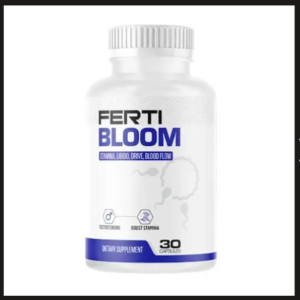
Ferti Bloom Review at a Glance
Product category
Male wellness and fertility supplement
Primary marketing focus
Male reproductive health, sexual performance, libido, testosterone support, sperm health, and stamina
Reported ingredients
Zinc, L-carnitine, L-citrulline, maca, pine bark extract, grape skin extract, saffron extract, and other nutrients or botanical compounds depending on the formulation and seller
Main concern
There is a difference between evidence supporting individual ingredients and clinical evidence proving that the complete Ferti Bloom formulation improves fertility.
Overall assessment
Ferti Bloom may be of interest as a nutritional supplement, but the available evidence not justify treating it as a proven cure or medical treatment for male infertility.
Ferti Bloom Review and What the Product Is
Ferti Bloom is marketed as a dietary supplement designed around male reproductive and sexual wellness. Product descriptions associate the formula with areas such as testosterone, libido, sperm health, stamina, and overall male performance.
That positioning places Ferti Bloom in a crowded supplement market where products frequently combine antioxidants, minerals, amino acids, and herbal extracts.
The distinction between a supplement and a fertility treatment is important.
Male infertility can result from hormonal disorders, impaired sperm production, obstruction of the reproductive tract, varicocele, infections, genetic factors, medication effects, environmental exposures, and other conditions. The American Urological Association and ASRM recommend an appropriate evaluation when male infertility is suspected rather than relying exclusively on supplements.
Ferti Bloom Review and Reported Ingredients
The reported Ferti Bloom formula contains several ingredients that have previously been studied in relation to metabolism, circulation, antioxidant activity, sexual health, or male reproductive function.
However, the exact amount of each ingredient matters.
A product can contain an ingredient that has been investigated in a clinical study without containing the same dose, formulation, purity, or combination used in that research. Therefore, ingredient-level evidence should not automatically be interpreted as proof that Ferti Bloom itself has been clinically demonstrated to produce the same outcome.
Ferti Bloom Review of Zinc
Zinc is an essential mineral involved in DNA synthesis, immune function, cell division, protein synthesis, and normal reproductive processes.
Zinc is particularly relevant to male reproductive biology because the testes and sperm require adequate micronutrient availability for normal function.
However, this does not mean that taking additional zinc will automatically increase fertility. The benefit of supplementation is more plausible where dietary intake is inadequate or deficiency exists.
Consumers should also avoid excessive zinc intake because more is not necessarily better.
Ferti Bloom Review of L-Carnitine
L-carnitine is involved in energy metabolism and has been investigated extensively in male reproductive research.
Some studies have reported improvements in certain semen parameters following antioxidant or carnitine-containing interventions. A systematic review published in Antioxidants found evidence of potential benefits from several antioxidant ingredients, including carnitines and zinc, while also noting that further research is needed to determine the most appropriate combinations and doses.
That evidence is interesting, but it still does not establish Ferti Bloom as a clinically proven fertility treatment.
Ferti Bloom Review of L-Citrulline
L-citrulline is an amino acid involved in the body’s nitric oxide pathway.
Because nitric oxide contributes to blood vessel relaxation, citrulline is commonly associated with circulation and exercise performance.
This gives the ingredient a reasonable physiological basis for products marketed around blood flow and sexual performance.
However, improved circulation should not be confused with treatment of infertility.
Ferti Bloom Review of Maca
Maca is a plant traditionally consumed in parts of South America and is commonly marketed in modern supplements for libido and sexual wellbeing.
Research has investigated maca in relation to sexual function and reproductive outcomes, but the evidence is not strong enough to treat maca as a universal fertility solution.
A person experiencing infertility should therefore avoid assuming that a maca-containing product can correct the underlying cause.
Ferti Bloom Review of Pine Bark Extract
Pine bark extract contains polyphenolic compounds with antioxidant properties.
Antioxidants are frequently included in male fertility supplements because oxidative stress has been investigated as one factor affecting sperm function.
There is ongoing research into antioxidant supplementation and male reproductive health, but the clinical evidence remains inconsistent. The World Health Organization’s 2025 infertility guideline does not currently make a recommendation either for or against antioxidant supplementation for men with infertility and abnormal semen parameters.
Ferti Bloom Review of Saffron
Saffron contains several bioactive compounds and has been studied for a range of possible physiological effects.
Its presence in a fertility supplement does not, by itself, demonstrate that the product can increase sperm count, testosterone, pregnancy rates, or live births.
This is another reason to separate ingredient research from finished-product evidence.
Ferti Bloom Review and Male Fertility Evidence
This is arguably the most important section of this Ferti Bloom review.
There is scientific interest in antioxidants, vitamins, minerals, amino acids, and male fertility. However, research has produced mixed findings.
A systematic review published in Antioxidants reported potentially positive effects from antioxidant supplementation across some semen and reproductive outcomes.
At the same time, the NIH reported results from the large MOXI randomized clinical trial in which antioxidant supplementation did not improve semen quality and was unlikely to improve pregnancy or live birth outcomes.
The Cochrane evidence has also highlighted uncertainty surrounding antioxidant supplementation. Its review found that evidence quality varied substantially and that conclusions about important outcomes such as live birth remained uncertain.
This apparent disagreement is actually useful for consumers.
It shows why a fertility supplement should not be evaluated simply by counting the number of ingredients that have appeared in scientific studies.
Ferti Bloom Review and Sperm Count Claims
Some marketing associated with male fertility supplements suggests that taking the product can increase sperm count or improve sperm movement.
That claim requires careful interpretation.
Sperm concentration, total sperm count, morphology, motility, and other semen parameters can be affected by many factors. A man can also have an apparently normal sperm count while experiencing infertility for another reason.
The AUA and ASRM recommend appropriate evaluation of men with suspected infertility. Semen analysis is one of the important components of this assessment.
Therefore, someone concerned about sperm count should obtain a laboratory semen analysis rather than attempting to determine sperm health based on sexual performance or supplement effects.
Ferti Bloom Review and Testosterone Claims
Ferti Bloom is also positioned around testosterone and male vitality.
This is another area where consumers need to separate marketing from clinical evidence.
Testosterone deficiency is a medical issue. Diagnosis normally requires appropriate clinical assessment and laboratory testing rather than simply assuming that fatigue, reduced libido, or erectile difficulties mean testosterone is low.
There is also an important fertility consideration.
The AUA and ASRM specifically state that testosterone monotherapy should not be prescribed to men interested in current or future fertility because external testosterone can suppress sperm production.
Consequently, men trying to conceive should be particularly careful with products or treatment plans that make aggressive testosterone-related promises.
Ferti Bloom Review and Possible Benefits
Based on the reported formulation and the available scientific literature, the potential appeal of Ferti Bloom is understandable.
The formula combines nutritional and botanical ingredients that have been investigated individually for different aspects of human health.
Potential areas of interest include
- Supporting adequate intake of certain micronutrients
- Providing amino acids involved in normal metabolism
- Providing antioxidant compounds
- Supporting general male nutritional status
- Supporting sexual wellness as part of a broader healthy lifestyle
These should be considered potential or theoretical benefits rather than guaranteed outcomes.
There is currently insufficient evidence to state that taking Ferti Bloom will reliably cause pregnancy, cure infertility, dramatically increase testosterone, or correct abnormal semen parameters.
Ferti Bloom Review and Possible Limitations
The biggest limitation is the lack of strong product-specific clinical evidence.
Another concern is that supplement marketing can blur the distinction between improving a laboratory measurement and improving the outcome that actually matters to couples trying to conceive.
For example, an intervention might change one semen parameter without demonstrating a meaningful improvement in pregnancy or live birth.
The WHO’s 2025 infertility guideline specifically notes that the effects of antioxidant supplements on fertility outcomes remain uncertain and does not recommend for or against their use in men with abnormal semen parameters.
This makes aggressive claims such as “guaranteed fertility improvement” difficult to justify scientifically.
Ferti Bloom Review and Safety Considerations
Ferti Bloom should be treated like any other dietary supplement rather than automatically assuming that it is risk-free because it contains vitamins or plant extracts.
Possible considerations include
- Allergies or sensitivities to individual ingredients
- Interactions with prescription medicines
- Excessive intake of certain micronutrients when combined with other supplements
- Unknown effects from undisclosed or poorly characterized formulations
- Product contamination or authenticity concerns when purchased through unreliable sellers
Anyone taking prescription medication or managing a medical condition should discuss the specific product and ingredient list with a qualified healthcare professional before use.
Pregnant or breastfeeding individuals should not use a male fertility product unless specifically advised by an appropriate healthcare professional.
Ferti Bloom Review and Who May Consider It
Ferti Bloom may appeal to adult men interested in nutritional support for male wellness, libido, or reproductive health.
However, the decision becomes different when a person is actively experiencing infertility.
If a couple has been trying to conceive without success, investing exclusively in supplements can delay the identification of an underlying medical problem.
A more evidence-based approach is to combine healthy lifestyle habits with appropriate medical evaluation.
The AUA and ASRM guidelines emphasize identifying potentially correctable conditions and other medical factors that may contribute to male infertility.
Ferti Bloom Review and Diet for Male Fertility
Supplements should not distract from the fundamentals of nutrition.
A balanced dietary pattern provides many nutrients involved in normal reproductive physiology.
Research examining diet and male fertility has associated healthier dietary patterns with foods such as seafood, poultry, nuts, whole grains, fruits, and vegetables.
Practical dietary priorities may include
- Adequate protein intake
- Fruits and vegetables rich in micronutrients and phytochemicals
- Nuts and seeds
- Fish and other sources of omega-3 fatty acids
- Whole grains and minimally processed carbohydrates
- Adequate zinc and other essential micronutrients
- Appropriate hydration
Diet is not a guaranteed infertility treatment either, but it provides a stronger foundation than relying on a single capsule to compensate for poor overall lifestyle habits.
Ferti Bloom Review and Lifestyle Factors
Male reproductive health is influenced by more than supplements.
Lifestyle factors worth discussing with a healthcare professional include smoking, excessive alcohol consumption, recreational drug use, obesity, physical inactivity, poor sleep, certain medications, environmental exposures, and excessive heat exposure.
The AUA and ASRM recommend discussing lifestyle, medication use, and environmental factors as part of male infertility assessment, although they note that evidence for many individual risk factors remains limited.
A fertility supplement cannot compensate for every lifestyle factor.
Ferti Bloom Review and Infertility Testing
Men concerned about fertility should consider proper testing rather than judging fertility based on libido, erection quality, ejaculation volume, or how often they have sex.
A clinician may recommend semen analysis and additional investigations depending on the medical history and findings.
The purpose of evaluation is not simply to determine whether sperm are present. It can help identify potentially correctable problems and determine whether additional fertility treatment may be appropriate.
Ferti Bloom Review and Scam Concerns
Calling Ferti Bloom a scam without sufficient evidence would be irresponsible.
The more reasonable position is to examine the product’s claims critically.
A supplement becomes particularly concerning when marketing uses guaranteed outcomes, dramatic before-and-after promises, fabricated testimonials, fake medical endorsements, pressure-based purchasing tactics, or claims that it can replace professional fertility treatment.
Consumers should also verify
- The complete ingredient label
- Ingredient quantities
- Manufacturer information
- Batch and expiry information
- Refund and return conditions
- Seller contact details
- Independent quality testing where available
A professional-looking website is not automatically evidence that a supplement works.
Ferti Bloom Review and Value for Money
Value depends heavily on the actual formulation, serving size, bottle quantity, seller, shipping charges, and evidence supporting the claims.
Consumers should calculate the cost per daily serving rather than focusing only on the headline price.
More importantly, money spent on supplements should be weighed against the cost of appropriate fertility assessment.
For someone with an identifiable medical cause of infertility, treating that cause is generally more rational than repeatedly purchasing supplements without diagnostic information.
Ferti Bloom Review Final Verdict
The overall conclusion of this Ferti Bloom review is cautiously neutral.
Ferti Bloom contains ingredients that are biologically interesting and that have individually been studied in relation to nutrition, antioxidant activity, circulation, sexual health, or male reproductive function.
However, this does not establish that Ferti Bloom itself is a clinically proven fertility treatment.
The strongest independent guidance is considerably more cautious. The AUA and ASRM describe the clinical usefulness of fertility supplements and antioxidants as questionable, while the WHO’s 2025 infertility guideline does not currently recommend for or against antioxidant supplementation in men with infertility and abnormal semen parameters.
The fairest conclusion is therefore that Ferti Bloom should be viewed as a dietary supplement marketed for male reproductive and sexual wellness, not as a confirmed cure for infertility.
Men who are genuinely struggling to conceive should prioritize semen analysis and professional evaluation rather than relying entirely on supplement claims.
Ferti Bloom Review Frequently Asked Questions
What Is Ferti Bloom Review Saying About the Product?
This Ferti Bloom review finds that the product has an interesting ingredient profile but insufficient evidence to classify it as a proven treatment for male infertility.
Does Ferti Bloom Increase Sperm Count?
There is not enough product-specific clinical evidence to conclude that Ferti Bloom reliably increases sperm count.
Can Ferti Bloom Cure Male Infertility?
There is no adequate evidence to describe Ferti Bloom as a cure for male infertility. Infertility can have multiple causes that require diagnosis and targeted treatment.
Does Ferti Bloom Increase Testosterone?
Ferti Bloom is marketed for testosterone support, but available evidence does not establish that the finished product reliably produces a clinically meaningful testosterone increase.
Is Ferti Bloom FDA Approved?
Consumers should not assume that Ferti Bloom is an FDA-approved treatment for infertility simply because it is marketed as a dietary supplement. Dietary supplements should not be confused with prescription fertility medicines.
For general information about how dietary supplements are regulated, readers can consult the U.S. Food and Drug Administration’s dietary supplement information.
Are Fertility Supplements Scientifically Proven?
The evidence is mixed.
Some systematic reviews have reported potential improvements in certain reproductive outcomes with antioxidant supplementation, while large clinical research and major guidelines have raised substantial uncertainty about whether these supplements improve meaningful fertility outcomes.
Should Men Trying to Conceive Take Ferti Bloom?
Men may consider discussing the product with a healthcare professional, particularly if they take medication or have an existing condition.
However, men experiencing infertility should not use Ferti Bloom as a substitute for medical evaluation.
What Is More Important Than Taking Ferti Bloom?
A healthy dietary pattern, appropriate physical activity, good sleep, avoidance of tobacco and recreational drugs, moderation of alcohol, and appropriate medical evaluation are more important foundations.
For men experiencing difficulty conceiving, a semen analysis and fertility assessment can provide information that a supplement cannot.
Ferti Bloom Review Sources and Further Reading
Readers interested in verifying the scientific information used in this Ferti Bloom review can consult the following sources.
AUA and ASRM Male Infertility Guideline
American Society for Reproductive Medicine Male Infertility Guideline
WHO 2025 Guideline on Male-Factor Infertility
PubMed systematic review on antioxidant supplementation and male fertility
NIH report on the MOXI antioxidant trial
Cochrane review on antioxidants for male subfertility