
Medicube PDRN Pink Peptide Serum Review
The Medicube PDRN Pink Peptide Serum is one of those skincare products that managed to turn a fairly ordinary serum category into a full-blown beauty trend. The words “salmon DNA,” “PDRN,” “peptides,” “glass skin” and “pink glow” are doing a lot of work on the product page, and considering how popular Korean skincare has become, it is not surprising that this serum has attracted thousands of buyers.
But popularity is not the same thing as proof.
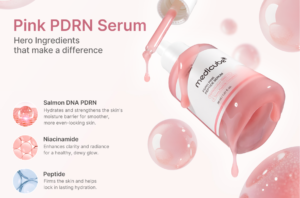
The Medicube PDRN Pink Peptide Serum is designed around hydration, brighter-looking skin, improved appearance of uneven tone, elasticity and a smoother complexion. Its formula combines sodium DNA, niacinamide, peptides, adenosine, sodium hyaluronate, botanical extracts and other conditioning ingredients. According to Medicube’s official product information, the serum is intended to support the skin barrier, elasticity, hydration and radiance.
The bigger question is whether the serum actually deserves all the hype surrounding it or whether “salmon DNA” is simply excellent skincare marketing.
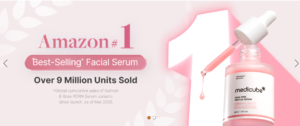
What Is the Medicube PDRN Pink Peptide Serum?
The Medicube PDRN Pink Peptide Serum is a 30 ml Korean skincare serum marketed around PDRN, peptides and niacinamide. The salmon version contains Sodium DNA, which Medicube identifies as its salmon-derived PDRN ingredient. The brand says the formula is intended to support elasticity, the skin barrier, hydration, radiance and the appearance of uneven tone.
It is also worth pointing out that there are different versions of Medicube’s PDRN serum. The product associated with the Amazon listing in question is the Salmon DNA PDRN version, rather than assuming that every Medicube PDRN product has the same formula.
The serum has attracted considerable attention on Amazon, with current marketplace data showing thousands of ratings. That level of consumer interest is certainly worth noting, although customer ratings should not be confused with clinical evidence.
Medicube PDRN Pink Peptide Serum Ingredients
The ingredient list is actually more interesting than the salmon DNA headline suggests.
The formula includes water, glycerin, dipropylene glycol, isopropyl myristate, glycereth-26, niacinamide and sodium DNA among its early ingredients. It also contains sodium hyaluronate, adenosine, botanical extracts, hydrolyzed collagen, ubiquinone and several peptides.
For readers who want to inspect the formula directly rather than relying on marketing descriptions, the official Medicube ingredient information is the most useful starting point.
Here is what some of the main ingredients are actually doing.
Medicube PDRN Pink Peptide Serum and Sodium DNA
Sodium DNA is the ingredient behind the PDRN marketing.
PDRN stands for polydeoxyribonucleotide. It consists of DNA fragments and has been investigated in regenerative medicine and dermatology.
This is not simply an invented skincare buzzword. Research indexed in PubMed has investigated PDRN in areas including tissue repair and skin rejuvenation.
However, there is an important distinction between PDRN as a researched ingredient and the results that can be expected from a particular cosmetic serum.
A 2026 systematic review published in the medical literature found promising results for PDRN and related polynucleotide approaches in dermatology, while also pointing out limitations in the current evidence and the need for larger, better-designed clinical trials. The review can be examined through PubMed.
So yes, PDRN is a legitimate area of scientific interest.
No, that does not mean this serum will literally rebuild damaged skin overnight.
Medicube PDRN Pink Peptide Serum and Niacinamide
Niacinamide is arguably one of the more established ingredients in this formula.
It has been studied for skin barrier support, pigmentation and overall skin appearance. A review published in the dermatology literature has discussed the multiple potential benefits of topical niacinamide, including its role in barrier function and pigmentation.
This makes the niacinamide component considerably less experimental than the salmon DNA headline.
For readers interested in the evidence behind niacinamide rather than influencer claims, the PubMed literature on topical niacinamide provides a useful starting point.
Medicube PDRN Pink Peptide Serum and Peptides
The serum contains multiple peptides, including palmitoyl pentapeptide-4, palmitoyl tripeptide-1, palmitoyl tetrapeptide-7, copper tripeptide-1 and acetyl hexapeptide-8.
Peptides are widely used in anti-aging skincare because certain peptide sequences may support signaling involved in skin structure and appearance.
However, “contains five peptides” should not be interpreted as “five times the collagen.”
The concentration, stability, formulation and delivery system all matter. Cosmetic peptides can be useful, but their presence alone does not guarantee dramatic wrinkle reduction.
Anyone interested in the broader evidence can explore the PubMed research on topical peptides and skin aging.
Medicube PDRN Pink Peptide Serum and Hyaluronic Acid
The serum also contains sodium hyaluronate, a form of hyaluronic acid that helps attract and retain water.
This is one of the reasons the product can create the plump, hydrated appearance people often associate with Korean “glass skin.”
The effect is primarily about hydration and surface appearance. A well-hydrated outer layer of skin can look smoother and temporarily fuller, which can make fine lines appear less noticeable.
For a straightforward explanation of how hyaluronic acid functions in skincare, the American Academy of Dermatology’s skincare resources are a useful reference.
Medicube PDRN Pink Peptide Serum and Adenosine
Adenosine is another cosmetic ingredient used in products aimed at improving the appearance of fine lines and supporting smoother-looking skin.
It is not as headline-grabbing as PDRN, but it contributes to the serum’s broader anti-aging positioning.
Medicube PDRN Pink Peptide Serum and Botanical Extracts
The formula contains ingredients including turmeric root extract, neem leaf and flower extracts, holy basil leaf extract and Corallina officinalis extract.
These ingredients can contribute antioxidant and conditioning properties to a cosmetic formula, although it would be difficult to attribute any visible result to one botanical extract when the serum contains so many ingredients.
This is one reason ingredient-by-ingredient marketing should be treated cautiously. A product can contain twenty interesting ingredients without every ingredient being present at a concentration capable of producing a measurable effect.
Medicube PDRN Pink Peptide Serum Claims
Medicube makes several claims about the serum, including improved skin elasticity, brighter-looking skin, improved resilience, support for the skin barrier and a reduction in the appearance of irritation.
The manufacturer’s product page provides the brand’s current description and recommended use.
Some claims are easier to understand from the formula.
Hydration is one of the more believable benefits because the formula contains glycerin, glycereth-26, butylene glycol and sodium hyaluronate.
A brighter and more even-looking complexion is also plausible because the serum contains niacinamide and several skin-conditioning ingredients.
Smoother-looking skin makes sense because hydration can temporarily improve the appearance of texture, while peptides and adenosine are included for anti-aging care.
Major collagen regeneration and dramatic skin repair require considerably more caution.
PDRN research is promising, but topical cosmetic formulations should not automatically be equated with medical PDRN procedures.
Medicube PDRN Pink Peptide Serum Effectiveness
The biggest realistic strength of the Medicube PDRN Pink Peptide Serum is likely hydration and cosmetic improvement in the appearance of the skin.
Someone with dehydrated or dull-looking skin may notice that the face looks more plump, smoother and more reflective after consistent use.
That does not necessarily mean new collagen has suddenly appeared.
Some of the immediate “glass skin” effect can simply come from humectants attracting water to the outer layers of the skin.
Longer-term improvements are harder to isolate because most people use several skincare products simultaneously. Sunscreen, moisturizer, cleanser, retinoids, vitamin C and other serums can all contribute to changes in skin appearance.
The evidence for PDRN itself is still developing. A recent systematic review of PDRN and related polynucleotide treatments reported promising findings in dermatology but also highlighted limitations in the existing evidence. Readers can review the study directly through PubMed.
That makes the serum interesting rather than revolutionary.
Medicube PDRN Pink Peptide Serum Safety
The formula is marketed by Medicube as dermatologist-tested and low irritation, and the company says it is suitable for different skin types.
That said, “suitable for sensitive skin” does not mean that every sensitive person will tolerate it.
The ingredient list contains fragrance, which can be relevant for people whose skin reacts to fragranced skincare.
It also contains isopropyl myristate, an emollient that some acne-prone users may prefer to approach cautiously.
The product contains salmon-derived ingredients, including sodium DNA and salmon egg extract. Anyone with a known fish allergy should therefore examine the packaging and manufacturer’s information carefully rather than assuming the product is fish-free.
A patch test is sensible when introducing the serum, especially if the skin is already irritated.
The American Academy of Dermatology also recommends testing new skincare products before applying them widely when irritation or allergy is a concern.
The serum should also be used according to the manufacturer’s directions. Medicube recommends applying it to clean, dry skin morning and night, followed by moisturizer and sunscreen during the day.
Medicube PDRN Pink Peptide Serum Customer Reviews
The customer response has been overwhelmingly positive based on the available Amazon rating data.
The Amazon listing supplied for this review is associated with ASIN B0DBF65JYY. Current marketplace tracking shows the product with thousands of ratings and a high average score, although Amazon ratings and review counts can change as new customers submit feedback.
Positive customer comments commonly focus on the serum’s lightweight texture, hydration, smoothness and glow.
Those observations actually line up reasonably well with the formula.
A serum containing glycerin, humectants, sodium hyaluronate and emollient ingredients would reasonably be expected to make skin feel softer and more hydrated.
The less convincing part is when individual customer experiences are interpreted as proof that the salmon DNA is repairing skin at a cellular level.
Customer reviews are useful for understanding user experience, texture, packaging and perceived results. They cannot establish clinical efficacy.
There is also a possibility that some of the immediate glow reported by users is simply the result of hydration and the finish of the serum on the skin.
Medicube PDRN Pink Peptide Serum Pros and Cons
Medicube PDRN Pink Peptide Serum Pros
- Contains niacinamide
- Contains several peptides
- Includes sodium DNA PDRN
- Contains sodium hyaluronate for hydration
- Includes adenosine and antioxidant-supporting ingredients
- Lightweight serum format
- Designed for daily use
- Strong customer interest and generally positive ratings
- Can fit into both morning and evening routines
- Combines several established skincare ingredients rather than relying exclusively on PDRN
Medicube PDRN Pink Peptide Serum Cons
- PDRN marketing is stronger than the current evidence for ordinary topical cosmetic use
- Contains fragrance
- Contains fish-derived ingredients
- Isopropyl myristate may not suit every acne-prone user
- Not a substitute for sunscreen
- Not a dedicated treatment for severe acne
- Not the most targeted option for stubborn hyperpigmentation
- Results are unlikely to be dramatic overnight
- Customer reviews cannot prove clinical effectiveness
Is Medicube PDRN Pink Peptide Serum Worth the Hype?
The Medicube PDRN Pink Peptide Serum is a good example of a product where the marketing deserves to be separated from the formula.
The serum is not empty hype.
There are several useful skincare ingredients here, particularly niacinamide, humectants, sodium hyaluronate, peptides and adenosine. The formula is capable of supporting hydration and producing smoother, plumper and more radiant-looking skin.
The PDRN component is also not pseudoscience. PDRN and related polynucleotides are legitimate subjects of dermatological research, with promising findings in areas such as tissue repair and skin rejuvenation. However, the evidence should not be stretched to imply that an ordinary cosmetic serum delivers the same results as medical PDRN treatments.
The customer response is another reason the product has earned attention. Thousands of Amazon ratings indicate strong consumer interest, but high ratings measure customer satisfaction rather than proving that PDRN is clinically responsible for the results.
The distinction matters.
There is a big difference between “people like this serum” and “the salmon DNA has been clinically proven to transform everyone’s skin.”
Those are two very different claims.
For hydration, glow, temporary plumping and smoother-looking skin, the hype has a reasonable foundation.
For dramatic wrinkle reversal, permanent collagen regeneration or miraculous skin repair, expectations should be lowered.
Medicube PDRN Pink Peptide Serum Final Verdict
The Medicube PDRN Pink Peptide Serum is a reasonably well-rounded hydrating and anti-aging serum with an interesting PDRN component.
Its biggest advantage is that the formula does not rely entirely on the trendy salmon DNA story. Niacinamide, humectants, peptides, adenosine and sodium hyaluronate give it a conventional skincare foundation that makes sense.
The salmon DNA is the attention-grabber.
The rest of the formula is what makes the product more credible.
Is it worth trying? For someone looking for hydration, glow, smoother-looking skin and a peptide-based serum, it is a reasonable option.
Is it a miracle serum? No.
Is the PDRN concept completely fake? Also no.
Is the hype bigger than the evidence? In some areas, yes.
The smartest way to approach this serum is to treat it as a hydrating, glow-enhancing peptide serum with PDRN, rather than expecting a bottle of salmon DNA to perform cosmetic surgery.
Medicube PDRN Pink Peptide Serum Frequently Asked Questions
What is the Medicube PDRN Pink Peptide Serum used for?
The serum is primarily marketed for hydration, radiance, uneven-looking skin tone, elasticity, skin barrier support and smoother-looking skin. Medicube recommends applying it to clean, dry skin and following with moisturizer and sunscreen during the day.
Does the Medicube PDRN Pink Peptide Serum contain salmon DNA?
Yes. The salmon version contains Sodium DNA and salmon egg extract. Medicube identifies Sodium DNA as the PDRN component of the formula.
Does Medicube PDRN Pink Peptide Serum really contain PDRN?
Yes. Sodium DNA is listed in the ingredient list, and Medicube markets it as salmon-derived PDRN.
Can Medicube PDRN Pink Peptide Serum remove wrinkles?
It may help improve the appearance of fine lines by hydrating and smoothing the skin, while peptides and adenosine are included for anti-aging care. However, it should not be expected to erase established wrinkles.
Is Medicube PDRN Pink Peptide Serum good for dry skin?
It can be useful for dry or dehydrated skin because it contains several humectant ingredients and sodium hyaluronate. People with very dry skin may still need a moisturizer on top.
Is Medicube PDRN Pink Peptide Serum good for oily skin?
The formula can be used by oily skin types, but individual tolerance matters because it contains isopropyl myristate and other emollient ingredients.
Can Medicube PDRN Pink Peptide Serum brighten the skin?
It may help improve the appearance of dullness and uneven tone. Niacinamide is one of the ingredients supporting this positioning. However, sunscreen remains essential when pigmentation is a concern. The American Academy of Dermatology’s guidance on sunscreen and hyperpigmentation is useful for anyone dealing with persistent pigmentation.
Is Medicube PDRN Pink Peptide Serum safe for sensitive skin?
Medicube describes the formula as dermatologist-tested and low irritation. However, the formula contains fragrance, so highly fragrance-sensitive users should patch test before applying it broadly.
How often should Medicube PDRN Pink Peptide Serum be used?
Medicube recommends using it morning and night on clean, dry skin, followed by moisturizer. During the daytime, sunscreen should be the final step of the skincare routine.
Is Medicube PDRN Pink Peptide Serum worth the money?
That depends on what you want from a serum. If the goal is hydration, glow and smoother-looking skin combined with niacinamide, peptides and PDRN, the formula is reasonably comprehensive. If you are purchasing it specifically because you expect salmon DNA to dramatically reverse aging, the evidence does not justify those expectations.