
MemoLift Review
MemoLift is marketed as a dietary supplement designed to support memory, concentration, mental clarity, energy, and general cognitive performance. The product is mainly promoted to adults concerned about memory decline, brain fog, reduced focus, and maintaining cognitive health as they age.
At first glance, MemoLift looks like another brain health supplement built around familiar herbal ingredients. However, a closer look at the marketing raises several questions about the strength of its claims, the evidence behind the finished formula, customer reviews, and the transparency of the sales operation.
This MemoLift review looks at the product claims, advertised ingredients, effectiveness, customer experiences, and some of the concerns surrounding the offer. The aim is not to label the product a scam simply because its marketing is aggressive, but to examine whether the available evidence supports what consumers are being encouraged to believe.
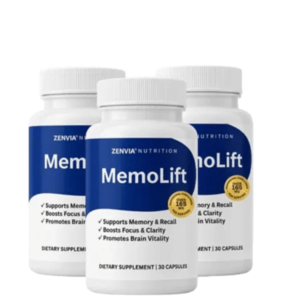
What Is MemoLift?
MemoLift is presented as a cognitive enhancement supplement containing a combination of natural ingredients intended to support memory, focus, mental clarity, mood, and long-term brain health.
The product website describes MemoLift as a premium cognitive health formula and claims that it can help improve memory retention, sharpen focus, reduce brain fog, increase mental energy, and support overall cognitive function. The sales material also presents the supplement as suitable for students, professionals, older adults, and people experiencing mental fatigue.
The marketing goes beyond ordinary wellness language in some places, particularly when the product is connected with serious memory problems and dementia-related concerns. This is where consumers need to slow down and distinguish between general cognitive support and treatment of an actual medical condition.
The U.S. Food and Drug Administration explains that dietary supplements can make certain structure and function claims, but these claims must not be presented as evidence that a supplement diagnoses, treats, cures, or prevents a disease.
MemoLift Product Claims
MemoLift makes several claims about its potential benefits.
The main claims include improved memory retention, sharper focus, increased mental clarity, reduced brain fog, better mental energy, improved mood and stress management, and support for long-term brain health.
The product page also describes ingredients such as Ginkgo biloba, Bacopa monnieri, Huperzine A, and St. John’s wort as part of its cognitive support approach. The seller presents these ingredients as working together to support different aspects of brain function.
There is nothing unusual about using these types of claims in supplement marketing. The important question is whether evidence for individual ingredients can automatically be applied to MemoLift itself.
It cannot.
Research on an individual ingredient does not automatically prove that a particular commercial supplement containing that ingredient will produce the same result. The dose, extract quality, combination of ingredients, manufacturing process, study population, and duration of use all matter.
The FDA’s guidance on dietary supplement claims emphasizes that evidence should actually support the meaning of the claim being made. Evidence from animals, unrelated products, or different populations may not adequately support a specific human health claim.
MemoLift Ingredients
The MemoLift sales material identifies several ingredients associated with the product, including St. John’s wort, Bacopa monnieri, Ginkgo biloba, and Huperzine A. Some versions of the marketing material also reference acetyl-L-carnitine.
These ingredients have been investigated individually for various neurological or cognitive effects. However, consumers should not confuse ingredient research with clinical evidence for MemoLift.
One particularly important ingredient to examine is St. John’s wort.
St. John’s wort is commonly associated with mood and depression supplements, but it can interact with numerous medications. This is one reason the phrase “all natural” should never be interpreted as “risk free.”
People taking prescription medication should check the complete MemoLift label with a pharmacist or healthcare professional before using it.
Ginkgo biloba and Huperzine A also deserve consideration because biologically active compounds can have side effects and interactions. The safety of a combination cannot be determined simply from the fact that each ingredient comes from a plant or is traditionally used.
MemoLift Effectiveness
The effectiveness of MemoLift is difficult to establish from the available evidence.
The seller claims that users may experience improvements in memory, focus, mental clarity, learning capacity, and brain energy. It also suggests that noticeable changes may occur after several weeks of consistent use.
The problem is that the marketing material does not provide strong clinical evidence showing that the finished MemoLift formula has been tested in a properly designed human clinical trial.
This distinction is important.
A study on Bacopa is not automatically a study on MemoLift. A study on Ginkgo is not automatically evidence that MemoLift improves memory. Likewise, a biological explanation involving acetylcholine or blood flow does not prove that taking the finished product will produce a meaningful improvement in everyday memory.
For that reason, I would describe MemoLift’s effectiveness as unproven rather than established.
That does not mean that nobody can experience an effect. Individual experiences can vary considerably. It simply means there is not enough publicly presented evidence to confidently say that MemoLift will produce the level of cognitive improvement promised in the marketing.
The FDA also states that supplement claims need appropriate substantiation and that the overall message of the advertising should be considered rather than looking at isolated statements.
MemoLift and Memory Loss Claims
This is one of the areas where consumers should be particularly careful.
Some online marketing surrounding MemoLift has connected the product with dramatic stories about memory loss, dementia, Alzheimer’s disease, and supposedly hidden natural discoveries. Independent reporting has also identified inconsistencies within the marketing funnel, including claims that go beyond ordinary cognitive support.
A supplement should not be treated as an alternative to medical assessment for significant memory problems.
The FDA has previously warned consumers about products marketed online with unproven claims to prevent, treat, or fight Alzheimer’s disease. The agency specifically notes that exaggerated testimonials are sometimes used to promote products making these claims.
Anyone experiencing persistent or worsening memory problems should therefore speak with a qualified healthcare professional rather than relying on MemoLift or another supplement as a substitute for diagnosis.
MemoLift Customer Reviews
MemoLift’s own website displays highly positive customer testimonials.
Some testimonials claim major improvements in memory, focus, mental clarity, learning ability, and daily cognitive performance. The page presents these accounts as experiences from customers who used the product consistently.
These stories may be genuine experiences, but they should still be treated as testimonials rather than clinical evidence.
A customer saying that a supplement improved their memory cannot establish that the supplement caused the improvement. Changes in sleep, stress, diet, caffeine intake, medication, workload, expectations, or simply normal fluctuations in concentration can affect how someone feels.
There is also an important issue with the source of the reviews.
The testimonials displayed on a product sales page are controlled by the seller. They are therefore not equivalent to independently verified reviews from a third-party platform.
The presence of positive reviews is not proof that the product works. At the same time, the absence of large numbers of independent negative reviews does not prove that the product is fraudulent.
The sensible approach is to look at independent evidence, verified purchase reviews, refund experiences, company transparency, and the actual product label rather than relying on testimonials alone.
MemoLift Customer Experiences and Concerns
Independent reporting has raised concerns about the marketing structure surrounding MemoLift.
One investigation reported that a MemoLift order button redirected consumers toward a different product called Memopezil. It also identified conflicting information concerning the money-back guarantee and questioned the transparency of the company behind the offer.
These findings do not prove that every MemoLift product sold online is counterfeit or that every customer will experience a problem.
They do, however, provide legitimate reasons for consumers to verify exactly who is taking their payment before placing an order.
A product page can look professional while still leaving important questions unanswered.
Who manufactures the product?
Who is legally selling it?
Where is the company located?
Who processes the payment?
Where are returns sent?
Is the guarantee actually honoured?
Is the order a one-time purchase or a recurring subscription?
These questions matter more than attractive testimonials.
MemoLift Price and Sales Tactics
The MemoLift website has promoted bottles at around $49 and has heavily pushed multi-bottle packages. One version of the offer advertised substantial savings for larger purchases and encouraged consumers to select a six-bottle package.
Large discounts are not automatically evidence of a scam.
However, a very high original price followed by a dramatic discount can create a sense of urgency and make consumers feel that they are losing money by purchasing fewer bottles.
The claim that most customers choose a particular package should also be treated carefully unless there is independent evidence supporting it.
Consumers should calculate the actual amount charged rather than focusing on the percentage discount displayed on the sales page.
MemoLift Money-Back Guarantee
The MemoLift sales material promotes a money-back guarantee. However, different sections of the marketing material have reportedly referenced different guarantee periods.
One section describes a 60-day guarantee, while another section refers to a 180-day guarantee.
That inconsistency is worth paying attention to.
A legitimate refund policy should clearly state the applicable period, eligibility conditions, return address, shipping responsibilities, and procedure for requesting a refund.
Consumers should save screenshots of the offer and refund policy before placing an order. If the terms change after purchase, the original documentation may become important when communicating with the seller or payment provider.
MemoLift FDA Claims
MemoLift marketing has used language referring to an FDA-approved or FDA-registered facility.
This wording deserves clarification because consumers often interpret it as meaning that the FDA has approved the supplement itself.
That is not how dietary supplement regulation works.
The FDA explains that dietary supplements are not generally pre-approved for safety and effectiveness in the same way prescription drugs are. Certain structure and function claims are permitted under specific regulatory requirements, but that does not mean the FDA has evaluated and approved the product for the advertised benefits.
Therefore, an “FDA facility” statement should not be used as proof that MemoLift has been clinically approved for memory improvement.
MemoLift Safety Considerations
MemoLift should not automatically be considered safe simply because its ingredients are described as natural.
St. John’s wort is particularly important because it can interact with many medications. This can include medicines used for depression, contraception, blood clotting, transplantation, seizures, and several other conditions.
Anyone using prescription medication should check the complete ingredient list with a pharmacist or doctor before taking MemoLift.
People who are pregnant, breastfeeding, managing a chronic condition, preparing for surgery, or experiencing unexplained neurological symptoms should also seek professional advice before starting a cognitive supplement.
The bigger issue is that cognitive symptoms can sometimes have an underlying medical cause. Using a supplement without investigating the cause can delay appropriate treatment.
MemoLift Scam Concerns
Calling MemoLift a scam outright would go further than the available evidence allows.
However, there are enough warning signs around some versions of the marketing to justify caution.
These include aggressive discounting, strong cognitive claims, customer testimonials presented on the seller’s own page, inconsistent guarantee information, unclear seller identity, and reports of a MemoLift sales link redirecting to another product.
The distinction is important.
A questionable marketing funnel does not necessarily mean that the capsules inside every bottle are fake.
It means consumers should not assume that the marketing is reliable simply because the website looks professional.
MemoLift Review Verdict
MemoLift is an interesting example of how modern supplement marketing can combine legitimate-sounding ingredients with claims that may extend beyond the available evidence.
The ingredients themselves deserve individual scientific consideration. Some have been studied for cognitive or neurological effects. However, the evidence available does not establish that the finished MemoLift formula will dramatically improve memory, reverse cognitive decline, or protect consumers against dementia.
The customer testimonials are strongly positive, but they appear on the seller’s own marketing material and should therefore be viewed as anecdotal evidence rather than independent proof.
The reported inconsistencies surrounding the guarantee, seller transparency, and product destination make additional caution reasonable.
My overall assessment is that consumers should not purchase MemoLift solely because of its memory claims, testimonials, discount offers, or references to FDA facilities.
Anyone still considering the product should first verify the full Supplement Facts label, manufacturer, seller identity, refund conditions, payment terms, and independent customer experiences.
For significant or worsening memory problems, professional medical assessment remains the safer starting point.
Frequently Asked Questions About MemoLift
What is MemoLift used for?
MemoLift is marketed as a cognitive support supplement for memory, focus, mental clarity, mental energy, and general brain health. These are marketing claims and should not be interpreted as proof that the product treats a medical condition.
Does MemoLift really improve memory?
There is not enough publicly presented clinical evidence on the finished MemoLift formula to establish that it reliably improves memory. Individual ingredients may have been studied separately, but that does not prove the effectiveness of the commercial combination.
Are MemoLift customer reviews reliable?
The testimonials published on the MemoLift sales page are positive, but they are seller-hosted testimonials. They should be treated as anecdotal experiences rather than independently verified evidence.
Is MemoLift FDA approved?
Consumers should not interpret references to an FDA-registered or FDA-related facility as FDA approval of MemoLift’s effectiveness. Dietary supplements are not generally pre-approved by the FDA for safety and effectiveness before marketing.
Can MemoLift treat Alzheimer’s disease?
There is no reliable evidence presented here showing that MemoLift treats or cures Alzheimer’s disease. Products marketed with unproven Alzheimer’s treatment claims have previously attracted FDA warnings.
What ingredients are in MemoLift?
The available MemoLift marketing material identifies ingredients including St. John’s wort, Bacopa monnieri, Ginkgo biloba, and Huperzine A. Some material also references acetyl-L-carnitine. Consumers should rely on the physical product’s current Supplement Facts panel for the exact formulation.
Is MemoLift safe to take with medication?
Not necessarily. Some listed ingredients, especially St. John’s wort, can interact with medications. Anyone taking prescription or regular over-the-counter medication should consult a healthcare professional before using the product.
Does MemoLift have a money-back guarantee?
The marketing material advertises a money-back guarantee, but different versions of the sales information have referenced different periods. Consumers should save the exact refund terms attached to their order before making payment.
Is MemoLift worth buying?
Based on the available evidence, I would not recommend buying MemoLift solely on the strength of its marketing claims. The lack of strong finished-product clinical evidence and the concerns surrounding parts of the sales funnel mean that consumers should approach the product carefully.
Final Thoughts on MemoLift
MemoLift is marketed as a solution for memory, focus, mental clarity, and long-term cognitive health. The product uses ingredients that sound scientifically familiar, which can make the marketing appear more convincing.
But familiar ingredients are not the same thing as proven results.
The biggest issue with MemoLift is the gap between what the marketing suggests and what can actually be verified. Customer testimonials may describe impressive personal experiences, but they cannot replace controlled human research. Likewise, an FDA facility claim does not mean that the supplement has been FDA approved for memory improvement.
The safest conclusion is that MemoLift remains an unproven cognitive supplement rather than a clinically established treatment for memory loss.
Consumers who decide to investigate it further should focus less on dramatic testimonials and discount timers and more on the label, dosage, manufacturer, evidence, refund terms, payment conditions, and independent customer experiences.
For anyone experiencing genuine memory decline, the better investment is a proper medical assessment before experimenting with a supplement.
EXTERNAL RELEVANT LINKS
FDA guidance on dietary supplement claims, FDA guidance on substantiating supplement claims and FDA information on products making Alzheimer’s claims.