
ParkingEye Outstanding Parking Balance Text Scam Review
Text message scams continue to evolve, with cybercriminals frequently impersonating trusted organizations to trick people into revealing sensitive information or making fraudulent payments. One of the latest examples is the ParkingEye Outstanding Parking Balance Text Scam, which falsely claims that recipients have unpaid parking charges requiring immediate payment.
The message often creates a sense of urgency by warning that failure to pay could result in additional fees, legal action, or debt collection. These tactics are designed to pressure recipients into clicking malicious links before they have time to verify whether the claim is genuine.
This ParkingEye Outstanding Parking Balance Text Scam review explains how the scam works, how to recognize fraudulent messages, how legitimate ParkingEye communications differ from fake texts, and the steps you should take if you receive one.
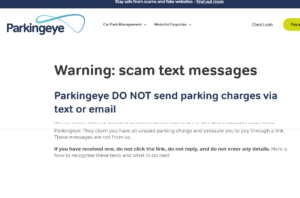
What Is the ParkingEye Outstanding Parking Balance Text Scam?
The ParkingEye Outstanding Parking Balance Text Scam is a phishing campaign that impersonates ParkingEye, a UK private parking management company.
Victims receive an SMS claiming they have an unpaid parking charge. The message typically includes:
- An outstanding balance.
- A payment deadline.
- A warning about increasing penalties.
- A hyperlink directing recipients to a fake payment website.
The goal is to convince recipients to enter personal details, banking information, or payment card credentials on a fraudulent website controlled by cybercriminals.
In many cases, recipients have never parked at a ParkingEye-managed location, making the message completely unsolicited.
How the ParkingEye Outstanding Parking Balance Text Scam Works
Understanding the scam’s process makes it easier to avoid becoming a victim.
ParkingEye Outstanding Parking Balance Text Scam Starts with a Fake SMS
Scammers send bulk text messages to thousands of phone numbers.
The message often includes phrases such as:
- Outstanding parking balance.
- Immediate payment required.
- Final reminder.
- Penalty increasing soon.
- Legal action may follow.
These messages attempt to create fear and urgency.
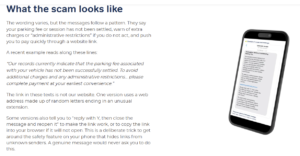
ParkingEye Outstanding Parking Balance Text Scam Uses Fake Websites
Clicking the provided link usually opens a website designed to imitate ParkingEye’s branding.
These fake websites may feature:
- Company logos.
- Professional-looking payment forms.
- Vehicle registration search boxes.
- Fake customer service information.
- SSL certificates to appear secure.
Although the page may look authentic, the website is operated by criminals.
ParkingEye Outstanding Parking Balance Text Scam Collects Personal Information
Victims may be asked to provide:
- Full name.
- Address.
- Phone number.
- Email address.
- Vehicle registration.
- Debit or credit card details.
- Banking information.
The information can later be used for identity theft, financial fraud, or additional phishing attacks.
Why Criminals Use Parking Companies
Parking charges naturally create urgency because many people worry about increasing penalties or legal consequences.
Scammers exploit this concern by pretending to represent legitimate parking operators.
Recipients may pay quickly without checking whether they actually owe any money, especially if they regularly use shopping centres, hospitals, airports, retail parks, or private car parks where ParkingEye operates.
Is ParkingEye a Legitimate Company?
Yes.
ParkingEye is a legitimate UK private parking management company that manages thousands of private parking locations throughout the United Kingdom.
The existence of scammers impersonating the company does not mean the company itself is fraudulent.
Legitimate parking charge notices are generally issued through established procedures and customers can verify charges using official company channels rather than links contained in unexpected text messages.
Official ParkingEye website:
Consumers should always navigate directly to the official website instead of clicking links received in unsolicited messages.
Warning Signs of the ParkingEye Outstanding Parking Balance Text Scam
Several indicators suggest the message is fraudulent.
ParkingEye Outstanding Parking Balance Text Scam Creates Artificial Urgency
Scammers often claim:
- Immediate payment required.
- Final warning.
- Last chance.
- Account suspension.
- Court action.
Pressure tactics are a common feature of phishing attacks.
ParkingEye Outstanding Parking Balance Text Scam Uses Suspicious Links
Rather than directing users to the official ParkingEye domain, scammers often use:
- Misspelled domains.
- Recently registered websites.
- Shortened URLs.
- Random domain names.
- Numbers mixed with letters.
Always inspect website addresses carefully before entering information.
ParkingEye Outstanding Parking Balance Text Scam Requests Immediate Payment
Legitimate organizations generally provide several ways to verify outstanding balances.
Scammers instead encourage victims to pay immediately without independent verification.
ParkingEye Outstanding Parking Balance Text Scam Targets Random Individuals
Many recipients have:
- Never used ParkingEye.
- Never visited the location mentioned.
- Never owned the listed vehicle.
- No outstanding parking charges.
Mass messaging is a common phishing strategy because criminals only need a small percentage of recipients to respond successfully.
How to Verify a Genuine ParkingEye Parking Charge
If you receive a message claiming you have an outstanding ParkingEye balance, avoid acting immediately. Instead, verify the claim through trusted channels.
Follow these steps:
- Do not click the link in the text message.
- Visit the official ParkingEye website by typing the address directly into your browser.
- Use the official payment or parking charge lookup service if you believe you may have received a legitimate Parking Charge Notice (PCN).
- Check whether you have received an official notice by post or another verified communication method.
- Contact ParkingEye’s customer support through the contact details published on its official website if you are unsure.
Never rely on contact information included in an unexpected text message.
What Happens If You Click the Scam Link?
Clicking the link does not always mean your information has been compromised. However, the level of risk depends on what actions were taken after opening the website.
Possible outcomes include:
- Your browsing activity may be tracked.
- You may be prompted to download malicious software.
- Personal information entered into forms may be stolen.
- Payment card information could be captured.
- Login credentials may be harvested for future attacks.
If you closed the webpage without entering any information, the risk is generally much lower. If you submitted sensitive information, you should act immediately.
What to Do If You Entered Your Banking Information
If you accidentally submitted your payment details to a fraudulent website, take these steps as soon as possible.
Contact Your Bank Immediately
Notify your bank or card issuer that your payment information may have been compromised. They may:
- Block your existing card.
- Issue a replacement card.
- Monitor your account for suspicious activity.
- Reverse unauthorized transactions where possible.
Acting quickly can significantly reduce financial losses.
Monitor Your Financial Accounts
Check your:
- Bank statements.
- Credit card transactions.
- Digital wallet activity.
- Online banking login history.
Report any unfamiliar transaction immediately.
Change Passwords
If you entered login credentials or reused passwords on the phishing website, change them immediately.
Prioritize passwords for:
- Email accounts.
- Online banking.
- Shopping accounts.
- Password managers.
Use unique passwords for every account.
Enable Multi-Factor Authentication
Multi-factor authentication (MFA) adds another layer of protection by requiring an additional verification method beyond your password.
Where available, enable MFA for:
- Email accounts.
- Banking apps.
- Payment platforms.
- Cloud storage.
- Social media accounts.
How to Report the ParkingEye Outstanding Parking Balance Text Scam
Reporting phishing attempts helps authorities identify ongoing campaigns and warn other consumers.
Depending on your country, you can report suspicious messages to:
- Your mobile network provider.
- Your local cybercrime reporting agency.
- Consumer protection organizations.
- National fraud reporting services.
- Your bank if financial information was involved.
You should also report suspicious text messages directly to ParkingEye so the company is aware of ongoing impersonation attempts.
Tips to Avoid Parking Payment Scams
Following good cybersecurity practices can greatly reduce your chances of becoming a victim.
Be Skeptical of Unexpected Messages
Treat any unexpected payment demand with caution, especially if you were not expecting a parking charge.
Scammers frequently impersonate trusted organizations to create a false sense of legitimacy.
Never Click Links in Unsolicited Text Messages
Instead of using links provided in SMS messages, manually enter the official company’s web address into your browser.
This simple habit can prevent many phishing attacks.
Check the Website Address Carefully
Before entering any personal information, verify that:
- The domain name is spelled correctly.
- The website belongs to the official company.
- There are no unusual characters or extra words in the URL.
A professional-looking website does not guarantee legitimacy.
Protect Your Personal Information
Legitimate companies generally do not request sensitive financial information through unsolicited text messages.
If a message asks for immediate payment or personal details, verify the request independently before responding.
Frequently Asked Questions About the ParkingEye Outstanding Parking Balance Text Scam
Is the ParkingEye Outstanding Parking Balance text message legitimate?
Not necessarily. While ParkingEye is a legitimate parking management company, scammers frequently impersonate well-known organizations. Always verify any payment request through ParkingEye’s official website rather than using links contained in text messages.
Can scammers steal my money from clicking the link?
Simply opening a webpage may not result in financial loss. However, entering payment card details, login credentials, or personal information on a fraudulent website can expose you to fraud or identity theft.
How can I check if I actually owe ParkingEye money?
Visit the official ParkingEye website directly and use its legitimate services or contact customer support using the contact information published on the official website.
Should I reply to the text message?
No. Replying confirms that your phone number is active and may lead to additional scam messages. It is generally safer to delete the message after reporting it.
What if I already made a payment?
Contact your bank or card provider immediately. Explain that you believe you have made a payment through a phishing website and ask them to secure your account and investigate the transaction.
Can scammers fake company names in text messages?
Yes. SMS sender IDs can sometimes be spoofed, making a message appear to come from a trusted organization. Never assume a message is genuine based solely on the displayed sender name.
Final Verdict on the ParkingEye Outstanding Parking Balance Text Scam
The ParkingEye Outstanding Parking Balance Text Scam is a phishing campaign that exploits the reputation of a legitimate parking management company to deceive consumers into revealing financial and personal information. Its use of urgent language, convincing branding, and counterfeit payment websites can make it appear authentic, particularly to individuals who regularly use private parking facilities.
The safest approach is to ignore unexpected payment requests until they have been independently verified through official channels. Avoid clicking links in unsolicited text messages, confirm any outstanding parking charges through the official ParkingEye website, and report suspicious messages to the appropriate authorities. Staying cautious and verifying every payment request can significantly reduce the risk of becoming a victim of phishing fraud.
References
- ParkingEye Official Website
https://www.parkingeye.co.uk/ - National Cyber Security Centre (NCSC). Phishing attacks.
https://www.ncsc.gov.uk/guidance/phishing - National Cyber Security Centre. Suspicious emails and messages.
https://www.ncsc.gov.uk/collection/phishing-scams/report-scam-text-message - UK National Fraud and Cyber Crime Reporting Centre (Action Fraud)
https://www.actionfraud.police.uk/ - Federal Trade Commission. How to Recognize and Avoid Phishing Scams.
https://consumer.ftc.gov/articles/how-recognize-and-avoid-phishing-scams
Related Scam Alerts and Review
- Crisan Hair Oil Review 2026
- ScarlettJune.com Review 2026
- AlkaSlim Review 2026
- Flow Alarm Clock Review 2026
- Sports Direct Shop Review 2026