
Quiet Nerves Review – Introduction
Dietary supplements marketed for relaxation, nervous system support and emotional wellbeing have become increasingly popular among consumers looking for alternatives to conventional wellness products. From herbal extracts to plant-based formulations, the market continues to introduce products promising better relaxation, improved stress management and support for everyday nervous system function.
One product in this category is Quiet Nerves, a dietary supplement marketed to support nervous system comfort, relaxation, emotional balance and the body’s response to stress.
Its advertised formulation features three botanical ingredients, namely Corydalis, prickly pear and California poppy. These plants have a history of traditional use and contain naturally occurring compounds that have attracted scientific interest.
However, traditional use and promising ingredient research do not automatically establish that a finished supplement delivers its advertised benefits.
This Quiet Nerves review examines the product’s advertised ingredients, potential benefits, safety concerns, scientific evidence, customer feedback and overall value. Particular attention is given to whether its claims are supported by reliable research and whether the available product information provides enough transparency for consumers to make an informed purchasing decision.
The goal is to separate realistic nutritional and botanical benefits from marketing expectations.
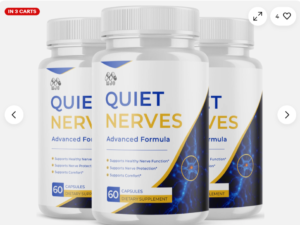
What Is Quiet Nerves?
Quiet Nerves is a botanical dietary supplement marketed towards adults interested in supporting relaxation, nervous system comfort and emotional balance.
According to the product’s sales website, its formulation combines three plant-based ingredients.
-
Corydalis (Corydalis yanhusuo) powder.
-
Prickly pear (Opuntia phaeacantha) extract.
-
California poppy (Eschscholzia californica) seed.
The manufacturer recommends taking two capsules once daily with water.
The product is marketed as a natural wellness supplement rather than a prescription medication. Its promotional positioning focuses on relaxation, nervous system support and maintaining a healthy response to everyday stress.
One important distinction should be made at the beginning. Quiet Nerves should not be confused with similarly named supplements advertised with magnesium glycinate, alpha-lipoic acid, turmeric, L-carnitine and CoQ10. Different websites using similar product names publish different formulations. This review examines the three-botanical formula displayed on Quiet Nerves’ sales website.
OFFICIAL SITE+2
Quiet Nerves Ingredients – What Is Inside the Formula?
The advertised Quiet Nerves formulation contains three botanical ingredients. Each has a different traditional background and biological profile.
Although botanical ingredients can contain potentially useful plant compounds, their safety and effectiveness depend on the species, plant part, extraction method, concentration and amount used.
1. Corydalis in Quiet Nerves
Corydalis, scientifically identified as Corydalis yanhusuo, is a traditional medicinal plant used in some Asian herbal practices.
It contains naturally occurring alkaloids, including tetrahydropalmatine (THP), which have attracted research interest because of their interactions with certain neurological pathways.
Potential areas of scientific interest include
-
Neurological signalling.
-
Pain-related pathways.
-
Relaxation and sedative effects.
-
Interactions with neurotransmitter systems.
Scientific assessment
Some laboratory and animal studies have investigated Corydalis alkaloids for their neurological and pain-related effects. However, evidence from these studies cannot automatically be applied to humans taking an over-the-counter supplement.
There is insufficient high-quality clinical evidence establishing that the Corydalis powder in Quiet Nerves produces reliable improvements in relaxation, stress management or nervous system health.
The quantity and alkaloid standardisation of the Corydalis ingredient are also important. Without these details, it is difficult to determine the strength or consistency of the formulation.
2. Prickly Pear in Quiet Nerves
Prickly pear, identified on the product website as Opuntia phaeacantha, belongs to the cactus family.
Different species of Opuntia have been investigated for their nutritional and biological properties. They contain naturally occurring compounds such as flavonoids, betalains, polyphenols and other antioxidants.
Potential areas of research include
-
Antioxidant activity.
-
Metabolic health.
-
Inflammatory response regulation.
-
General cellular protection.
Scientific assessment
Research involving prickly pear has explored several metabolic and antioxidant applications. However, results vary depending on the species, plant part and preparation used.
It is particularly important not to assume that findings from prickly pear fruit, juice or other Opuntia species apply directly to the Opuntia phaeacantha extract used in Quiet Nerves.
There is currently insufficient clinical evidence demonstrating that this specific ingredient, as formulated in Quiet Nerves, improves nervous system function or produces meaningful relaxation benefits.
3. California Poppy in Quiet Nerves
California poppy, scientifically known as Eschscholzia californica, is a flowering plant traditionally used in herbal preparations associated with relaxation and sleep support.
The plant contains several naturally occurring alkaloids that have been investigated for their potential effects on the central nervous system.
Potential areas of research include
-
Relaxation and calming effects.
-
Sleep-related support.
-
Interactions with neurological pathways.
-
Potential sedative properties.
Scientific assessment
California poppy has a history of traditional use, but clinical evidence supporting its effectiveness remains limited.
Traditional herbal applications should not be treated as proof of clinical effectiveness. More well-designed human studies are needed to establish whether California poppy can reliably improve sleep quality, reduce stress or support emotional balance.
Its potential sedative effects also make safety considerations important, particularly when combined with alcohol, sleeping medication or other substances that affect the central nervous system.
Quiet Nerves Ingredients Summary
| Ingredient | Main research interest | Evidence limitation |
|---|---|---|
| Corydalis | Neurological pathways and pain-related activity | Limited reliable human evidence |
| Prickly pear | Antioxidant and metabolic activity | Evidence varies by species and preparation |
| California poppy | Relaxation and sedative properties | Insufficient clinical evidence |
The formula has an interesting botanical foundation, but the manufacturer needs to provide more detailed information about ingredient quantities, extraction ratios and standardisation.
Without this information, consumers cannot properly compare the product with scientific research involving individual plant extracts.
Quiet Nerves Benefits and Health Claims – What Does It Promise?
Quiet Nerves is promoted as a supplement for nervous system comfort, relaxation, emotional balance and a healthy response to everyday stress.
Its marketing focuses on the potential calming properties of its botanical ingredients.
The advertised benefits can be examined individually.
Quiet Nerves for Nervous System Support
Corydalis and California poppy contain naturally occurring compounds that have been investigated for their interactions with neurological pathways.
However, there is insufficient human clinical evidence establishing that the finished Quiet Nerves supplement improves nervous system function.
Quiet Nerves for Relaxation and Stress Management
California poppy has traditionally been associated with relaxation and sleep-related herbal preparations.
Some of its compounds have demonstrated biological activity in laboratory and animal research. Nevertheless, human evidence supporting its use for anxiety and stress relief remains inadequate.
According to Poison Control’s review of California poppy, useful human studies supporting these claims are lacking.
Quiet Nerves for Emotional Balance
The manufacturer positions the formula as a product that may support emotional balance.
Although certain botanical compounds interact with neurological signalling pathways, there is no established clinical evidence demonstrating that Quiet Nerves improves emotional regulation or treats anxiety disorders.
Quiet Nerves for Everyday Comfort
Corydalis has attracted scientific interest because of its potential interaction with pain-related pathways.
However, evidence from laboratory research does not establish that the supplement provides meaningful everyday comfort in humans.
Overall assessment
Quiet Nerves has a botanical formulation with some interesting areas of preliminary research. However, the manufacturer’s broader claims about relaxation, emotional balance and nervous system support remain insufficiently established by clinical evidence.
Quiet Nerves Effectiveness – Does It Really Work?
The effectiveness of Quiet Nerves depends on more than the traditional reputation of its ingredients.
A product may contain botanicals with interesting biological properties without necessarily producing measurable benefits when consumed in a commercial supplement.
Three important considerations stand out.
1. Limited human clinical evidence
California poppy, one of the central ingredients, lacks useful human studies establishing its advertised calming and sleep-related benefits.
Corydalis has been investigated in pharmacological research, but much of the available evidence comes from laboratory and animal studies.
2. Unclear ingredient quantities
The product website identifies three botanical ingredients but does not provide sufficient individual dosage information to establish whether the quantities are comparable to those investigated in research.
This makes it difficult to assess potency, expected outcomes and safety.
3. No established clinical trial of the finished formula
There is no independently established clinical trial demonstrating that the three-ingredient Quiet Nerves combination produces the advertised improvements in nervous system comfort or emotional balance.
Consequently, the supplement’s effectiveness cannot be confidently established from its ingredient list alone.
Quiet Nerves Side Effects and Safety – What Should Consumers Know?
Natural ingredients are not automatically harmless. Botanical supplements can contain biologically active compounds capable of producing side effects and interacting with medications.
Quiet Nerves contains three botanicals that deserve closer attention.
Corydalis Safety Concerns
Corydalis contains alkaloids that can interact with neurological pathways.
Research has raised concerns about potential toxicity at high exposures, including liver-related effects observed in animal studies.
A scientific review published in Frontiers in Pharmacology examined Corydalis chemistry, pharmacology and safety, highlighting the importance of processing, dosage and alkaloid composition.
Reference – Processing and Compatibility of Corydalis yanhusuo.
Prickly Pear Safety Concerns
Prickly pear is generally consumed as food in various parts of the world. However, concentrated extracts may have different effects from ordinary dietary consumption.
Potential concerns include
-
Digestive discomfort.
-
Nausea.
-
Changes in bowel movements.
-
Possible blood glucose reduction, depending on the preparation.
People taking diabetes medication should exercise caution because some prickly pear preparations have been investigated for blood glucose-lowering effects.
Reference – Mayo Clinic: Does Prickly Pear Cactus Have Health Benefits?.
California Poppy Safety Concerns
California poppy contains alkaloids associated with potential sedative activity.
Although reliable human safety data are limited, combining products with potential sedative effects deserves caution.
Consumers should avoid combining it with alcohol, sleeping medications or other sedating substances without professional guidance.
Reference – Poison Control: California Poppy Products.
Who Should Avoid Quiet Nerves Without Medical Advice?
The following groups should seek professional advice before using the supplement.
-
Pregnant or breastfeeding women.
-
People taking prescription medications, especially sedatives.
-
Individuals with liver or kidney conditions.
-
People taking diabetes medications.
-
Individuals scheduled for surgery.
-
Anyone with an existing neurological or psychiatric condition.
It is also important to seek medical assessment for persistent anxiety, sleep disturbances, unexplained numbness or other neurological symptoms rather than relying on a supplement.
Quiet Nerves Customer Reviews – What Are Buyers Saying?
Customer reviews can provide useful information about product satisfaction, purchasing experiences and perceived benefits.
However, there is an important limitation with Quiet Nerves.
The available product website promotes customer satisfaction and claims that many customers choose its six-bottle package. However, these promotional statements do not independently establish customer satisfaction or prove that the product works.
A sufficiently reliable collection of independently verified customer reviews could not be established during this assessment.
Therefore, it would be misleading to present specific positive or negative experiences as established customer feedback.
Before purchasing, consumers should investigate the following.
-
Whether reviews are linked to verified purchases.
-
Whether customers describe specific experiences rather than repeat promotional claims.
-
Whether negative feedback is available.
-
Whether complaints involve product quality, delivery or refund difficulties.
-
Whether claimed improvements are supported by measurable outcomes.
Customer feedback assessment
There is insufficient independently verified customer feedback to establish Quiet Nerves’ overall satisfaction rate or real-world effectiveness.
Quiet Nerves Price, Packages and Refund Policy
Quiet Nerves promotes multiple purchasing options, including a six-bottle package.
The official sales website advertises a 60-day money-back guarantee. However, the refund conditions deserve attention.
According to its published policy
-
Customers must request and receive return authorisation within 60 days of purchase.
-
Returned products must meet the stated physical-condition requirements.
-
Customers are responsible for return shipping.
-
The return must be sent within 14 days after receiving the authorisation.
These conditions mean that the guarantee is not necessarily a completely cost-free return arrangement.
Buyers should review the official Quiet Nerves refund policy and confirm the final checkout price before ordering.
For international customers, particularly buyers in Nigeria, currency conversion, shipping availability, customs charges and return logistics should also be considered.
Quiet Nerves Pros and Cons
| Pros | Cons |
|---|---|
| Contains three identified botanical ingredients | Individual ingredient quantities are unclear |
| Uses plants with traditional herbal applications | Limited reliable human clinical evidence |
| Simple daily capsule routine | No established clinical trial of the finished formula |
| Advertises a 60-day refund policy | Customer pays return shipping |
| Promotes a plant-based wellness approach | Limited independently verified customer feedback |
Is Quiet Nerves Legit or a Scam?
Determining whether a supplement is legitimate requires examining its product identity, manufacturer transparency, ingredient information, purchasing terms and available evidence.
Quiet Nerves has a published sales website, an ingredient list and written refund conditions.
However, several issues deserve attention.
Limited formulation transparency
The available product information does not provide sufficient individual ingredient quantities or detailed standardisation information.
Limited clinical evidence
The advertised ingredients have varying levels of preliminary research, but the finished formulation has not been established as clinically effective.
Unclear independent quality verification
The available sales information does not establish independent laboratory verification of the finished product’s identity, purity and potency.
Confusing product identity
Several websites use the Quiet Nerves name while advertising different formulations. This makes it especially important to verify the actual seller, ingredient list and packaging before purchasing.
Another important point concerns FDA claims. Dietary supplements are not approved by the FDA for effectiveness before entering the US market. A manufacturing facility’s registration does not mean that the FDA has approved the product.
Reference – FDA: Questions and Answers on Dietary Supplements.
There is insufficient evidence to categorically label this product a scam. However, its limited transparency makes a confident purchasing recommendation difficult.
Quiet Nerves Compared With Other Relaxation Supplements
Quiet Nerves belongs to a broader category of supplements marketed for relaxation and nervous system support.
Some alternatives use ingredients with more extensive human research, although their effectiveness also depends on formulation and dosage.
| Ingredient category | Common application | Evidence considerations |
|---|---|---|
| Magnesium | Normal neuromuscular function | Established nutritional role |
| L-theanine | Relaxation and stress-related research | Human studies exist, but findings vary |
| Valerian | Sleep-related support | Clinical findings are inconsistent |
| California poppy | Traditional relaxation support | Limited human evidence |
| Corydalis | Traditional pain-related applications | Much research remains preclinical |
An ingredient’s research history should not be confused with proof that every supplement containing it is effective.
Consumers should prioritise products with clearly disclosed quantities, reliable quality testing and evidence relevant to their intended use.
Is Quiet Nerves Worth the Hype?
Quiet Nerves presents an interesting botanical combination, particularly because Corydalis and California poppy contain compounds that have attracted scientific interest in neurological research.
However, the available evidence does not sufficiently establish the product’s advertised benefits.
The main concerns are the absence of clear ingredient quantities, limited human clinical research and insufficient independently verified customer feedback.
Its 60-day refund policy offers a purchasing safeguard, but customers still need to consider the return-shipping conditions.
Quiet Nerves may appeal to consumers interested in botanical wellness supplements, but its current evidence base does not justify strong expectations regarding relaxation, stress relief or nervous system improvement.
The product would be more convincing if the manufacturer provided a complete Supplement Facts panel, independently verified quality-testing documentation and credible human clinical evidence.
Until then, consumers should approach its promotional claims cautiously rather than interpret traditional herbal use as proof of effectiveness.
Frequently Asked Questions About Quiet Nerves
1. What is Quiet Nerves used for?
Quiet Nerves is a botanical dietary supplement marketed to support nervous system comfort, relaxation, emotional balance and a healthy response to everyday stress.
2. What are the main Quiet Nerves ingredients?
The advertised formulation contains Corydalis (Corydalis yanhusuo) powder, prickly pear (Opuntia phaeacantha) extract and California poppy (Eschscholzia californica) seed.
3. Does Quiet Nerves really work?
There is insufficient clinical evidence to establish that Quiet Nerves produces its advertised benefits. Some of its ingredients have been investigated in laboratory and animal studies, but reliable human evidence remains limited.
4. Does Quiet Nerves help with anxiety?
The product is marketed around relaxation and emotional balance, but there is insufficient clinical evidence demonstrating that it treats anxiety or anxiety disorders.
5. Can Quiet Nerves improve sleep?
California poppy has traditionally been associated with sleep and relaxation. However, useful human studies supporting these claims are lacking. Quiet Nerves itself has not been established as an effective sleep supplement.
6. What are the possible Quiet Nerves side effects?
Potential concerns include digestive discomfort, interactions with medications and possible sedative effects. Corydalis also raises questions about toxicity at high exposures, although the relevance to this specific formulation cannot be determined without dosage information.
7. Is Quiet Nerves safe for daily use?
Its long-term safety cannot be confidently established from the available product information. Consumers should consult a qualified healthcare professional before beginning regular use, particularly when taking medication.
8. Is Quiet Nerves FDA approved?
No. Dietary supplements are not FDA-approved for effectiveness before marketing in the United States. Facility registration should not be mistaken for product approval.
9. How many Quiet Nerves capsules should be taken daily?
The product website recommends two capsules once daily with water. Consumers should verify the directions on their actual product packaging and consult a healthcare professional where necessary.
10. Does Quiet Nerves offer a money-back guarantee?
The sales website advertises a 60-day refund policy. However, customers must follow its return authorisation requirements and pay return shipping.
11. Is Quiet Nerves a scam?
There is insufficient evidence to categorically classify Quiet Nerves as a scam. Nevertheless, limited ingredient transparency, uncertain clinical effectiveness and confusing similarly named product websites warrant caution.
12. Is Quiet Nerves worth buying?
The supplement has an interesting botanical profile, but the lack of dosage transparency and reliable clinical evidence makes its value difficult to establish. Consumers should compare the available evidence and purchasing terms before spending money.
Final Thoughts on Quiet Nerves Review
Quiet Nerves enters the botanical supplement market with three ingredients traditionally associated with relaxation, neurological activity and general wellness.
Although these ingredients have attracted scientific interest, the evidence supporting their use in the finished product remains limited.
The most significant concern is not necessarily the choice of ingredients but the lack of information needed to evaluate their actual quantities, potency, safety and effectiveness.
A supplement should offer more than an attractive ingredient list and convincing promotional language. It should provide sufficient transparency for consumers to understand exactly what they are purchasing.
For now, Quiet Nerves remains a product that deserves cautious consideration rather than an unconditional recommendation.