
lood sugar supplements are everywhere right now, and Sugarix GlucoBalance Complex is one of the names showing up most often in searches and social media ads. If you’re looking into it because you want extra support for healthy glucose levels, or because you’ve seen a claim online that sounded a little too good, this review breaks down what’s actually in the bottle and what the research says about it.
This is not a sponsored post. Nobody paid for this review, and there’s no affiliate link waiting at the bottom to nudge you toward a purchase. The goal here is simple: look at the ingredients, compare the marketing to the science, and give you a straight answer.
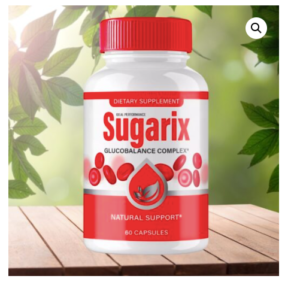
What Is Sugarix GlucoBalance Complex?
Sugarix GlucoBalance Complex is a dietary supplement sold in capsule form, typically packaged as a 60-count bottle meant to last about a month. It’s marketed toward people who want to support healthy blood sugar levels, improve insulin sensitivity, or manage the kind of fatigue and energy crashes that often get linked to glucose swings.
Like most products in this category, it’s formulated as a blend rather than a single active ingredient. The label commonly lists chromium, cinnamon bark extract, turmeric, bitter melon, prickly pear, holy basil, vitamin C, and zinc. None of these are unusual choices. In fact, this is close to the standard formula you’ll find across dozens of similarly positioned blood sugar supplements currently on the market.
The product is sold primarily through its official website and through third-party wellness retailers, with pricing that generally lands around $20 to $25 per bottle depending on bundle size and ongoing promotions.
Sugarix GlucoBalance Ingredients: What the Research Actually Shows
This is the part most reviews skip, and it’s the part that matters most. A supplement is only as credible as the evidence behind what’s inside it. Here’s an honest look at the research on the core ingredients in Sugarix GlucoBalance Complex.
Chromium in Sugarix GlucoBalance Complex
Chromium picolinate is the most heavily studied ingredient in this formula, and the evidence is genuinely mixed. A review of 15 clinical studies covering more than 1,600 subjects reported that chromium picolinate supplementation improved at least one marker of glycemic control in the large majority of trials, including reduced blood glucose and reduced need for glucose-lowering medication (Broadhurst & Domenico, 2006). A separate randomized trial in elderly patients with type 2 diabetes also found a significant drop in fasting glucose after chromium supplementation (Racek et al., 2004).
That said, not every study agrees. A six-month, double-blind, placebo-controlled trial in adults with impaired fasting glucose or metabolic syndrome found no meaningful change in glucose, insulin, or insulin resistance at either a 500 mcg or 1,000 mcg daily dose (Ebbing et al., 2011). Another eight-week randomized trial in people with type 2 diabetes found no significant change in fasting blood glucose either (Salehi et al., 2020).
The honest summary is that chromium has real research support, but the results depend heavily on dosage, study length and who’s taking it. It is not a guaranteed fix.
Cinnamon in Sugarix GlucoBalance Complex
Cinnamon has some of the stronger evidence in this ingredient list. A 2022 meta-analysis of randomized controlled trials found that cinnamon supplementation improved fasting blood glucose and lipid profiles, with the strongest results appearing in people who already had diabetes or metabolic syndrome (Zhou et al., 2022). A more recent umbrella review of meta-analyses reached a similar conclusion, noting that higher doses above 1.5 grams per day and shorter intervention periods tended to produce more noticeable benefits (2025 umbrella review).
A separate systematic review published in 2025 also found that cinnamon improved glycated hemoglobin (HbA1c) and body mass index in people with type 2 diabetes, though it had no measurable effect on inflammatory markers (Systematic Review, 2025).
The catch is dosage. Most supplement blends, including Sugarix, don’t publicly disclose whether their cinnamon content comes close to the 1.5-gram threshold used in the studies showing benefit.
Bitter Melon in Sugarix GlucoBalance Complex
This is where the evidence gets noticeably weaker. A systematic review and meta-analysis of nine randomized controlled trials involving 414 patients found no statistically significant effect of bitter melon over placebo on fasting blood glucose or HbA1c (Peter et al., 2023). The reviewers were direct about it, concluding that the overall metabolic effect of bitter melon cannot be reliably determined from the current evidence.
A separate, smaller review did find a modest drop in fasting glucose after 12 weeks of bitter melon extract, though HbA1c levels did not change (RCT review). Put simply, bitter melon might help a little, but the research is inconsistent enough that it shouldn’t be a main reason to buy this or any supplement.
Turmeric, Prickly Pear, Holy Basil, Vitamin C and Zinc
These ingredients round out the formula and are commonly included in metabolic health supplements, largely because of their antioxidant and anti-inflammatory properties. However, independent clinical trials testing them specifically for blood sugar control are limited compared to chromium and cinnamon. They’re reasonable additions to a general wellness formula, but they shouldn’t be treated as proven glucose-lowering agents on their own.
Has Sugarix GlucoBalance Complex Itself Been Clinically Tested?
This is the single most important question, and it’s the one the marketing conveniently avoids answering. Multiple independent product reviewers who looked into this supplement reported the same finding: there is no published clinical trial testing the finished Sugarix GlucoBalance Complex formula itself. The available research applies to the individual ingredients in isolation, not to this specific blend, dosage or combination.
That distinction matters. Two ingredients that each work on their own don’t automatically work the same way when combined at unknown doses in one capsule. Without a trial on the actual product, any claim about how well Sugarix performs is an extrapolation, not a proven result.
Sugarix GlucoBalance Reviews: What Are Users Saying?
Customer feedback on Sugarix GlucoBalance Complex is mixed, which tends to be the norm for supplements in this category. Some buyers report modest improvements in energy and more stable-feeling blood sugar over several weeks of consistent use. Others report no noticeable difference at all.
A pattern worth flagging: the most enthusiastic reviews tend to appear on pages closely tied to the product’s own sales funnel, while independent comparison sites tend to be far more measured, often describing the benefits as modest at best and cautioning against expecting dramatic results. As with most supplements sold primarily through direct-to-consumer marketing, it’s worth weighing testimonials on official or affiliate pages a little differently than reviews on independent platforms.
Is Sugarix GlucoBalance Complex Safe to Take?
The ingredients in Sugarix GlucoBalance Complex are generally recognized as safe for most healthy adults at typical supplement doses, and the product is commonly marketed as non-GMO and gluten-free. That said, a few precautions are worth taking seriously.
Chromium, bitter melon and cinnamon can all interact with blood sugar medications, including insulin and metformin, potentially causing blood sugar to drop lower than intended. Anyone currently taking medication for diabetes or prediabetes should talk to a doctor or pharmacist before adding this or any similar supplement. Pregnant or breastfeeding individuals should also check with a healthcare provider first, since several of these ingredients haven’t been well studied in that population.
Sugarix GlucoBalance Complex Pricing
Sugarix GlucoBalance Complex is typically priced around $20 to $25 per bottle when purchased individually, with multi-bottle bundles bringing the per-bottle cost down. This pricing is in line with most competitors in the blood sugar supplement space, and it’s not the highest or lowest priced option on the market.
Sugarix GlucoBalance Complex: Pros and Cons
Pros
- Contains ingredients with genuine, if mixed, clinical research behind them, particularly chromium and cinnamon
- Priced comparably to other established blood sugar support supplements
- Marketed as non-GMO and gluten-free
- Simple once-daily capsule format
Cons
- No published clinical trial on the finished product itself
- Bitter melon, one of the headline ingredients, has weak and inconsistent supporting evidence
- Exact dosages of each ingredient are not always clearly disclosed
- Marketing language sometimes overstates what the evidence can support
- Not a substitute for medical treatment of diabetes or prediabetes
Final Verdict
Sugarix GlucoBalance Complex isn’t a scam in the sense of containing nothing useful. The ingredient list draws from compounds that have shown real, measurable effects on blood sugar markers in clinical research, chromium and cinnamon especially. But it also isn’t the breakthrough its marketing sometimes implies. No trial has tested this specific formula, several of its ingredients have inconsistent evidence, and the individual doses aren’t always transparent.
If you’re already eating well, staying active and looking for a modest layer of nutritional support, this supplement is a reasonable, low-risk option to discuss with your doctor. If you’re hoping it will meaningfully lower blood sugar on its own or replace medical treatment, the current evidence doesn’t support that expectation.
Frequently Asked Questions About Sugarix GlucoBalance Complex
Does Sugarix GlucoBalance Complex actually lower blood sugar? Some ingredients in Sugarix GlucoBalance Complex, particularly chromium and cinnamon, have shown blood-sugar-lowering effects in clinical studies. However, the finished Sugarix GlucoBalance Complex formula has not been independently tested in a clinical trial, so results for the product as a whole are not confirmed.
Is Sugarix GlucoBalance Complex safe for people with diabetes? Several ingredients in Sugarix GlucoBalance Complex can interact with diabetes medications and may lower blood sugar further than intended. Anyone with diabetes should consult a doctor before taking Sugarix GlucoBalance Complex alongside prescribed treatment.
How long does it take for Sugarix GlucoBalance Complex to work? There’s no official clinical timeline for Sugarix GlucoBalance Complex specifically. Based on the ingredient research, any noticeable effect would likely take several weeks of consistent daily use rather than being immediate.
Where can you buy Sugarix GlucoBalance Complex? Sugarix GlucoBalance Complex is sold through its official website and select third-party wellness retailers. Buying directly from the official source is generally recommended to avoid counterfeit products.
Is Sugarix GlucoBalance Complex a replacement for diabetes medication? No. Sugarix GlucoBalance Complex is marketed as a dietary supplement, not a treatment or cure for diabetes. It should not replace prescribed medication or medical supervision.
What is the price of Sugarix GlucoBalance Complex? Sugarix GlucoBalance Complex typically costs between $20 and $25 per bottle, with lower per-bottle pricing available through multi-bottle bundles.
This article is for informational purposes only and does not constitute medical advice. Consult a licensed healthcare provider before starting any new supplement, especially if you are managing diabetes, prediabetes, or taking related medication.
References
- Broadhurst, C.L. & Domenico, P. (2006). Clinical studies on chromium picolinate supplementation in diabetes mellitus: a review. Diabetes Technology & Therapeutics. https://pubmed.ncbi.nlm.nih.gov/17109600/
- Racek, J. et al. (2004). Effect of chromium supplementation on blood glucose and lipid levels in type 2 diabetes mellitus elderly patients. PubMed. https://pubmed.ncbi.nlm.nih.gov/15296075/
- Ebbing, M. et al. (2011). Chromium effects on glucose tolerance and insulin sensitivity in persons at risk for diabetes mellitus. PMC. https://pmc.ncbi.nlm.nih.gov/articles/PMC3118091/
- Salehi, E. et al. (2020). Effects of Chromium Picolinate Supplementation on Cardiometabolic Biomarkers in Patients with Type 2 Diabetes Mellitus. Clinical Nutrition Research. https://e-cnr.org/DOIx.php?id=10.7762/cnr.2020.9.2.97
- Zhou, Q. et al. (2022). Efficacy of cinnamon supplementation on glycolipid metabolism in T2DM diabetes: a meta-analysis and systematic review. Frontiers in Physiology. https://pmc.ncbi.nlm.nih.gov/articles/PMC9731104/
- The effects of cinnamon on patients with metabolic diseases: an umbrella review of meta-analyses of randomized controlled trials (2025). PMC. https://pmc.ncbi.nlm.nih.gov/articles/PMC12620228/
- Cinnamon Improves Glycated Haemoglobin and Body Mass Index, but Not Inflammatory Parameters in Patients with Type 2 Diabetes (2025). MDPI. https://www.mdpi.com/2673-396X/6/1/3
- Peter, E. et al. (2023). The metabolic effect of Momordica charantia cannot be determined based on the available clinical evidence: a systematic review and meta-analysis. Frontiers in Nutrition. https://www.frontiersin.org/journals/nutrition/articles/10.3389/fnut.2023.1200801/full