
TheraICE Migraine Relief Cap Review
Headaches and migraines can turn an ordinary day into a complete shutdown. Bright screens become irritating, noise feels unnecessarily loud, and finding a comfortable position can suddenly become a project of its own. This is one reason wearable cooling products have become increasingly popular.
The TheraICE Migraine Relief Cap takes the familiar cold-pack approach and turns it into something that can be worn around the head. Instead of holding an ice pack against the forehead or wrapping a towel around a frozen gel pack, the cap provides cooling, compression and light blocking in one product.
But popularity alone does not prove effectiveness. The more useful question is whether the TheraICE Migraine Relief Cap actually provides meaningful relief, how its claims compare with available evidence, what customers are saying, and whether the product is worth the price.
TheraICE Migraine Relief Cap Specifications
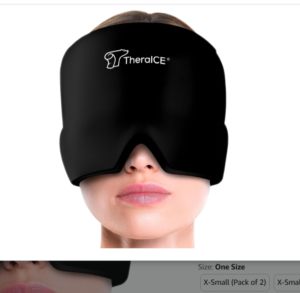
The TheraICE Migraine Relief Cap is a reusable gel-based head wrap designed primarily for hot and cold therapy. According to the manufacturer’s current product information, it uses a stretchable, form-fitting construction designed to provide compression without hard ice inserts or Velcro. The dark material can also be positioned over the eyes to help block light.
The official TheraICE product page currently lists the standard Headache Hat at $29.99 and describes it as a reusable hot and cold therapy product.
Key specifications include
- Brand name TheraICE
- Model TI-HEAD-OS
- One-size-fits-most design
- Form-fitting stretchable construction
- Gel-based cooling material
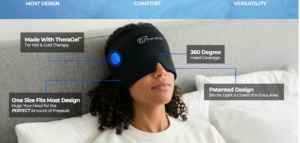
- 360-degree head coverage
- Compression-style fit
- Light-blocking dark material
- Reusable construction
- Hot and cold therapy capability
- No Velcro or rigid ice inserts
The product is designed to slide over the head rather than being strapped around the forehead. That makes the design relatively simple, particularly for someone who wants to put on a cooling product without manually holding it in place.
TheraICE Migraine Relief Cap Design and Fit
The most obvious selling point of the TheraICE Migraine Relief Cap is its wearable design.
Traditional ice packs can be effective but inconvenient. They may need to be held against the forehead, wrapped in fabric or repeatedly repositioned. The TheraICE cap removes some of that hassle by staying around the head while the user rests.
Its stretchable construction also creates gentle pressure around the head. Some people find this compression soothing during headache episodes, although pressure is obviously a matter of personal tolerance.
The cap can also be pulled down over the eyes. This is particularly relevant for people who experience light sensitivity during migraine attacks. The manufacturer specifically markets the dark material as a way to block light while wearing the cap. (TheraICE)
That does not mean the cap treats light sensitivity itself. It simply creates a darker environment, which may make resting more comfortable.
TheraICE Migraine Relief Cap Claims
TheraICE markets the cap as a drug-free, non-invasive option for headache and migraine comfort. The company also mentions tension headaches, sinus pressure, stress and other types of head discomfort.
The manufacturer’s claims include
- Helping soothe headaches
- Providing cold therapy
- Providing compression
- Helping with tension and sinus pressure
- Blocking light
- Providing hot or cold therapy
- Offering hands-free use
- Helping users relax or sleep more comfortably
The company also states that the cap can maintain its intended temperature for up to approximately 20 minutes. The TheraICE FAQ provides additional information about freezing, heating and the intended uses of the product.
However, there is an important distinction between saying a product provides temporary relief and saying it treats or cures migraine.
The latter would require considerably stronger evidence.
TheraICE Migraine Relief Cap Effectiveness
This is where the product gets more interesting because there is some scientific support for the basic idea behind it.
A systematic review and meta-analysis published in the Journal of Clinical Nursing evaluated six studies involving cold interventions for migraine. These interventions included cold-gel caps, cold-gel headbands, cold wraps and other cooling approaches.
The review found that cold interventions were associated with a reduction in migraine pain in the short term, particularly around 30 minutes after treatment. However, evidence for longer-term improvement was limited, with the researchers rating the certainty of evidence from very low to moderate.
The full study is available through PubMed, which is a useful source for anyone wanting to look beyond the product marketing.
This matters because it supports the general concept of cold therapy, but it does not prove that the TheraICE Migraine Relief Cap itself will work for every person experiencing migraine.
In other words, the science gives the product a reasonable foundation, but it does not give it a magic stamp.
TheraICE Migraine Relief Cap Customer Reviews
Customer feedback is another reason the TheraICE Migraine Relief Cap continues to attract attention.
Reviews commonly focus on the same features that appear in the product description. Cooling, compression, light blocking and convenience are frequently mentioned as benefits.
Some users appreciate being able to put the cap on and simply lie down without holding an ice pack against the head. Others particularly like being able to pull it over the eyes when light becomes uncomfortable.
The product’s official website currently displays hundreds of reviews, while the Amazon listing associated with ASIN B082WN9NJL has accumulated a substantial number of customer ratings over time.
Customer reviews are useful for understanding real-world usability, but they should still be treated separately from clinical evidence. Someone reporting that a migraine improved after using the cap is describing a personal experience, not conducting a controlled clinical trial.
That distinction becomes especially important with products marketed for pain relief.
TheraICE Migraine Relief Cap Negative Reviews
The TheraICE Migraine Relief Cap does not work perfectly for everyone.
One recurring issue is temperature.
The cap can become extremely cold after being stored in the freezer. That can be exactly what some users want, while others may find the initial temperature uncomfortable. TheraICE itself acknowledges this issue in its instructions and recommends allowing the cap to sit out if it is too cold immediately after freezing. (TheraICE)
The compression can also divide opinions.
Someone who enjoys pressure around the head may find the snug fit comforting. Someone who dislikes anything pressing against the temples or forehead may find the same feature irritating.
Cooling duration is another potential limitation. TheraICE states that the product can maintain its intended temperature for up to about 20 minutes. That means buyers expecting several hours of intense cold may have unrealistic expectations. (TheraICE)
So the positive reviews should not be read as evidence that every user will have the same experience.
TheraICE Migraine Relief Cap Cooling Duration
The manufacturer states that the cap can provide its intended cooling sensation for up to approximately 20 minutes.
It typically takes around two hours to reach the recommended frozen temperature, according to the company’s product information. The cap can also be stored in a refrigerator for a less intense cooling experience. (TheraICE)
This is one of those specifications that needs to be interpreted realistically.
Twenty minutes of cooling may be enough for someone who wants a short period of relief while resting. It may feel inadequate to someone who prefers prolonged cold therapy.
The actual experience can also vary depending on freezer temperature, room temperature and individual tolerance.
TheraICE Migraine Relief Cap Safety
The fact that the product is drug-free does not mean it can be used carelessly.
TheraICE recommends inspecting the cap before use, particularly the inner lining. The company warns users not to use the product if ice crystals or gel are visible through damage to the lining.
The cap should be frozen inside a freezer bag and applied only to dry skin. It should not be used on infected areas or open wounds without consulting a healthcare professional. The manufacturer also says not to put the product in a washing machine or dryer, submerge it in water, or use it while wet. (TheraICE)
For anyone using the heated function, the instructions are equally important. TheraICE recommends allowing the cap to reach room temperature before microwaving it, starting at 20 seconds and adding 10-second increments if additional heat is needed.
It should never be applied while excessively hot.
The manufacturer’s care instructions provide the specific handling instructions and warnings.
Cold intolerance is also worth considering. A small clinical study of a frozen gel cap reported that some participants could not tolerate the cold, with one participant experiencing vertigo. (PubMed)
That does not mean the TheraICE cap is inherently unsafe. It simply reinforces the fact that extreme cold is not comfortable or appropriate for everyone.
TheraICE Migraine Relief Cap Hot Therapy
The TheraICE Migraine Relief Cap is not restricted to cold therapy.
It can also be warmed in a microwave according to the manufacturer’s instructions. This gives it more versatility than a traditional frozen ice pack.
However, most of the clinical discussion surrounding this particular use case centers on cold therapy. The available systematic review found evidence for short-term migraine pain reduction from cold interventions, while evidence for longer-term benefit was limited. (PubMed)
Therefore, the hot function is better viewed as an additional feature rather than the primary reason to purchase the product for migraine relief.
TheraICE Migraine Relief Cap vs Regular Ice Pack
A regular reusable ice pack is considerably simpler and usually cheaper.
So why purchase a wearable cap?
Convenience is the main answer.
An ice pack has to be held, positioned or wrapped. It can slide off the forehead, become uncomfortable or occupy one hand. The TheraICE cap stays on the head and can provide cooling and compression while the user rests.
It also offers the additional benefit of light blocking.
The American Migraine Foundation includes a cold pack among items that may be useful in a migraine emergency kit, alongside other migraine-management tools. This does not specifically endorse TheraICE, but it shows that cold packs are already recognized as a practical comfort measure for some people living with migraine.
The question is therefore not whether the cap is better than every ice pack on the market. It is whether the added convenience is worth paying for.
For someone who already owns a comfortable reusable cold pack, the difference may not be significant.
For someone who frequently reaches for cold therapy during headaches, the wearable design could be much more useful.
TheraICE Migraine Relief Cap Pros and Cons
TheraICE Migraine Relief Cap Pros
- Reusable
- Hands-free design
- Broad head coverage
- Provides cooling and compression
- Can be worn over the eyes
- Helps create a darker environment
- Can be used hot or cold
- Does not require batteries
- Simple to store and reuse
- Cold therapy has some evidence for short-term migraine pain reduction
TheraICE Migraine Relief Cap Cons
- Can initially feel extremely cold
- Cooling sensation is temporary
- Compression may not suit everyone
- One-size-fits-most design may not feel identical on every head
- Evidence supports cold therapy generally rather than proving this specific cap treats migraine
- Does not address the underlying cause of migraine
- May be unnecessary for someone who already owns an effective cold pack
TheraICE Migraine Relief Cap Worth the Hype
The TheraICE Migraine Relief Cap is not difficult to understand once the marketing is separated from the evidence.
There is a legitimate reason cold therapy is used by some people during migraine attacks. Research has found short-term pain reduction following cold interventions, although the evidence for lasting effects remains limited.
The TheraICE cap packages that concept into a wearable product.
Its advantages are convenience, coverage, compression and light blocking. Its limitations are equally straightforward. The cooling effect is temporary, the temperature may be uncomfortable for some people and the cap is not a cure for migraine.
The manufacturer’s own messaging is relatively careful on this point. TheraICE explicitly says it makes no “miracle claims” and describes the product as something intended to help users feel better rather than promising to eliminate migraine. (TheraICE)
That is probably the most reasonable way to evaluate it.
The cap may be useful as a temporary comfort tool, particularly for someone who already knows that cold therapy feels good during headaches. It should not be treated as a replacement for proper migraine diagnosis or evidence-based medical treatment.
The American Migraine Foundation’s migraine treatment guidance explains that migraine management can involve acute treatment, preventive treatment, behavioral strategies and lifestyle measures depending on the individual.
That puts the TheraICE cap into its proper category.
It is an adjunctive comfort product, not a complete migraine-management strategy.
TheraICE Migraine Relief Cap Final Verdict
The TheraICE Migraine Relief Cap has a reasonable concept behind it.
Cold therapy has been studied for migraine symptoms, and the available evidence suggests that it can provide short-term pain relief.
The TheraICE design adds convenience by turning a conventional cooling pack into a wearable cap with compression and light-blocking capability.
The strongest reasons to consider it are therefore practical rather than miraculous.
It is reusable, hands-free and relatively simple to use. The main concerns are the short cooling window, individual tolerance to cold and whether the compression feels comfortable.
The large volume of positive customer feedback makes the product interesting, but customer reviews should not be confused with clinical evidence.
Overall, the TheraICE Migraine Relief Cap appears to be a legitimate cooling and compression product that may provide temporary comfort during headaches or migraine attacks. The hype becomes excessive only when temporary symptom relief is interpreted as a cure.
For buyers who want a dedicated wearable cold therapy option, the product has a reasonable use case. For anyone dealing with frequent, severe or unexplained headaches, however, a cooling cap should remain an addition to proper medical care rather than the entire strategy.
TheraICE Migraine Relief Cap Frequently Asked Questions
What is the TheraICE Migraine Relief Cap?
The TheraICE Migraine Relief Cap is a reusable gel-based head wrap designed to provide hot or cold therapy, compression and light blocking. The manufacturer markets it for migraine, headaches, sinus pressure and tension-related discomfort. (TheraICE)
Does the TheraICE Migraine Relief Cap really work?
Cold therapy has some clinical evidence for short-term reduction of migraine pain. However, the research does not establish that the TheraICE product itself will work for everyone or that it can cure migraine. (PubMed)
How long does the TheraICE Migraine Relief Cap stay cold?
TheraICE states that its products can maintain the intended temperature for up to approximately 20 minutes. The actual experience can vary according to storage conditions and individual temperature tolerance. (TheraICE)
Can the TheraICE Migraine Relief Cap go in the freezer?
Yes. The manufacturer recommends freezing the cap inside a freezer bag. If it feels excessively cold immediately after removal, the company recommends allowing it to sit out until it reaches a more comfortable temperature. (TheraICE)
Can the TheraICE Migraine Relief Cap be refrigerated?
Yes. TheraICE states that the product can be stored in either a freezer or refrigerator depending on the user’s preferred temperature.
Can the TheraICE Migraine Relief Cap be heated?
Yes. The cap is designed for hot therapy as well. TheraICE recommends starting at approximately 20 seconds in the microwave and adding 10-second increments while checking the temperature. (TheraICE)
Does the TheraICE Migraine Relief Cap block light?
The dark material can be pulled over the eyes to reduce exposure to light. This may be useful for people who prefer a dark environment during a migraine attack.
Is the TheraICE Migraine Relief Cap safe?
It is designed for external use, but the manufacturer’s instructions should be followed carefully. The cap should be inspected for damage and should not be used if gel or ice crystals are visible through a damaged lining. It should also not be applied to open wounds or infected skin without medical advice. (TheraICE)
Can the TheraICE Migraine Relief Cap cure migraines?
No. Current evidence does not establish that the cap cures migraine. Research on cold interventions mainly supports potential short-term symptom relief. (PubMed)
Is the TheraICE Migraine Relief Cap worth buying?
It may be worth considering for people who want a reusable, hands-free cooling option for temporary headache or migraine comfort. The value is less obvious for someone who already owns a reusable cold pack and does not need the cap’s compression, coverage or light-blocking features.