
CogniMary Supplement Review
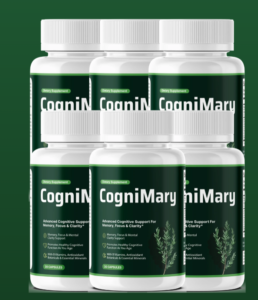
CogniMary is marketed as an advanced cognitive support supplement for people looking to support memory, focus and mental clarity. The particular product shown in the image is packaged in a white bottle with a dark green label and contains 30 capsules.
The formula presented by the brand combines Rosemary Extract, Bacopa Monnieri, Ginkgo Biloba and Phosphatidylserine. These are not completely random ingredients. Each has been investigated in scientific literature for possible relationships with memory or cognitive function. However, that does not automatically mean the finished CogniMary supplement has been clinically proven to work.
That distinction is important because CogniMary’s own website acknowledges that the individual ingredients have been studied separately, while the finished four-ingredient CogniMary formula has not undergone its own separate clinical trial.
This CogniMary supplement review looks at the product claims, ingredients, scientific evidence, customer reviews and whether the product actually deserves the hype.
What Is CogniMary Supplement
CogniMary is a daily dietary supplement marketed for cognitive support. According to the brand, the formula is designed around four ingredients that target different aspects of brain health.
The current product page identifies these ingredients as Rosemary Extract, Bacopa Monnieri, Ginkgo Biloba and Phosphatidylserine. The company describes CogniMary as a non-stimulant formula intended to support memory recall, mental clarity and everyday focus.
The bottle shown in the supplied image also states that CogniMary is intended for advanced cognitive support involving memory, focus and clarity.
The concept sounds reasonable on paper. The question is whether the evidence behind the individual ingredients translates into meaningful results from this particular supplement.
That is where things become less straightforward.
CogniMary Supplement Claims
The main CogniMary claims centre around three areas.
Memory support
The company says the formula is designed to support memory recall and information retention, particularly through Bacopa Monnieri and rosemary extract.
Focus and mental clarity
CogniMary is also marketed as a way to support everyday concentration and mental clarity without relying on conventional stimulants such as caffeine.
General cognitive support
Ginkgo Biloba and phosphatidylserine are presented as additional components supporting circulation and brain-cell structure.
These are relatively broad wellness claims. They should not be interpreted as proof that CogniMary can treat dementia, Alzheimer’s disease, ADHD, neurological disorders or any other medical condition.
The brand itself states that CogniMary is not a prescription drug or a treatment for disease.
CogniMary Supplement Ingredients and Scientific Evidence
The ingredient list is probably the strongest part of this product.
There is actual research behind several of the ingredients. The problem is that the research generally concerns specific ingredients, extracts and doses, rather than this exact CogniMary combination.
Bacopa Monnieri in CogniMary Supplement
Bacopa Monnieri is arguably the most interesting ingredient in this formula from a memory perspective.
A systematic review of randomized controlled human trials found some evidence that Bacopa could improve aspects of memory, particularly free recall. The reviewed trials generally used standardized extracts for approximately 12 weeks, with doses around 300 to 450 mg per day.
A separate meta-analysis involving nine studies and 518 participants also reported potential improvements in certain measures of cognition and attention following chronic Bacopa supplementation.
That sounds promising, but there is a catch.
The studies investigated particular standardized Bacopa preparations at particular doses. Unless the CogniMary label clearly identifies the amount and standardization of Bacopa per capsule, consumers cannot assume that taking CogniMary provides the same exposure used in those studies.
There is also no strong evidence that Bacopa should be viewed as a treatment for Alzheimer’s disease. A systematic review of trials in Alzheimer’s disease found very low-certainty evidence and concluded that the available studies did not establish a difference between Bacopa and placebo or donepezil.
So Bacopa is scientifically interesting, but it is not a magic memory pill.
For readers who want to inspect the research directly, the Bacopa systematic review on PubMed is a useful starting point. Bacopa systematic review on PubMed
Ginkgo Biloba in CogniMary Supplement
Ginkgo Biloba has been investigated for cognitive function for decades.
The evidence is mixed rather than overwhelmingly positive.
A 2026 Cochrane review assessed Ginkgo for cognitive impairment and dementia and found that its effects depend heavily on the population being studied. In people with mild cognitive impairment, Ginkgo probably has little or no effect on cognition or overall status. In some people with dementia, small to moderate benefits were observed at six months.
That makes the marketing around Ginkgo more complicated than the simple “better blood flow equals better memory” argument sometimes used by supplement sellers.
Ginkgo may have a legitimate role in cognitive research, but that does not establish that the amount contained in CogniMary will produce a noticeable cognitive improvement.
The 2026 Cochrane review on Ginkgo Biloba provides a more balanced look at the evidence. 2026 Cochrane review on Ginkgo Biloba
Rosemary Extract in CogniMary Supplement
Rosemary is another interesting inclusion.
The plant contains compounds such as rosmarinic acid and has been investigated for possible effects on cognition and memory. The CogniMary website specifically positions rosemary extract alongside Bacopa as part of the memory and recall component of the formula.
The problem is the same one seen with the other ingredients.
Research on rosemary does not automatically equal research on CogniMary.
The concentration, extraction method and dose can substantially affect how an ingredient behaves. Without detailed information about the standardized rosemary extract used in the product, it is difficult to determine whether the formulation corresponds closely to doses used in human research.
Phosphatidylserine in CogniMary Supplement
Phosphatidylserine is a naturally occurring phospholipid found in cell membranes, including neuronal membranes.
It has been studied for its potential relationship with memory and cognitive function, particularly among older adults.
This gives CogniMary another ingredient with a legitimate scientific background. However, as with Bacopa and Ginkgo, evidence involving phosphatidylserine itself should not be presented as clinical proof that CogniMary works.
The finished combination still needs to stand on its own.
CogniMary Supplement Effectiveness
This is the section where I would be careful with the hype.
There is some evidence supporting individual ingredients in CogniMary, particularly Bacopa. Recent research continues to investigate Bacopa and Ginkgo in relation to different cognitive outcomes.
However, the evidence is not strong enough to say that CogniMary itself is a clinically proven cognitive enhancer.
The most important admission actually comes from the brand.
CogniMary states that its four ingredients have been studied individually but that the finished CogniMary combination has not undergone a separate clinical trial.
That is a significant distinction.
Think about it this way. If four ingredients have each been studied separately, you cannot simply combine the results and announce that the finished product has the same evidence behind it.
The doses may be different.
The extracts may be different.
The participants may be different.
The formulation may behave differently.
That is why I would describe CogniMary as plausible but not clinically proven.
CogniMary Supplement Customer Reviews
Customer testimonials are one of the major selling points of CogniMary.
The company’s website displays positive testimonials describing better recall, improved focus and reduced difficulty remembering names and details.
Another CogniMary sales page displays testimonials from customers claiming improvements in mental clarity, energy and memory after several weeks of use.
These testimonials may represent genuine customer experiences.
However, they are still seller-hosted testimonials.
That means they should not be treated as equivalent to independently collected clinical data.
There is also an important limitation. The brand itself explains that its scientific citations concern the individual ingredients rather than a clinical trial of the finished CogniMary formula.
So the customer reviews may tell us how some buyers say they felt after taking the product, but they cannot establish that CogniMary caused those changes.
Memory and concentration can also fluctuate naturally with sleep, stress, workload, diet, caffeine intake, exercise and expectations.
That makes personal testimonials particularly weak evidence for cognitive supplements.
CogniMary Supplement Customer Review Evidence
The independent review landscape is not particularly strong.
There are multiple websites using the CogniMary name, and some do not appear to present exactly the same formulation.
For example, the main CogniMary pages I found identify rosemary extract, Bacopa Monnieri, Ginkgo Biloba and phosphatidylserine.
Another CogniMary domain promotes a formulation involving Ginkgo, Bacopa and Huperzia serrata instead.
This is something prospective buyers should take seriously.
A consumer should not assume that every website using the CogniMary name is selling an identical product.
The safest approach is to compare the exact Supplement Facts panel on the bottle with the website before making a purchase.
CogniMary Supplement and the Importance of Ingredient Dosage
One thing I would want to see more clearly before calling this product highly transparent is the complete dosage information for each active ingredient.
Listing “Bacopa Monnieri” is not enough.
A proper supplement assessment needs to know how much is present per serving, what extract is being used and, where relevant, whether the extract has been standardized to particular active compounds.
This matters because clinical studies do not simply test the name of an ingredient.
They test a specific preparation at a specific dose for a specific period.
For example, the Bacopa studies included in the systematic review commonly used standardized extracts at approximately 300 to 450 mg per day for 12 weeks.
Therefore, anyone comparing CogniMary with the research should look at the actual Supplement Facts panel rather than relying solely on the ingredient names printed on the front of the bottle.
CogniMary Supplement Safety
CogniMary is marketed as a natural and non-stimulant supplement, but natural does not automatically mean risk-free.
Ginkgo is particularly worth paying attention to because it can interact with certain medicines, especially medications that affect blood clotting.
The CogniMary website itself advises people taking prescription medication, particularly blood thinners, to seek medical advice before using the product.
People who are pregnant or breastfeeding, under 18, living with a diagnosed medical condition or taking regular medication should not treat this type of supplement as automatically safe.
The FDA also advises consumers to speak with a healthcare professional before using dietary supplements because supplements can interact with medicines and other supplements.
The FDA’s consumer information on dietary supplements is useful for understanding the difference between supplements and prescription medicines. FDA dietary supplement consumer guidance
CogniMary Supplement and the FDA Approval Claim
This is another area where supplement marketing can easily become confusing.
Some CogniMary sales pages use phrases such as “FDA registered” or “FDA approved facility.”
Consumers need to understand what that actually means.
The FDA states clearly that it does not approve dietary supplements for safety and effectiveness before they are marketed.
Therefore, an “FDA-registered facility” is not the same thing as an FDA-approved CogniMary supplement.
That distinction is worth remembering because “FDA approved” sounds considerably stronger than what the regulatory framework actually means.
The FDA’s explanation of what “FDA approved” really means is worth reading before purchasing any supplement making similar claims. FDA explanation of dietary supplement approval
CogniMary Supplement and the Multiple Website Problem
This is probably one of the biggest things I would investigate before buying.
There are several websites using the CogniMary name, and they do not all appear to provide identical information.
The main site reviewed here describes a four-ingredient formula containing rosemary extract, Bacopa Monnieri, Ginkgo Biloba and phosphatidylserine.
Another site using the CogniMary branding promotes different ingredients and makes broader claims about memory enhancement.
A recent third-party review has also noted the apparent lack of uniformity across CogniMary sales channels.
This does not automatically prove that the product is fraudulent.
It does mean buyers should be careful about assuming that a website, review article or advertisement is referring to exactly the same product shown in the image above.
CogniMary Supplement Marketing and Sales Tactics
Some CogniMary sales pages use strong urgency-based marketing, including limited-time discounts and countdown-style messaging.
This type of marketing is common in the supplement industry.
It is not evidence that a product is fake.
At the same time, consumers should not allow a countdown timer or “limited stock” message to push them into purchasing a six-month supply before they have checked the label, seller, refund policy and manufacturer information.
A supplement should be evaluated based on its evidence and transparency, not how aggressively the checkout page creates urgency.
CogniMary Supplement Effectiveness Compared With the Hype
The marketing suggests a product capable of supporting sharper memory, focus and mental clarity.
The science gives us a more cautious picture.
Bacopa has some promising evidence for certain memory outcomes.
Ginkgo has a large research history, but recent Cochrane evidence shows that its cognitive effects vary substantially depending on the population and condition.
Research involving plant-based cognitive compounds more generally also continues to produce mixed results, showing why broad “brain boosting” claims should be treated cautiously.
The missing piece is a high-quality randomized controlled trial of CogniMary itself.
Until that exists, it would be more accurate to say that CogniMary contains several clinically studied ingredients rather than saying that CogniMary is a clinically proven cognitive supplement.
That wording difference is small.
The scientific difference is huge.
Is CogniMary Supplement Worth the Hype
My verdict is that CogniMary is more interesting than the average gimmicky brain supplement, but the marketing is stronger than the product-specific evidence.
The formula contains ingredients with legitimate research backgrounds. Bacopa in particular has some evidence supporting certain memory outcomes when standardized extracts are used consistently over time.
That gives the product some credibility.
However, there is no good reason to assume that taking CogniMary will produce dramatic improvements in memory, concentration or mental clarity.
The customer testimonials are also not enough to settle the question because they are primarily hosted by the seller rather than being independently verified clinical evidence.
The multiple CogniMary websites and inconsistent formulations add another layer of caution.
So, is CogniMary completely useless?
No.
Is it a proven brain-enhancement formula?
Also no.
I would put it somewhere in the middle.
CogniMary may be worth considering for someone interested in a cognitive-support supplement, but I would not buy a large multi-bottle package purely because of the marketing claims.
The first thing I would verify is the actual Supplement Facts panel, including the amount and form of each active ingredient.
CogniMary Supplement Final Verdict
After looking at the product claims, ingredient research and available customer feedback, I would rate CogniMary as follows.
Ingredient concept
7/10
Evidence for individual ingredients
7/10
Evidence for the finished CogniMary product
4/10
Transparency
5/10
Customer-review reliability
4/10
Overall
5.5/10
The product is not something I would immediately dismiss as a scam simply because it is sold online. There are legitimate cognitive-support ingredients in the advertised formulation.
However, consumers should not confuse research-backed ingredients with a research-backed finished product.
That is the biggest issue with the CogniMary hype.
For me, the reasonable conclusion is that CogniMary is potentially useful but insufficiently proven.
Anyone buying it should verify the exact formula, manufacturer, serving size, ingredient quantities, lot information and refund terms before paying.
And I would definitely not let a “today only” discount pressure me into buying six bottles of a product that has not been clinically tested as a finished formula.
CogniMary Supplement Frequently Asked Questions
Does CogniMary Supplement really work
CogniMary contains ingredients that have been studied for cognitive effects, particularly Bacopa Monnieri. However, the finished CogniMary formula has not undergone its own separate clinical trial, so there is insufficient evidence to guarantee that the product will improve memory or focus.
How long does CogniMary Supplement take to work
The company’s marketing suggests that results may become noticeable over several weeks and recommends consistent use over a longer period. This is broadly consistent with Bacopa research, where many clinical studies used approximately 12 weeks of supplementation rather than a single dose.
Is CogniMary Supplement clinically proven
Not as a finished product. The company explicitly states that the individual ingredients have published research but that the combined CogniMary formula has not undergone a separate clinical trial.
Does CogniMary Supplement improve memory
It may potentially support certain aspects of memory because it contains ingredients such as Bacopa that have been investigated for memory performance. However, there is not enough evidence to guarantee a noticeable improvement from CogniMary itself.
Is CogniMary Supplement FDA approved
No. The FDA states that dietary supplements are not approved for safety and effectiveness before marketing. Consumers should therefore be cautious about interpreting statements involving FDA registration or manufacturing facilities as proof that the finished supplement is FDA approved.
Is CogniMary Supplement safe
The advertised ingredients have histories of human use and research, but safety depends on the dose, formulation, individual health status and medications being taken. Ginkgo in particular can interact with certain medicines. Anyone taking prescription medication should seek professional advice before using CogniMary.
Is CogniMary Supplement worth buying
It depends on expectations. Someone looking for a modest cognitive-support supplement may find the formulation interesting, but someone expecting a dramatic improvement in memory or concentration is likely expecting more than the current evidence can support.
Is CogniMary Supplement a scam
There is not enough evidence to make that accusation about the product itself. However, the existence of multiple CogniMary websites with differing formulations means buyers should be careful about where they purchase it and confirm that the product received matches the formula advertised.