
Vinetaro Supplement Review 2026
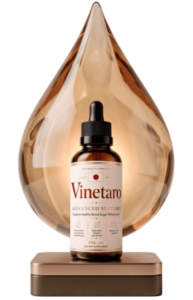
Vinetaro has been gaining attention through online advertisements promoting it as a liquid supplement for blood sugar support, glucose metabolism, energy and general metabolic wellness. The product is marketed as a convenient alternative to conventional capsules, with claims that appeal particularly to consumers concerned about blood sugar, sugar cravings and insulin function.
But there is one important question that should come before everything else.
Is Vinetaro actually a regulated mainstream medical supplement, or is it simply another dietary supplement being heavily marketed online?
The answer is fairly straightforward.
Vinetaro is marketed as a dietary supplement, not as an FDA-approved medicine or established medical treatment for diabetes. The distinction matters because the U.S. Food and Drug Administration does not approve dietary supplements for safety and effectiveness before they are marketed. FDA information on dietary supplements
Vinetaro marketing may mention manufacturing in an FDA-registered facility, but facility registration should not be confused with FDA approval of the finished product. The FDA specifically explains that dietary supplements are regulated differently from drugs and generally enter the market without the type of premarket approval required for prescription medicines. FDA’s explanation of “FDA approved” claims
That does not automatically make Vinetaro a scam.
It simply means consumers need to separate the product’s marketing claims, ingredient research and actual clinical evidence before deciding whether it deserves the hype.
This Vinetaro supplement review takes a closer look at the product claims, effectiveness, customer reviews, regulatory status, potential concerns and whether Vinetaro appears worth buying.
Is Vinetaro a Regulated Mainstream Medical Supplement?
Vinetaro is regulated as a dietary supplement rather than as a conventional medical treatment.
That distinction is important because dietary supplements do not go through the same premarket approval process as prescription and over-the-counter medicines.
According to the FDA, the agency does not have the authority to approve dietary supplements for safety and effectiveness before they reach consumers. Manufacturers are responsible for ensuring their products comply with applicable safety and labeling requirements, while the FDA’s oversight is largely focused on postmarket monitoring and enforcement. FDA questions and answers on dietary supplements
So Vinetaro should not be placed in the same category as established diabetes medicines such as metformin or insulin.
It is better described as an online dietary supplement marketed for blood sugar and metabolic support.
This is also why the phrase “FDA registered” needs to be handled carefully.
A manufacturing facility may be registered with the FDA without the individual supplement being FDA approved. The FDA explicitly states that it does not approve dietary supplements for safety and effectiveness. FDA 101 on dietary supplements
Is Vinetaro FDA Approved?
There is no evidence that Vinetaro is an FDA-approved drug for diabetes or blood sugar control.
This is an important distinction because supplement advertisements sometimes use regulatory language that can sound more impressive than it actually is.
The FDA states clearly that it does not approve dietary supplements for safety and effectiveness before they are sold. Is it really FDA approved?
Therefore, claims such as “made in an FDA-registered facility” should not be rewritten as “FDA approved.”
They are not the same thing.
The FDA also explains that products claiming to diagnose, treat, cure or prevent a disease can fall under the legal definition of a drug and become subject to drug requirements. FDA guidance on dietary supplement claims
This becomes particularly relevant when a supplement is advertised around diabetes.
What Does Vinetaro Claim to Do?
Vinetaro is promoted primarily around blood sugar and metabolic health.
Depending on the Vinetaro marketing page being viewed, claims may include support for healthy blood glucose levels, insulin function, carbohydrate metabolism, energy and sugar cravings.
Some product pages also emphasize botanical ingredients as part of a natural approach to metabolic wellness.
There is nothing unusual about a dietary supplement making structure/function claims such as supporting normal body functions. However, there is a major regulatory difference between saying a product supports glucose metabolism and saying that it treats or reverses diabetes.
The FDA explains that dietary supplement structure/function claims must be truthful and not misleading, and products making such claims must carry the required disclaimer that the FDA has not evaluated the claim and that the product is not intended to diagnose, treat, cure or prevent disease. FDA structure/function claims guidance
This is why readers should be cautious when advertisements move from general wellness language into promises about reversing a medical condition.
Vinetaro Ingredients and Formula Transparency
Another area worth checking is the actual formulation.
Vinetaro information available online has not always been completely consistent across different sales pages. Some pages have presented combinations involving ingredients such as chromium, Gymnema, African mango, green tea, maca and Panax ginseng, while other pages have presented formulations involving Gymnema, banaba, bitter melon, cinnamon, licorice, juniper, chromium and cayenne.
That discrepancy deserves attention.
It does not automatically prove that Vinetaro is fraudulent because formulations can change. However, consumers should know exactly which formulation they are purchasing.
The best approach is to check the physical bottle’s Supplement Facts panel before taking the product.
The FDA explains that dietary supplement labels should provide information such as serving size, servings per container, dietary ingredients and the amount of those ingredients per serving. FDA 101 dietary supplement labeling information
A product containing an ingredient is also not necessarily equivalent to the doses used in clinical research.
That distinction becomes important when evaluating whether the product can realistically deliver the benefits suggested in advertisements.
Vinetaro Effectiveness and Scientific Evidence
The effectiveness question is more complicated.
Some ingredients associated with Vinetaro have been researched for their possible effects on glucose metabolism and other aspects of metabolic health.
That does not automatically mean that Vinetaro itself has been clinically proven.
This is one of the most common problems with supplement advertising.
A company can point to scientific research involving individual ingredients and create the impression that the finished commercial product has undergone the same level of testing.
Those are two different things.
For Vinetaro to have strong product-level evidence, ideally there would be independent randomized controlled trials testing the finished Vinetaro formulation at its recommended dose and measuring clinically meaningful outcomes.
I could not establish strong independent clinical evidence showing that Vinetaro itself reliably reverses diabetes, replaces diabetes medication or produces major long-term improvements in HbA1c.
That does not prove that the product has no effect.
It means the evidence is not strong enough to justify treating Vinetaro as a clinically established diabetes therapy.
The FDA itself emphasizes that it does not review dietary supplements for effectiveness in the same way it evaluates conventional medicines before they enter the market. FDA information about supplement regulation
Vinetaro and Blood Sugar Claims
The blood sugar angle is probably the biggest reason consumers encounter Vinetaro in the first place.
There is legitimate scientific interest in several nutritional and botanical compounds that may influence glucose metabolism.
However, someone with diabetes needs considerably more than a supplement advertisement.
Diabetes management may involve blood glucose monitoring, HbA1c testing, medication, nutrition, physical activity, weight management and assessment of cardiovascular and kidney health depending on the individual.
A supplement cannot replace that clinical process.
The FDA has previously taken action against companies marketing dietary supplements with claims that they could treat or cure diabetes. The agency has warned that relying on unproven products instead of appropriate diabetes treatment can delay effective care and increase health risks. FDA warning on illegally sold diabetes treatments
That is the line consumers should watch carefully.
Vinetaro Customer Reviews
Vinetaro’s sales pages feature positive customer testimonials describing experiences involving energy, sugar cravings, blood sugar and general wellness.
These testimonials may be useful for understanding how the product is presented to consumers, but they should not be treated as equivalent to independent clinical evidence.
A customer review cannot establish whether Vinetaro caused an improvement.
For example, someone may have started taking Vinetaro while simultaneously changing their diet, losing weight, exercising more frequently, taking prescribed medication or simply monitoring their blood glucose more carefully.
Any of those factors could influence the outcome.
This is why customer testimonials should be treated as anecdotal evidence.
They can tell us that people claim to have experienced certain benefits.
They cannot establish that the product will produce those benefits consistently across a larger population.
Are Vinetaro Customer Reviews Independently Verified?
The customer reviews presented on Vinetaro’s own sales pages are controlled by the seller, so they should be interpreted cautiously.
I would not use a large number of testimonials as proof that Vinetaro works.
The same principle applies to star ratings.
A supplement with thousands of positive reviews can still lack high-quality clinical evidence.
Conversely, a legitimate supplement may have limited online reviews simply because it has not been aggressively marketed.
The better question is not “How many people say it worked?”
The better question is “What independent evidence shows that the product itself works?”
That is a much harder standard, but it is the standard worth applying to health products.
Vinetaro Marketing Claims and Red Flags
The strongest concern surrounding Vinetaro is not necessarily the fact that it contains botanical ingredients.
The bigger issue is the way blood sugar supplements can be marketed online.
The FDA warns that disease-treatment claims can change the regulatory status of a product. A dietary supplement cannot simply be presented as a treatment for a disease while avoiding the requirements that apply to drugs. FDA dietary supplement claim requirements
Consumers should therefore be cautious around advertisements suggesting that Vinetaro can:
- Reverse diabetes
- Replace prescribed medication
- Cure high blood sugar
- Eliminate the need for insulin
- Produce dramatic glucose reductions without lifestyle changes
- Deliver a guaranteed medical outcome
Those claims would require considerably stronger evidence than ordinary supplement marketing.
The FDA has previously warned companies over dietary supplements marketed with diabetes treatment claims, which shows that this is not merely a theoretical concern. FDA and FTC warning on diabetes supplement claims
Vinetaro Safety and Possible Side Effects
“Natural” does not automatically mean harmless.
Dietary supplements can interact with medicines and medical conditions. The FDA specifically advises consumers to speak with a doctor, pharmacist or other qualified healthcare professional before using supplements, particularly because interactions are possible. FDA questions and answers on dietary supplement safety
This matters even more for a product marketed around blood sugar.
Someone taking insulin or another glucose-lowering medicine should not casually add a blood sugar supplement without professional guidance.
The exact risks will depend on the ingredients, quantities, the person’s health status and other medications or supplements being taken.
People who are pregnant, breastfeeding or managing a chronic medical condition should also seek appropriate professional advice before using Vinetaro.
Is Vinetaro Worth the Hype?
Vinetaro is not completely without a scientific rationale.
Some of the ingredients associated with blood sugar and metabolic supplements have been investigated in scientific research.
But the leap from “this ingredient has been studied” to “this product can treat diabetes” is where the marketing can get ahead of the evidence.
That is the main issue.
Vinetaro may be reasonable for an adult who understands that they are purchasing a dietary supplement and not a medical treatment.
It is much harder to justify purchasing it because an advertisement creates the impression that it can reverse diabetes or replace medication.
My verdict is therefore cautious rather than dismissive.
I would not label Vinetaro an outright scam based solely on its status as a dietary supplement. At the same time, I would not describe it as a clinically proven mainstream medical treatment.
The evidence does not currently justify that level of confidence.
Vinetaro Pros and Cons
Potential Vinetaro Pros
- Convenient liquid dropper format
- Contains nutritional and botanical ingredients associated with metabolic research
- May appeal to consumers who prefer liquid supplements
- Marketed for general metabolic and blood sugar support
- Available with refund guarantees on some sales pages
Potential Vinetaro Cons
- Not an FDA-approved medical treatment
- FDA facility registration should not be confused with product approval
- Strong independent clinical evidence on the finished product is difficult to establish
- Customer testimonials are not equivalent to controlled clinical trials
- Ingredient information should be checked carefully because online formulations may differ
- Potential interactions are relevant for people taking blood sugar medication
- Aggressive diabetes-related advertising should be treated cautiously
What to Check Before Buying Vinetaro
Before buying Vinetaro, do not start with the sales video.
Start with the label.
Check the exact ingredient list.
Check the quantity of every active ingredient.
Check the serving size.
Check the manufacturer’s information.
Check the lot number and expiration date.
Check the return policy.
Check the final price before submitting payment.
Most importantly, check what the product actually promises.
If the advertisement makes a medical promise that the official product label does not support, that is a reason to slow down.
The FDA recommends carefully reading dietary supplement labels and discussing supplement use with a healthcare professional when appropriate. FDA consumer guidance on dietary supplements
Vinetaro Frequently Asked Questions
Is Vinetaro FDA approved?
No evidence establishes Vinetaro as an FDA-approved diabetes medicine. Vinetaro is marketed as a dietary supplement. The FDA states that it does not approve dietary supplements for safety and effectiveness before they reach the market. FDA “Is it really FDA approved?” guide
Is Vinetaro a medical supplement?
Vinetaro is better classified as a dietary supplement rather than a mainstream medical treatment. It should not be considered equivalent to prescription diabetes medication.
Does Vinetaro treat diabetes?
Vinetaro should not be treated as a diabetes therapy. The FDA explains that dietary supplements cannot legally make disease-treatment claims while simply being marketed as dietary supplements. FDA structure/function claims guidance
Does Vinetaro lower blood sugar?
Some ingredients associated with blood sugar supplements have been studied for possible glucose-related effects. However, that does not establish that the finished Vinetaro product will reliably lower blood glucose or HbA1c.
Are Vinetaro customer reviews reliable?
They may represent genuine individual experiences, but seller-published testimonials are not independent clinical evidence. They should therefore be considered anecdotal.
Can Vinetaro replace metformin or insulin?
No. Consumers should never discontinue prescribed diabetes medication simply because an online supplement claims to support blood sugar.
Is Vinetaro safe?
Safety depends on the actual formulation, dose, health status and medications being used. Supplements can interact with medicines, which is why the FDA recommends discussing supplement use with a healthcare professional. FDA guidance on supplement and medication interactions
Is Vinetaro a mainstream supplement?
Not in the medical sense. It is an online dietary supplement marketed around metabolic and blood sugar support.
Does Vinetaro have scientific evidence?
There is scientific literature surrounding some ingredients commonly associated with the product category. That is different from having strong clinical evidence proving that the finished Vinetaro formula treats a medical condition.
Is Vinetaro worth buying?
That depends on expectations. Someone looking for a dietary supplement may decide that the formulation is worth considering. Someone looking for a clinically proven diabetes treatment should not rely on Vinetaro.
Final Verdict on Vinetaro Supplement
Vinetaro sits in the increasingly crowded market between nutritional supplements and medical-style wellness marketing.
The product is not a mainstream FDA-approved medical treatment.
It is marketed as a dietary supplement, and the FDA does not pre-approve dietary supplements for safety and effectiveness in the same way it approves drugs. FDA information for consumers using dietary supplements
The manufacturer’s reference to an FDA-registered facility should therefore be understood for what it is. It does not mean that the FDA has tested Vinetaro and confirmed that it works.
There are also legitimate questions around the level of independent evidence for the finished product, the reliability of seller-controlled testimonials and the way blood sugar claims are presented in online marketing.
That does not automatically make Vinetaro fraudulent.
It simply means the product deserves a skeptical, evidence-based assessment rather than blind trust or instant dismissal.
For someone interested in general metabolic support, Vinetaro may be considered as a dietary supplement after checking the exact formulation and discussing it with an appropriate healthcare professional.
For anyone with diabetes, however, the priority should remain evidence-based medical care, appropriate nutrition, physical activity, glucose monitoring and prescribed treatment.
Bottom line: Vinetaro may have an interesting supplement formula, but the available evidence does not justify treating it as a proven diabetes solution. The hype is stronger than the clinical evidence currently supports.