
StopWatt Review 2026
StopWatt is marketed as a plug-in electricity-saving device that supposedly helps households reduce wasted electricity and lower their monthly power bills without requiring major changes to appliances or daily electricity usage.
That sounds like exactly the kind of product many households would want, especially when electricity costs keep rising. The marketing around StopWatt also uses technical-sounding explanations involving power stabilization, electrical efficiency and wasted energy, making the device appear more sophisticated than an ordinary plug-in gadget.
But does StopWatt really help reduce power costs?
The answer is not as impressive as the advertising makes it sound.
There is a legitimate electrical engineering concept behind some of the terminology used in energy-saving products, particularly power factor correction. However, that does not automatically mean that a small plug-in device can reduce the number of kilowatt-hours consumed by an ordinary household or produce the dramatic bill reductions sometimes advertised.
Current customer feedback is also a major concern. BBB currently shows StopWatt with an average customer review rating of 1.1 out of 5 from 49 reviews, while its BBB profile lists 94 complaints over the past three years.
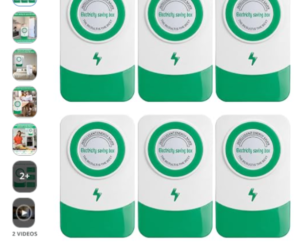
So, is StopWatt worth the hype? Let’s look at the claims, effectiveness, customer reviews and the actual economics behind the product.
StopWatt Review and What the Product Claims
StopWatt is promoted as a device that can be plugged into an electrical outlet to improve the efficiency of electricity flowing through a home.
The marketing suggests that the device can reduce wasted electricity, stabilize electrical current and help appliances operate more efficiently.
Some versions of the advertising also promote large potential savings on electricity bills.
This is where consumers need to slow down and separate electrical terminology from measurable energy savings.
Power factor correction is a real technology. UL Solutions explains that power factor can matter in electrical systems and that power factor correction equipment has legitimate applications, particularly in industrial and larger commercial installations. However, UL also states that it does not validate manufacturers’ claims that power factor correction equipment will reduce energy consumption or energy costs.
That distinction is important.
A product can use a real electrical concept while its particular consumer savings claims remain unproven.
StopWatt Review and How Electricity Bills Actually Work
To understand why the StopWatt claim deserves scrutiny, it helps to understand what consumers are actually paying for.
Electricity consumption is generally measured in kilowatt-hours, or kWh. The more electrical energy your household appliances consume over time, the more energy your meter records.
A device that genuinely reduces household electricity costs therefore needs to produce a measurable reduction in the energy that is ultimately being consumed and billed.
Simply changing the electrical characteristics of a circuit does not automatically mean that refrigerators, air conditioners, televisions, kettles, pumps, irons or other appliances suddenly require dramatically less energy to perform the same work.
The U.S. Department of Energy explains the basic relationship between electricity consumption and kilowatt-hours, while ENERGY STAR recommends focusing on actual energy efficiency improvements and efficient appliances when attempting to lower household energy costs.
This is why the claim that a small plug-in device can slash an ordinary household’s electricity bill deserves independent testing rather than simply accepting the advertising.
StopWatt Review and the Power Factor Explanation
The power factor argument is probably the most technical part of the StopWatt marketing.
Power factor describes the relationship between useful electrical power and apparent power in AC electrical systems. Poor power factor can increase current requirements and create additional losses in some electrical systems.
However, the existence of poor power factor does not mean every household is being charged for all of that apparent power in the same way.
UL Solutions notes that utility penalties for poor power factor can apply to certain medium and large primary-metered customers. It also explains that these situations are different from simply assuming that residential consumers will automatically receive substantial electricity-cost savings from power factor correction.
This is one of the biggest weaknesses in the StopWatt argument.
The technology behind power factor correction is legitimate.
The leap from that technology to a promise of major household bill reductions is a completely different claim.
StopWatt Review and Does StopWatt Really Reduce Power Consumption
Based on the evidence currently available, there is not convincing independent evidence showing that StopWatt consistently produces the substantial electricity savings promoted in its marketing.
This does not mean that every electrical component inside the device is necessarily incapable of doing anything.
It means the important consumer question remains unanswered.
How much measurable energy does the device actually save in a normal household, and under what conditions?
A convincing answer would require properly controlled testing.
For example, researchers could monitor the same household for comparable periods while controlling for appliance usage, weather, occupancy and other variables. Electricity consumption would then need to be measured with and without the device.
That kind of evidence would be much more useful than testimonials saying that someone’s bill supposedly dropped after purchasing StopWatt.
At present, the evidence available to consumers does not establish that StopWatt can reliably deliver dramatic reductions in residential electricity consumption.
StopWatt Review and Customer Feedback
Customer feedback is where the picture becomes even more concerning.
The current BBB review page gives StopWatt an average customer rating of 1.1 out of 5 based on 49 customer reviews. Recent reviews include complaints from customers who say the product did not reduce their electricity bills, while others report difficulties cancelling orders or obtaining refunds.
Several 2026 reviews are particularly direct.
Some customers reported seeing no difference in their electricity bills after using the device. Others claimed their bills actually increased.
One customer reported purchasing two StopWatt devices and receiving different branded devices instead. Another complained about difficulty getting a full refund after attempting to cancel an order.
These customer experiences cannot by themselves prove whether the device technically works because electricity bills are influenced by many factors.
However, the consistency of the complaints is difficult to ignore.
StopWatt Review and Trustpilot Ratings
The Trustpilot feedback is similarly unfavorable.
The current StopWatt Trustpilot profile shows a 1.4 out of 5 TrustScore from 73 reviews, with 95 percent of the displayed reviews rated one star. Trustpilot’s recent reviews include customers saying the device did not reduce their electricity bills and that their bills remained unchanged or increased.
There are also complaints concerning the ordering process.
Some reviewers claim that additional products appeared during checkout, while others reported difficulties cancelling orders or obtaining refunds.
It is worth stressing that online reviews are not the same thing as laboratory evidence. Review platforms can contain genuine experiences, misunderstandings and occasionally unreliable reports.
Still, when the overwhelming majority of recent reviews are negative, consumers should treat that as a meaningful warning rather than ignoring it.
StopWatt Review and BBB Complaints
The BBB complaint record adds another layer to the picture.
The BBB currently lists 94 complaints within the previous three years, including 30 complaints closed during the previous 12 months. The complaints cover issues involving products, refunds, customer service and ordering.
Some recent complaints describe customers purchasing the device specifically to reduce their electricity bills and reporting that their bills did not change.
There are also complaints from customers who say devices stopped working or failed to operate after being plugged in.
Interestingly, some BBB complaints show that refunds were eventually issued after the complaint was raised. That does not erase the original complaint, but it does show why consumers should preserve order confirmations, payment records, emails and cancellation requests if they decide to purchase.
StopWatt Review and Refund Concerns
The refund process is another area potential buyers should examine carefully.
The BBB profile publishes a refund policy stating that customers can request refunds through the company’s support channels. However, several customer complaints describe difficulty cancelling purchases or obtaining refunds.
Some customers also complain about additional charges, products or memberships appearing during the checkout process.
These are customer allegations and should not automatically be interpreted as proof of deliberate fraud.
However, they are still relevant when assessing whether a product is worth purchasing.
A product advertised as a simple electricity-saving device should have a straightforward purchase process with a clear price, clearly disclosed extras and an uncomplicated refund procedure.
Consumers should therefore review the final checkout page carefully before submitting payment.
StopWatt Review and Celebrity Endorsement Claims
Another issue worth watching is the use of celebrity names and endorsement-style advertising.
Online reviews have raised questions about claims connecting StopWatt with well-known personalities and television programs. Trustpilot currently contains reviews questioning celebrity-related claims and the authenticity of some of the promotional material.
A celebrity appearing in an advertisement does not automatically mean that the person has invested in, tested or endorsed the product.
This is particularly important with products that use celebrity authority to create an impression of legitimacy.
Consumers should verify endorsements independently rather than relying on screenshots, promotional videos or advertisements.
StopWatt Review and Is the Device Regulated
StopWatt should not automatically be regarded as a mainstream medically, scientifically or utility-approved energy-saving technology simply because its advertising uses electrical terminology.
There are legitimate electrical devices designed for power factor correction, voltage regulation, surge protection and other electrical applications.
However, product safety certification and proof of energy-saving performance are two different things.
UL Solutions specifically states that its evaluation of power factor correction equipment focuses on risks such as fire, electric shock and injury and does not validate manufacturers’ energy consumption or cost reduction claims.
This is an important distinction for consumers.
A safety certification, where applicable, should not be interpreted as proof that a product will reduce an electricity bill by a particular percentage.
StopWatt Review and Is It Safe to Leave Plugged In
Consumers should also avoid assuming that every plug-in electrical device is harmless simply because it is small.
A device that remains connected to mains electricity continuously should have appropriate electrical safety certification for the market in which it is being used.
Some StopWatt customer complaints describe devices failing or not functioning properly.
If any electrical plug-in device becomes unusually hot, produces a burning smell, sparks, melts, makes unusual noises or repeatedly trips a circuit breaker, it should be unplugged and inspected by a qualified electrician.
There is no reason to gamble with electrical safety for the sake of an unverified energy-saving promise.
StopWatt Review and Better Ways to Reduce Power Costs
There are considerably less glamorous ways to reduce electricity costs, but they have one major advantage.
They are measurable.
ENERGY STAR recommends improving home energy efficiency through measures such as efficient lighting, energy-efficient appliances and improvements to heating, cooling and insulation.
For households, practical strategies can include replacing inefficient bulbs with LEDs, reducing unnecessary standby consumption, using efficient appliances and paying attention to the appliances that consume the most electricity.
ENERGY STAR notes that certified LED bulbs can use up to 90 percent less energy than standard bulbs, while efficient appliances can also reduce operating costs.
The principle is simple.
Instead of trying to make electricity disappear after it enters the house, reduce the amount of electricity the household actually needs.
That is a much easier claim to measure.
StopWatt Review and Who Should Be Most Careful
People with unusually high electricity bills are probably the most vulnerable to this type of marketing.
When a monthly electricity bill becomes painful, a product promising 30, 40 or 50 percent savings can look like an obvious solution.
But that is precisely when consumers need to be more skeptical.
Before purchasing StopWatt, identify what is actually responsible for the electricity consumption.
A large refrigerator, freezer, air conditioner, water heater, electric cooker, pressing iron, pump or other high-power appliance can consume vastly more electricity than a small electronic gadget.
ENERGY STAR similarly recommends focusing on the areas of the home where the greatest energy savings can be achieved.
StopWatt Review and Is StopWatt Worth the Hype
So, does StopWatt really help reduce power costs?
There is currently not enough credible independent evidence to conclude that it reliably reduces ordinary household electricity bills.
The technical explanation surrounding power factor has some legitimate electrical engineering foundations, but that does not prove that this particular consumer product can deliver the large savings advertised.
The customer evidence is also poor.
BBB currently shows a 1.1 out of 5 customer rating from 49 reviews and 94 complaints over three years. Trustpilot currently shows a 1.4 out of 5 TrustScore from 73 reviews, with 95 percent of the displayed reviews rated one star.
That is not the profile I would expect from a genuinely impressive household energy-saving product.
There are isolated positive experiences online, but they do not outweigh the lack of convincing independent evidence and the volume of negative customer feedback.
StopWatt Review Final Verdict
Verdict: Not recommended based on the current evidence
StopWatt has an attractive proposition.
Plug it into an outlet, supposedly reduce electrical waste and watch the electricity bill fall.
Unfortunately, the available evidence does not establish that this actually happens on a reliable household-wide basis.
The underlying concept of power factor correction is real, but the leap from legitimate electrical engineering to dramatic residential electricity savings is not adequately demonstrated.
The current customer feedback makes the situation even less attractive. Complaints about ineffective results, unchanged or higher electricity bills, ordering problems and refund difficulties appear repeatedly across BBB and Trustpilot.
For someone genuinely trying to reduce power costs, I would put the money toward measurable energy-efficiency improvements instead.
StopWatt may sound like an easy shortcut, but the evidence currently does not justify the hype.
Frequently Asked Questions About StopWatt Review
Does StopWatt really reduce power costs?
There is currently insufficient independent evidence to show that StopWatt reliably reduces household electricity consumption or electricity bills by the levels suggested in its marketing.
Does StopWatt really reduce electricity usage?
The available evidence does not convincingly demonstrate a significant reduction in household kilowatt-hour consumption. The product’s marketing should therefore be treated cautiously.
Is StopWatt a scam?
It is safer to avoid making a definitive legal accusation based solely on online reviews. StopWatt is a physical product that is sold online, but its advertised energy-saving performance is not convincingly supported by independent evidence and the company has accumulated substantial customer complaints.
What do StopWatt customer reviews say?
Recent customer reviews are predominantly negative. Common complaints include no noticeable reduction in electricity bills, higher bills, problems with the product, difficulties cancelling orders and problems obtaining refunds.
What is the StopWatt Trustpilot rating?
The current Trustpilot profile shows a 1.4 out of 5 TrustScore from 73 reviews, with 95 percent of the displayed reviews rated one star.
What is the StopWatt BBB rating?
The BBB customer review page currently shows an average customer rating of 1.1 out of 5 from 49 reviews. The BBB business profile lists a B rating but also reports 94 complaints over the previous three years. These are separate measures and should not be confused with the customer-review score.
Can power factor correction really save electricity?
Power factor correction is a legitimate electrical technology and can have financial value in certain commercial or industrial situations, particularly where utilities impose power-factor penalties. However, that does not establish that a small plug-in consumer device will substantially reduce a normal household’s electricity bill.
What is a better way to reduce power costs?
Focus on the appliances and systems actually consuming electricity. Efficient lighting, energy-efficient appliances, reducing unnecessary standby use and improving home efficiency are more measurable approaches. ENERGY STAR provides practical guidance on household energy efficiency and certified products.
Should you buy StopWatt?
Based on the current evidence, I would not recommend buying StopWatt primarily for the promise of dramatically lowering an electricity bill.
The potential savings are not convincingly demonstrated, while the customer feedback and complaint history provide additional reasons for caution.