
FertiFlow Drops Review 2026 – Ingredients, Benefits, Side Effects, Customer Reviews and Does It Really Work?
Fertility supplements have become increasingly popular among women looking for nutritional support while trying to conceive. From products claiming to improve egg quality to formulations promising hormonal balance and more regular menstrual cycles, the market continues to attract consumers searching for natural ways to support reproductive health. One product gaining attention in this category is FertiFlow Glow & Grow Drops.
FertiFlow Drops is marketed as a liquid fertility supplement containing a combination of 15 nutrients and botanical ingredients intended to support reproductive wellness, healthy stress responses, cellular energy and hormonal balance. Its promotional message particularly targets women experiencing irregular cycles, concerns about egg quality, PCOS-related symptoms and difficulties conceiving.
The product also uses pregnancy success stories and testimonials from women who reportedly experienced positive changes after incorporating the drops into their fertility routines. These claims may sound encouraging, particularly for women who have spent months or years trying to conceive.
However, a product containing recognised vitamins, minerals and herbal extracts is not automatically an effective fertility treatment. The actual ingredient quantities, scientific evidence, formulation quality and potential side effects all deserve careful consideration.
This FertiFlow Drops review examines its advertised ingredients, health claims, potential benefits, safety concerns, customer feedback, pricing and refund policy to determine whether the supplement is worth the attention it receives.
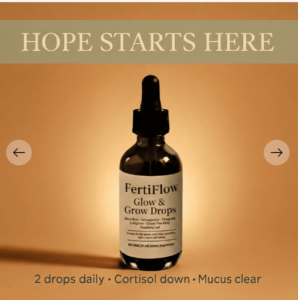
What Is FertiFlow Drops?
FertiFlow Glow & Grow Drops is a liquid dietary supplement marketed primarily towards women interested in supporting their reproductive health and preparing their bodies for conception.
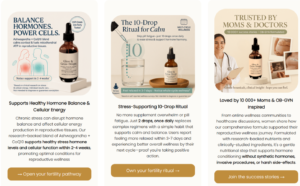
The manufacturer promotes the product as a nutritional formula designed to address several aspects of reproductive wellness, particularly stress management, cellular energy production, hormonal health and ovarian function.
Unlike conventional fertility supplements sold in capsule or tablet form, FertiFlow comes in a liquid formulation that can be taken directly under the tongue or mixed with water, juice or smoothies.
According to the manufacturer’s promotional information, the formula combines 15 advertised nutrients and botanical ingredients selected for their potential nutritional and physiological functions.
Some of the benefits promoted on the official website include
- Supporting healthy hormonal balance.
- Promoting healthy egg quality.
- Supporting normal cellular energy production.
- Encouraging a healthy stress response.
- Supporting reproductive wellness.
- Promoting healthy menstrual cycle patterns.
- Providing antioxidant support.
- Supporting general nutritional health while trying to conceive.
The manufacturer also promotes a 90-day routine, suggesting that consistent supplementation may support reproductive wellness over several menstrual cycles.
However, these are product marketing claims rather than established clinical outcomes. There is currently insufficient publicly verifiable evidence to establish that FertiFlow itself increases pregnancy rates or improves live birth outcomes.
Official product information is available at FertiFlow Glow & Grow Drops.
FertiFlow Drops Ingredients and Their Functions
One of the most important aspects of evaluating a fertility supplement is understanding what goes into its formulation.
FertiFlow advertises 15 ingredients, combining vitamins, minerals, antioxidants, amino acids and botanical extracts.
The ingredients listed by the manufacturer include the following.
| Advertised ingredient | Main nutritional or physiological function |
|---|---|
| Coenzyme Q10 (CoQ10) | Mitochondrial energy production and antioxidant activity |
| Myo-inositol | Cellular signalling and metabolic function |
| N-acetylcysteine (NAC) | Glutathione production and antioxidant support |
| Ashwagandha | Stress response and general wellness |
| L-arginine | Nitric oxide production and blood circulation |
| Maca root | Traditional vitality and wellness support |
| Raspberry leaf | Traditional botanical women’s wellness support |
| Fenugreek | Traditional botanical and metabolic support |
| Selenium | Antioxidant enzyme function |
| Vitamin D3 | Bone, immune and cellular health |
| Folate | DNA synthesis and normal cell division |
| Vitamin B12 | Red blood cell formation and neurological function |
| Choline | Cell membrane structure and normal metabolism |
| Vitamin C | Antioxidant protection and collagen formation |
| Zinc | Immune function and normal reproductive physiology |
Although several of these ingredients have been investigated in reproductive health research, the manufacturer does not consistently disclose verifiable individual ingredient quantities in its publicly available product information.
This is a significant limitation because the amount of an ingredient determines whether a supplement can reasonably be compared with the quantities investigated in scientific studies.
CoQ10 in FertiFlow Drops
Coenzyme Q10 is one of the more recognisable ingredients in fertility-related supplements.
It is a naturally occurring compound involved in mitochondrial energy production. Mitochondria are responsible for generating much of the energy required by cells to perform their normal functions.
CoQ10 also has antioxidant properties that help protect cells against oxidative stress.
Its role in reproductive health has attracted research interest because ovarian cells require adequate energy production to support normal cellular processes.
Some studies have investigated CoQ10 supplementation in women undergoing assisted reproductive treatments, particularly those with diminished ovarian reserve.
However, the findings should not be overstated. Research involving CoQ10 does not establish that every supplement containing the ingredient improves egg quality or increases the likelihood of pregnancy.
Without knowing the quantity of CoQ10 in FertiFlow, it is difficult to determine whether its formulation provides an amount comparable to those used in relevant research.
Myo-Inositol in FertiFlow Drops
Myo-inositol is a naturally occurring compound involved in cellular signalling and insulin-related metabolic processes.
It is particularly popular in supplements marketed towards women with polycystic ovary syndrome (PCOS).
Some women with PCOS experience insulin resistance, irregular ovulation and menstrual cycle disturbances. Myo-inositol has therefore attracted scientific interest because of its potential role in metabolic and reproductive health.
However, its effectiveness for fertility outcomes remains uncertain.
The 2023 International Evidence-Based Guideline for PCOS explains that inositol may have some potential metabolic benefits, but its clinical benefits for ovulation and reproductive outcomes remain limited.
The guideline also states that inositol should be considered experimental as a fertility therapy for women with PCOS-related infertility.
This means that the presence of myo-inositol in FertiFlow should not be interpreted as proof that the product can treat PCOS, restore ovulation or resolve infertility.
Read the international PCOS evidence-based guidelines.
N-Acetylcysteine (NAC) in FertiFlow Drops
N-acetylcysteine, commonly known as NAC, is a compound involved in the production of glutathione, an important antioxidant within the body.
Glutathione contributes to the protection of cells against oxidative damage.
NAC has been investigated in several areas of reproductive and metabolic health, including PCOS and insulin-related metabolic disturbances.
Its potential benefits have attracted research interest because oxidative stress may influence several physiological processes involved in reproductive function.
However, evidence from individual NAC studies cannot automatically be transferred to FertiFlow.
The effectiveness of a finished supplement depends on its formulation, ingredient quantities, quality and the population using it.
Without a complete ingredient breakdown, the contribution of NAC to FertiFlow’s advertised benefits remains difficult to establish.
Ashwagandha in FertiFlow Drops
Ashwagandha is a botanical ingredient traditionally used in Ayurvedic medicine.
It is commonly included in wellness supplements marketed for stress management, relaxation and general vitality.
FertiFlow promotes ashwagandha as part of its approach to supporting healthy stress hormone levels.
Some research suggests that certain ashwagandha preparations may help with stress-related outcomes. However, there is insufficient high-quality evidence to establish that ashwagandha improves female fertility.
There are also important safety considerations.
According to the National Center for Complementary and Integrative Health, ashwagandha should be avoided during pregnancy and breastfeeding. It may also interact with thyroid medications, sedatives, blood pressure medication and certain other medicines. Rare cases of liver injury have been reported.
These concerns are particularly relevant to a supplement marketed towards women who may become pregnant while using it.
Read the NCCIH ashwagandha safety information.
L-Arginine in FertiFlow Drops
L-arginine is an amino acid involved in the production of nitric oxide.
Nitric oxide helps regulate blood vessel relaxation and circulation.
FertiFlow includes L-arginine as part of its reproductive wellness formulation, promoting its potential role in supporting circulation.
Although L-arginine has been investigated in different areas of cardiovascular and reproductive health, its inclusion does not establish that the complete product improves uterine blood flow, implantation or pregnancy outcomes.
Its potential interaction with blood pressure medication and other treatments should also be considered.
Maca Root and Fenugreek in FertiFlow Drops
Maca root and fenugreek are botanical ingredients commonly found in traditional wellness and reproductive health preparations.
Maca is traditionally associated with vitality and general wellness, while fenugreek has been investigated for different metabolic and physiological effects.
However, strong clinical evidence supporting their ability to improve female fertility remains limited.
Fenugreek may also cause gastrointestinal discomfort, allergic reactions and changes in blood glucose levels.
Their presence in FertiFlow should therefore be viewed as additional botanical support rather than proof of improved reproductive outcomes.
Folate, Vitamin B12, Vitamin D3 and Other Nutrients in FertiFlow Drops
The vitamin and mineral components of FertiFlow contribute to several essential physiological functions.
Folate is particularly important for women who may become pregnant because it supports DNA synthesis and normal cell division during early fetal development.
The Centers for Disease Control and Prevention recommends 400 micrograms of folic acid daily for women capable of becoming pregnant to help prevent neural tube defects.
Vitamin B12 supports red blood cell formation and neurological function, while vitamin D contributes to bone health, immune function and normal cellular processes.
Zinc and selenium also participate in several enzymatic and antioxidant functions.
However, including these nutrients in a fertility supplement does not automatically make the formulation sufficient to meet individual nutritional requirements.
The quantities supplied must be established before the product can be assessed as a meaningful source of these nutrients.
Read the CDC folic acid recommendations.
FertiFlow Drops Health Claims and Advertised Benefits
FertiFlow promotes several benefits connected to female reproductive wellness.
Although some ingredients have legitimate scientific research behind them, the claims need to be examined individually.
FertiFlow Drops and Hormonal Balance
The manufacturer suggests that the formula supports healthy hormonal balance by combining ashwagandha, maca, fenugreek and other nutrients.
Hormonal regulation involves several interconnected systems, including the hypothalamus, pituitary gland, ovaries and thyroid gland.
Factors such as PCOS, thyroid disorders, nutritional deficiencies, stress and certain medications may influence hormonal patterns.
Some ingredients in FertiFlow have been investigated for metabolic or stress-related effects. However, there is insufficient clinical evidence demonstrating that the finished formulation regulates reproductive hormones.
A product should not be considered a treatment for hormonal disorders simply because it contains botanical extracts and vitamins.
FertiFlow Drops and Egg Quality
Another major selling point is the manufacturer’s claim that FertiFlow supports healthy egg quality.
CoQ10 and other antioxidants are frequently discussed in reproductive research because oxidative stress and mitochondrial function may influence ovarian cellular processes.
However, egg quality is influenced by several factors, including age, genetics, ovarian biology and underlying reproductive conditions.
There is currently no reliable clinical evidence demonstrating that FertiFlow improves human egg quality or reverses age-related ovarian changes.
The claim should therefore be considered an advertised benefit rather than an established outcome.
FertiFlow Drops and PCOS Support
FertiFlow contains myo-inositol and NAC, two ingredients that have been investigated in women with PCOS.
Their potential metabolic effects have attracted interest, particularly in relation to insulin sensitivity and reproductive function.
Nevertheless, the 2023 international PCOS guideline highlights important limitations in the available evidence.
Women with PCOS should not depend on FertiFlow as a substitute for proper diagnosis, medical assessment or established treatment.
FertiFlow Drops and Stress Management
The manufacturer places considerable emphasis on stress management as part of its fertility approach.
Stress can influence general health and may affect reproductive function in certain circumstances.
Ashwagandha is included in the formulation because some preparations have demonstrated potential benefits for stress-related outcomes.
However, reducing perceived stress does not automatically improve ovulation, egg quality or pregnancy rates.
FertiFlow has not demonstrated through a published clinical trial that its complete formula produces the reproductive outcomes advertised.
Does FertiFlow Drops Really Work?
The effectiveness of FertiFlow depends on more than the presence of familiar ingredients.
Several ingredients have been studied individually, but evidence supporting an ingredient does not establish the effectiveness of the complete product.
For example, CoQ10 has attracted research interest in assisted reproduction, while myo-inositol and NAC have been investigated in women with PCOS.
However, these studies involve different formulations, doses, populations and health outcomes.
A systematic review published in 2025 examining nutrient supplementation in female infertility concluded that the available evidence was insufficient to recommend nutrient supplementation as a reliable way to improve fertility outcomes.
The evidence also varied in certainty across the nutrients and reproductive outcomes examined.
Read the systematic review on nutrient supplements and female infertility.
More importantly, no reliable published clinical trial demonstrating that FertiFlow Glow & Grow Drops increases pregnancy rates or live birth outcomes could be established.
The manufacturer uses phrases such as research-backed nutrients and clinically studied ingredients. These descriptions refer to the individual ingredients and should not be confused with clinical testing of the complete formula.
The absence of a verified clinical trial does not prove that every ingredient is ineffective. It means the product’s overall fertility benefits remain unestablished.
FertiFlow Drops Customer Reviews and Testimonials
Customer feedback is another important consideration when evaluating supplements, particularly products marketed towards women dealing with fertility challenges.
FertiFlow’s official website features testimonials from women who reportedly experienced improvements after incorporating the drops into their reproductive wellness routines.
Some testimonials describe positive pregnancy tests after months of unsuccessful attempts, while others discuss improvements in mood, energy and menstrual cycle patterns.
The manufacturer also advertises thousands of customers and positive experiences.
However, these testimonials are displayed on the seller’s own platforms and cannot independently establish the effectiveness of the product.
Positive FertiFlow Drops Customer Experiences
The positive experiences promoted by the manufacturer generally focus on the following outcomes.
- Reports of successful conception after previous unsuccessful attempts.
- Claims of improved energy and mood.
- Reports of feeling calmer during the fertility journey.
- Personal accounts of changes in menstrual cycle patterns.
- Testimonials describing positive experiences alongside fertility treatment.
These accounts may reflect genuine individual experiences, but they do not establish that FertiFlow caused the reported changes.
FertiFlow Drops Customer Review Concerns
Several issues make it difficult to assess the reliability of the available customer feedback.
First, the seller controls which testimonials appear on its website.
Second, the advertised customer figures and pregnancy stories have not been independently verified.
Third, there is insufficient independently established customer feedback to calculate a reliable satisfaction rate or determine how frequently users experience adverse effects.
Finally, a pregnancy occurring after taking a supplement does not establish that the supplement caused conception.
For these reasons, the testimonials should be treated as anecdotal experiences rather than clinical evidence.
FertiFlow Drops Side Effects and Safety Concerns
Although FertiFlow is promoted as a natural fertility supplement, its ingredients are not automatically safe for every individual.
The potential risks depend on ingredient quantities, personal health conditions, existing medication use and whether pregnancy occurs during supplementation.
Some important considerations include
Ashwagandha: May cause drowsiness, gastrointestinal discomfort and, rarely, liver injury. It should be avoided during pregnancy and breastfeeding.
Fenugreek: May cause gastrointestinal symptoms, allergic reactions and changes in blood glucose levels.
NAC: May cause gastrointestinal discomfort and may interact with certain medications.
L-arginine: May influence blood pressure and interact with medication affecting circulation.
Selenium: Excessive intake can cause toxicity, including hair loss, nail changes and gastrointestinal symptoms.
Vitamin D3: Excessive intake can result in elevated blood calcium levels and related complications.
Zinc: Excessive intake can cause nausea and interfere with copper absorption.
The absence of a consistently verifiable ingredient quantity table makes it difficult to calculate the combined nutritional intake or establish whether the formulation is appropriate for regular use.
Is FertiFlow Drops Safe During Pregnancy?
Particular caution is necessary when considering FertiFlow during pregnancy.
The manufacturer markets the drops towards women trying to conceive, which means some users may become pregnant while taking the supplement.
However, the advertised inclusion of ashwagandha raises a significant safety concern because authoritative guidance advises against its use during pregnancy.
The formula also contains several nutrients that may overlap with prenatal supplements.
Women who are pregnant, breastfeeding, undergoing IVF, taking fertility medication or actively trying to conceive should have the complete formulation reviewed by a qualified healthcare professional before using it.
FertiFlow should not replace prenatal care, prescribed fertility medication or medical evaluation.
FertiFlow Drops Dosage and Directions for Use
The manufacturer describes FertiFlow as a daily liquid supplement intended to be used consistently for approximately 90 days.
Its product information recommends taking the drops directly under the tongue or mixing them with water, juice or a smoothie.
However, the manufacturer’s website contains conflicting dosage instructions.
Different sections refer to two drops, ten drops, two full droppers daily and two full droppers twice daily.
These instructions are not equivalent and create unnecessary uncertainty about the actual serving size.
The manufacturer also states that a two-ounce bottle provides approximately 30 days of use at a 2 mL daily serving.
For a supplement intended for women who may become pregnant, dosage transparency is essential.
Customers should request the complete Supplement Facts label and written clarification of the correct serving size before considering use.
It is not advisable to select a dosage based on conflicting promotional instructions.
FertiFlow Drops Price and Refund Policy
FertiFlow Glow & Grow Drops is advertised on its official website at a promotional price of $59.99, reduced from a stated regular price of $119.95.
The manufacturer also promotes a three-month routine, encouraging customers to purchase multiple bottles.
However, the refund conditions deserve attention.
The product page states that customers have six hours to cancel or modify an order and seven days after delivery to request a refund or replacement, subject to approval.
This creates an important difference between the recommended 90-day usage period and the much shorter refund window.
Customers should also note that a separate FertiFlow promotional page advertises a 90-day money-back guarantee. The terms of that offer are not clearly established as identical to the seven-day policy on the product page.
Before making a purchase, it is advisable to confirm the applicable refund conditions in writing and save the checkout terms.
Official purchasing information is available at FertiFlow’s product website.
Is FertiFlow Drops Legit or a Scam?
FertiFlow has an identifiable online product page, published marketing information and an advertised purchasing price.
However, these details alone do not establish product quality, manufacturing reliability or clinical effectiveness.
Several issues deserve consideration.
- Incomplete ingredient transparency: The publicly available information does not consistently establish the quantity of every advertised ingredient.
- Contradictory dosage instructions: Different sections of the product website recommend substantially different serving sizes.
- Unverified fertility claims: No reliable published clinical trial demonstrating the effectiveness of the complete formula for pregnancy outcomes could be established.
- Emotional pregnancy marketing: The use of personal pregnancy testimonials may create expectations that are not supported by clinical evidence.
- Unverified laboratory documentation: The manufacturer claims third-party purity testing, but a batch-specific certificate of analysis could not be independently established.
- Refund policy inconsistencies: The advertised 90-day routine and the stated seven-day refund window raise practical concerns for prospective customers.
These findings do not establish that FertiFlow is a counterfeit product or a confirmed financial scam.
However, they highlight important transparency and evidence-related concerns that should be addressed before customers commit to purchasing the supplement.
The US Food and Drug Administration’s consumer guidance on health fraud also provides useful information about evaluating products marketed with unsupported health claims.
What Are Better Alternatives to FertiFlow Drops?
Women looking to support reproductive health should prioritise nutritional adequacy, appropriate medical assessment and evidence-based preconception care.
A fertility supplement should not become the starting point for investigating unexplained reproductive difficulties.
Some practical considerations include
- Maintaining adequate folic acid intake before conception.
- Eating a balanced diet containing vegetables, fruits, whole grains, legumes and quality protein sources.
- Investigating irregular menstrual cycles rather than assuming they are caused by stress.
- Seeking appropriate assessment for PCOS, thyroid disorders and other reproductive concerns where indicated.
- Discussing CoQ10, myo-inositol and other fertility-related supplements with a qualified healthcare professional.
- Avoiding products that guarantee pregnancy or promise to reverse infertility.
- Following appropriate fertility evaluation recommendations when conception does not occur.
Women with PCOS should particularly avoid relying on a supplement as their primary management strategy.
The appropriate approach depends on individual symptoms, reproductive goals, metabolic health and medical history.
FertiFlow Drops Review – Final Verdict and Is It Worth the Hype?
Verdict: Approach with caution.
FertiFlow Glow & Grow Drops contains several recognisable nutritional and botanical ingredients with legitimate scientific research interest.
CoQ10, myo-inositol, NAC, folate, vitamin D and other ingredients have been investigated for different physiological functions, including metabolic health, antioxidant activity and reproductive wellness.
However, the presence of these ingredients does not establish that the finished supplement can improve egg quality, regulate reproductive hormones, increase pregnancy rates or help women avoid fertility treatments.
The biggest concerns are the absence of consistently verifiable ingredient quantities, contradictory dosage instructions, limited independently verifiable customer feedback and lack of convincing clinical evidence supporting the finished formulation.
The pregnancy testimonials may be encouraging, but they should not be interpreted as proof of effectiveness.
The safety concerns surrounding ashwagandha also deserve particular attention because the product targets women who may become pregnant while using it.
Is FertiFlow Drops worth the hype?
At present, the available evidence does not justify the confidence of its fertility marketing or establish that its advertised price represents good value for a proven fertility benefit.
A more transparent formulation, complete ingredient disclosure, consistent dosage instructions, independently verifiable quality testing and well-designed clinical studies would make the product easier to assess.
Until those requirements are met, women trying to conceive would be better served by evidence-based nutritional care and appropriate reproductive healthcare rather than relying on FertiFlow as a fertility solution.
The goal should not simply be finding a supplement with an impressive ingredient list. It should be finding nutritional support that is safe, transparent and backed by evidence that matches the claims being made.
Frequently Asked Questions About FertiFlow Drops
What is FertiFlow Drops used for?
FertiFlow Glow & Grow Drops is marketed as a female fertility and reproductive wellness supplement intended to support hormonal health, egg quality, cellular energy, stress management and general reproductive function.
Does FertiFlow Drops really help women get pregnant?
There is insufficient clinical evidence to establish that FertiFlow increases pregnancy rates or improves the likelihood of conception. Some of its ingredients have been investigated individually, but the finished formulation has not demonstrated these outcomes in a verified clinical trial.
Can FertiFlow Drops improve egg quality?
The manufacturer advertises this benefit, partly through its inclusion of CoQ10 and antioxidants. However, there is no established clinical evidence demonstrating that FertiFlow itself improves human egg quality.
Can women with PCOS use FertiFlow Drops?
Women with PCOS should consult their healthcare professionals before using the supplement. Although myo-inositol and NAC have been investigated in PCOS-related research, FertiFlow has not been established as a treatment for PCOS or PCOS-related infertility.
Does FertiFlow Drops have side effects?
Potential side effects depend on the ingredient quantities and individual health circumstances. Ashwagandha may cause gastrointestinal discomfort and drowsiness and has been associated with rare liver injury. Other ingredients may also interact with medication.
Is FertiFlow Drops safe during pregnancy?
Its safety during pregnancy has not been established. The advertised inclusion of ashwagandha is particularly concerning because authoritative guidance advises against its use during pregnancy.
How long does FertiFlow Drops take to work?
The manufacturer recommends a 90-day routine and advertises possible changes in energy, mood and cycle patterns. However, these timelines have not been established through clinical trials of the finished product.
Is FertiFlow Drops FDA approved?
FertiFlow is marketed as a dietary supplement, not an FDA-approved infertility medication. Dietary supplements are not subject to the same premarket approval process as prescription medicines in the United States.
How much does FertiFlow Drops cost?
The official website advertises a promotional price of $59.99 per bottle, reduced from a stated regular price of $119.95. Prices and promotional offers may change.
Is FertiFlow Drops a scam?
There is insufficient evidence to classify FertiFlow as a confirmed financial scam. However, its ingredient transparency, conflicting dosage information and unsupported fertility claims raise legitimate concerns that prospective buyers should investigate.
Can FertiFlow Drops replace prenatal vitamins?
No. FertiFlow should not be assumed to provide the recommended nutritional requirements for pregnancy. Women planning to conceive should discuss appropriate prenatal supplementation, particularly folic acid, with a qualified healthcare professional.
References and Further Reading
- American Society for Reproductive Medicine. (2023). International Evidence-Based Guideline for the Assessment and Management of PCOS.
- National Center for Complementary and Integrative Health. Ashwagandha: Usefulness and Safety.
- Centers for Disease Control and Prevention. Folic Acid Safety and Health Outcomes.
- The Role of Nutrient Supplements in Female Infertility: An Umbrella Review and Hierarchical Evidence Synthesis.
- FertiFlow. Official Glow & Grow Drops Product Information.
Editorial disclosure: This article is an independent informational review based on publicly available product information and scientific literature. Manufacturer claims and customer testimonials are distinguished from independently established clinical evidence. This content is not a substitute for individual medical advice.