
Fuel Sync Gas Saver Review
Fuel costs remain a major concern for drivers, particularly for people who commute frequently or rely on their vehicles for work. This has created a large market for aftermarket fuel-saving gadgets that promise better mileage without expensive engine modifications.
Fuel Sync Gas Saver is one of the products marketed in this category. The device is promoted as a simple plug-in fuel-saving solution that can supposedly improve fuel efficiency without requiring mechanical expertise or permanent changes to a vehicle.
But does Fuel Sync Gas Saver actually reduce fuel consumption, or is the product relying mainly on attractive marketing claims?
This Fuel Sync Gas Saver review examines how the product is marketed, what sellers claim it does, what customer feedback suggests, and what independent consumer-protection information says about similar fuel-saving devices.
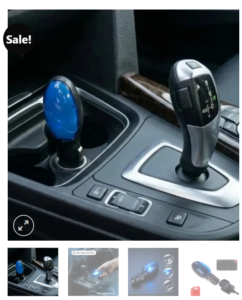
Fuel Sync Gas Saver Review Overview
Fuel Sync Gas Saver is an aftermarket automotive gadget marketed as a fuel-efficiency device.
Current Fuel Sync marketing presents the product as a small plug-in unit that can be connected to a vehicle’s 12V cigarette-lighter or power outlet. One seller claims the device can reduce fuel costs by up to 45 percent, while another Fuel Sync website advertises reductions of up to 35 percent. The marketing also describes benefits such as smoother acceleration, improved engine performance and better fuel economy.
There is an important issue here. The claims are not consistent across the different websites selling products under the Fuel Sync name. The advertised savings vary considerably, which makes it difficult to establish a single, independently verified performance figure.
That does not automatically prove that every Fuel Sync-branded device is fraudulent. It does mean buyers should examine the evidence behind the advertised savings before treating the percentages as established results.
Fuel Sync Gas Saver Features
The main features associated with Fuel Sync listings include
- Plug-and-play installation
- Connection through a vehicle’s 12V power outlet
- LED power indicator
- Compact design
- No tools required
- Claimed compatibility with many gasoline and diesel vehicles
- Claims of improved fuel economy
- Claims of smoother engine performance
- Claims of reduced fuel consumption
The official-looking Fuel Sync sales page states that the device can be installed simply by inserting it into a vehicle’s 12V socket.
Another Fuel Sync website describes the product differently and says that its device is designed to connect to the vehicle’s OBD2 port and supposedly recalibrate the engine control unit.
This difference is worth highlighting because consumers should not assume that every product sold under the Fuel Sync name has identical hardware or operating principles.
Fuel Sync Gas Saver Claims
The central Fuel Sync Gas Saver claim is that the device can improve fuel efficiency without requiring mechanical modifications.
Depending on the seller, claimed savings range from approximately 15 to 45 percent. One sales page promotes savings of up to 45 percent, while another advertises reductions of up to 35 percent.
Some listings also associate the device with improved acceleration, engine performance, combustion efficiency and reduced emissions.
These claims sound appealing, especially when fuel prices are high. However, the size of the claimed improvement should immediately raise the evidence question.
The U.S. Federal Trade Commission has previously warned consumers about dramatic claims involving aftermarket automotive fuel-saving devices. The FTC reported that the U.S. Environmental Protection Agency had evaluated or tested more than 100 purported gas-saving devices and had not found products that significantly improved gas mileage in those evaluations.
This does not constitute a direct laboratory test of the current Fuel Sync product. It does, however, provide important context when evaluating large fuel-saving claims made by aftermarket gadgets.
Fuel Sync Gas Saver Does It Really Work
The available evidence does not provide strong independent support for the headline fuel-saving claims.
One recent review reported that a FuelSync device produced changes in the vehicle’s dashboard readings without producing a corresponding reduction in actual fuel consumption. The reviewer also described opening the device and finding basic electronic components.
There are also consumer reports from Walmart listings that are far from consistent.
Some customers report noticing a possible improvement, while others say the product produced no measurable difference. One verified purchaser reported that the device did not improve gas consumption and was associated with a check-engine-light issue. Another reported that neither of two units illuminated or appeared to work and that there was no change in mileage.
A separate five-piece listing contains similarly mixed feedback. Some buyers report apparent benefits, while others state that the devices stopped working or did not perform as advertised.
The pattern matters. Positive anecdotes can show that individual users believe they experienced an improvement, but they cannot establish that the device itself caused the improvement.
Fuel economy naturally changes because of driving speed, traffic, road conditions, weather, tire pressure, vehicle load, maintenance and air-conditioning use. The EPA specifically notes that these factors can substantially influence fuel economy.
Fuel Sync Gas Saver Scientific Evidence
The biggest weakness in the Fuel Sync proposition is the lack of readily available independent evidence demonstrating that the device produces the advertised percentage of fuel savings under controlled conditions.
Modern vehicles already use electronic engine-management systems to regulate fuel delivery and other engine parameters. A claim that a small aftermarket device can produce a dramatic improvement should therefore be supported by credible testing rather than testimonials alone.
The FTC has a long history of taking action against unsupported fuel-saving claims. In one case involving a magnetic fuel-saving product, the agency alleged that claims of increased mileage and reduced fuel consumption were false and misleading. The case ultimately resulted in a settlement that included a ban on manufacturing, advertising and selling the product involved.
The FTC has also repeatedly advised consumers to be skeptical of aftermarket gadgets that promise unusually large improvements in fuel economy.
For that reason, a responsible Fuel Sync Gas Saver review should distinguish between what the seller claims and what has actually been independently demonstrated.
Fuel Sync Gas Saver Customer Reviews
Customer feedback appears inconsistent rather than overwhelmingly positive.
Some marketplace customers report that they noticed a slight difference in fuel consumption. Others report no improvement, malfunctioning units or disappointment with the product. One Walmart listing currently shows a 2.8 out of 5 rating from 26 ratings, while another Fuel Sync listing shows a 2.9 out of 5 rating from 72 ratings.
Another listing has several negative reviews describing the product as ineffective, including a verified purchaser who said the units did not light up or change the vehicle’s mileage.
These marketplace ratings should not be treated as a scientific experiment. However, they do suggest that consumers should not expect guaranteed fuel savings simply because the product is advertised as a fuel optimizer.
Fuel Sync Gas Saver Pros
There are a few practical advantages to the concept and design.
Simple Fuel Sync Gas Saver Installation
The products are marketed as plug-and-play devices. A driver does not need to remove engine components or hire a mechanic simply to connect the unit to a power socket.
Compact Fuel Sync Gas Saver Design
The device is small and portable, which makes it relatively easy to install and remove.
No Permanent Fuel Sync Gas Saver Modification
Unlike mechanical modifications, a plug-in gadget does not require permanent alteration of the vehicle’s engine or fuel system.
These advantages concern convenience rather than proven fuel savings.
Fuel Sync Gas Saver Cons
The disadvantages are more significant when the primary reason for buying the product is fuel economy.
Unverified Fuel Sync Gas Saver Savings
The advertised savings vary between sellers, with claims ranging from roughly 15 percent to 45 percent depending on the listing. There is no clear independent evidence establishing those figures as typical results.
Mixed Fuel Sync Gas Saver Reviews
Customer experiences vary considerably. Some users report possible improvements, while others report no effect or malfunctioning devices.
Limited Fuel Sync Gas Saver Independent Testing
The lack of transparent, independently verified testing is a major concern for a product whose main selling point is measurable fuel reduction.
Fuel Sync Gas Saver Seller Variation
Different websites appear to describe the device differently. One version is presented as a 12V plug-in product, while another describes an OBD2-based system.
Consumers should therefore verify exactly which product they are purchasing.
Fuel Sync Gas Saver Safety Considerations
A plug-in device should not automatically be considered harmless simply because installation is easy.
There are customer reports of units failing or, in one case, being associated with a check-engine light. These reports do not establish that Fuel Sync caused vehicle damage, but they demonstrate why drivers should monitor their vehicle rather than assuming that a glowing LED means the product is working correctly.
If a vehicle develops warning lights, unusual electrical behavior, starting problems or changes in engine operation after installing an aftermarket device, removing the device and having the vehicle checked would be a sensible precaution.
The FTC has also warned that some poorly supported fuel-saving products can potentially damage vehicles or increase emissions.
Fuel Sync Gas Saver Versus Proven Ways to Save Fuel
Drivers interested in reducing fuel expenses have more established options.
The EPA recommends keeping vehicles properly maintained, maintaining correct tire pressure, reducing unnecessary weight, avoiding aggressive acceleration and braking, and combining short trips where practical.
The FTC similarly recommends following the manufacturer’s maintenance schedule, combining errands and avoiding aggressive driving as practical ways to improve fuel economy.
These approaches may appear less exciting than plugging in a gadget, but they have a much stronger basis in established vehicle-maintenance and fuel-economy guidance.
For additional information, readers can consult the U.S. EPA Fuel Economy resources and the Federal Trade Commission’s consumer guidance on gas-saving products.
Fuel Sync Gas Saver Testing Method
Anyone who already owns Fuel Sync and wants to determine whether it is genuinely helping should avoid relying only on the dashboard’s instantaneous MPG display.
A better approach is to measure actual fuel consumption over several comparable refueling cycles.
Start with a full tank and record the odometer reading. Drive normally for a meaningful distance, refill the tank and record the amount of fuel purchased and distance traveled. Repeat the process with the device removed, keeping driving conditions as similar as possible.
The EPA recommends starting with a full tank, recording mileage and driving a substantial portion of the tank before refueling when measuring real-world fuel economy.
A simple calculation is
Fuel economy = distance traveled ÷ fuel consumed
The more consistent the driving conditions, the more useful the comparison becomes.
Fuel Sync Gas Saver Verdict
Based on the currently available information, Fuel Sync Gas Saver should be approached cautiously.
The product is inexpensive-looking, simple to install and marketed with attractive claims about reducing fuel consumption. However, the major selling point is not supported by a convincing body of independent evidence that demonstrates the advertised savings.
The inconsistent claims across Fuel Sync websites, mixed marketplace feedback and broader warnings from consumer-protection authorities about dramatic fuel-saving gadgets all make it difficult to recommend the product as a proven fuel-economy solution.
This does not mean that every person who reports an improvement is necessarily mistaken. Fuel economy can change for many reasons, and individual experiences are not sufficient to establish causation.
The more defensible conclusion is that Fuel Sync Gas Saver has not demonstrated enough independent evidence to justify treating its advertised fuel savings as reliable or guaranteed.
Drivers primarily interested in reducing fuel costs would be better served by maintaining their vehicle properly, monitoring tire pressure, improving driving habits and measuring real fuel consumption rather than relying on an advertised percentage.
Fuel Sync Gas Saver Frequently Asked Questions
What is Fuel Sync Gas Saver?
Fuel Sync Gas Saver is an aftermarket automotive device marketed as a fuel-efficiency product. Depending on the seller, it may be described as a 12V plug-in device or an OBD2-connected device.
Does Fuel Sync Gas Saver really save fuel?
There is currently insufficient independent evidence to confirm the large fuel-saving percentages advertised for Fuel Sync. Customer feedback is also mixed, with some users reporting possible improvements and others reporting no noticeable benefit.
How much fuel can Fuel Sync Gas Saver save?
Different sellers advertise different figures, including claims of up to 35 percent and 45 percent. These figures should not be interpreted as independently verified typical savings.
Is Fuel Sync Gas Saver scientifically proven?
The available online evidence does not establish that the current Fuel Sync product has undergone sufficient independent controlled testing to validate its advertised savings.
Does Fuel Sync Gas Saver work with every vehicle?
Seller claims suggest broad compatibility with vehicles equipped with a suitable power outlet or, for some versions, an OBD2 port. However, compatibility should be checked against the exact product listing and vehicle before purchase.
Can Fuel Sync Gas Saver damage a car?
There is not enough evidence to conclude that Fuel Sync routinely damages vehicles. However, some marketplace users have reported problems including malfunctioning units and a check-engine-light issue. These reports are anecdotal and do not establish causation.
What is a better way to improve fuel economy?
Vehicle maintenance, correct tire inflation, smoother driving, reducing unnecessary weight and combining trips are among the established approaches recommended by the EPA and FTC.
Should you buy Fuel Sync Gas Saver?
Consumers should exercise caution. If purchasing, it is better to treat the product as an unverified aftermarket gadget rather than a guaranteed method of reducing fuel consumption.
Final Fuel Sync Gas Saver Rating
Overall assessment: Caution advised
Ease of installation: High
Convenience: High
Independent evidence: Low
Customer feedback: Mixed
Fuel-saving claims: Unverified
Value for money: Difficult to establish
Overall: Not enough evidence to recommend it as a proven fuel-saving solution
Fuel Sync Gas Saver illustrates an important rule when evaluating automotive products. A simple installation and impressive percentage claim do not automatically translate into measurable savings. Before spending money on a fuel-saving gadget, consumers should look for independent testing, transparent technical information and results that can be reproduced outside the seller’s marketing environment.
Sources and Further Reading
For readers who want to verify the broader fuel-economy information independently, the following resources are useful.
- U.S. EPA Fuel Economy
- U.S. EPA Fuel-Saving Tips
- U.S. EPA Mileage Guidance
- Federal Trade Commission Fuel-Saving Device Warning
- Federal Trade Commission Fuel-Saving Device Enforcement Case