
Mounja Patches review
Mounja Patches have attracted attention online because they are promoted as an easier alternative to conventional weight-loss methods. The advertising surrounding these patches often connects them with the popularity of GLP-1 medications such as Mounjaro and Ozempic, while suggesting that users can achieve appetite control, increased metabolism and weight loss simply by applying a patch to the skin.
At first glance, this may sound convenient. However, a closer look raises important questions about the actual ingredients, effectiveness, scientific evidence and the stories circulating online about professionals allegedly recommending these products.
This Mounja Patches review looks at those claims from a neutral perspective and separates established evidence from advertising statements and online stories.
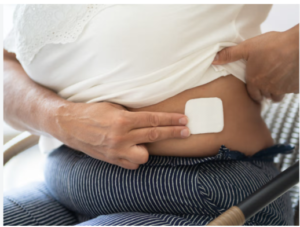
Mounja Patches review and what the product claims to do
Mounja Patches are marketed as weight-loss or metabolism-support patches. Depending on the advertisement or sales page being viewed, products in this category can claim to reduce appetite, support fat burning, increase metabolism, control cravings and help users lose weight without the inconvenience associated with conventional treatments.
Some advertisements also create an association with GLP-1 weight-loss medicines. This is particularly important because Mounjaro contains tirzepatide, a prescription medicine with established clinical evidence and a completely different delivery system.
A patch carrying a similar name should not automatically be considered equivalent to Mounjaro.
Current professional explanations of so-called GLP-1 patches indicate that these products generally do not contain pharmaceutical GLP-1 medicines such as tirzepatide or semaglutide. Instead, many use combinations of herbal extracts, vitamins and other compounds while borrowing the popularity of prescription weight-loss medications in their marketing.
That distinction is central to this Mounja Patches review.
Mounja Patches review and the ingredients being advertised
One of the biggest problems with assessing Mounja Patches is the lack of a consistently verifiable, complete ingredient profile from a reliable manufacturer source.
Products marketed as GLP-1 or Mounjaro-style patches commonly advertise ingredients such as berberine, green tea extract, Garcinia cambogia, bitter orange, caffeine, seaweed extracts and various vitamins.
These ingredients have appeared in discussions surrounding weight-loss patches, but their presence in other patch products does not prove that every Mounja Patches formulation contains them.
This difference matters.
A consumer should not assume that an ingredient listed on one weight-loss patch is automatically present in Mounja Patches. The exact product label, dosage, manufacturer and batch information should be available before making such a conclusion.
Research into herbal weight-loss products has also produced mixed findings. A systematic review and meta-analysis of herbal medicines found that many commonly promoted ingredients did not produce clinically meaningful weight loss compared with placebo. The researchers specifically found no effect for green tea or Garcinia cambogia when assessed as individual agents in the included evidence base.
Mounja Patches review and the claims about berberine
Berberine is frequently mentioned in the wider weight-loss patch market because of its research involving glucose metabolism and other metabolic processes.
However, the existence of research on orally consumed berberine does not automatically demonstrate that a small adhesive patch can deliver an effective amount of berberine through human skin.
This is where many online advertisements blur two separate issues.
The first question is whether an ingredient has biological activity.
The second question is whether the particular product can deliver that ingredient in a sufficient and predictable dose through the skin.
Those are not the same thing.
A product therefore needs evidence for its actual formulation and delivery system rather than simply pointing to research involving an ingredient in a completely different form.
Mounja Patches review and the claims about green tea extract
Green tea extract is another ingredient commonly associated with weight-management supplements and patches.
Green tea contains catechins and caffeine, which have been investigated for possible effects on energy expenditure and body weight. However, evidence does not support turning these findings into a guarantee of significant weight loss from an adhesive patch.
A systematic review of herbal medicines for weight loss found that green tea did not produce a clinically significant effect when assessed as a single agent.
Therefore, statements suggesting that green tea inside a patch will automatically cause substantial fat loss should be treated cautiously.
Mounja Patches review and the claims about Garcinia cambogia
Garcinia cambogia is another ingredient that appears frequently in weight-loss marketing.
There is some human research on Garcinia cambogia and its active compound hydroxycitric acid. One meta-analysis found a small statistical difference in weight loss compared with placebo, but the researchers described the size of the effect as small and its clinical relevance as uncertain.
Another systematic review found conflicting evidence surrounding Garcinia cambogia and weight-related outcomes.
This means it would be inaccurate to take the existence of Garcinia research and present it as proof that Mounja Patches work.
More importantly, research involving an orally consumed supplement does not establish that the same compound will be absorbed through the skin at an effective dose.
Mounja Patches review and whether the patches actually work
The effectiveness question is probably the most important part of this review.
At present, there is not enough reliable clinical evidence to conclude that Mounja Patches produce meaningful weight loss.
This is not the same as saying that every person who wears a patch will experience absolutely no change. Someone could lose weight while using a patch because they simultaneously changed their diet, increased physical activity, reduced calorie intake or made other lifestyle changes.
That does not prove that the patch caused the weight loss.
Current professional assessments of weight-loss patches have reached a similar conclusion. Experts writing about Ozempic-style patches note that the products do not contain the pharmaceutical ingredients found in Ozempic or Mounjaro and that evidence for meaningful weight loss from these patches is lacking.
The Federal Trade Commission also warns consumers about weight-loss advertising that promises significant results from simply wearing a patch or using another product without changing established lifestyle factors.
Mounja Patches review and the Mounjaro comparison
The use of the name Mounja can easily make consumers think about Mounjaro.
That comparison needs to be handled carefully.
Mounjaro contains tirzepatide and is a prescription medication. It is administered by injection rather than through an ordinary adhesive weight-loss patch. Professional pharmacy guidance confirms that there is no licensed Mounjaro patch equivalent to the genuine medicine.
This means Mounja Patches should not be viewed as a cheaper, easier or non-invasive version of Mounjaro simply because the names sound similar.
A genuine prescription medicine has a defined active pharmaceutical ingredient, manufacturing standards, dosing information, clinical evidence and regulatory oversight.
An online wellness patch does not acquire those qualities through branding.
Mounja Patches review and stories involving acclaimed professionals
Another issue surrounding products in this category is the appearance of alleged professional endorsements.
Some online advertisements show apparently credible doctors, researchers, podcast hosts or other recognised personalities discussing weight-loss patches. These clips can look convincing because they may use genuine footage, familiar studios and realistic voices.
However, professional commentary has warned that AI-generated and manipulated endorsements are increasingly being used to promote weight-loss products.
Researchers from the University of New South Wales reported that some online promotions for Ozempic-style weight-loss patches use AI-generated endorsements and noted that these products do not contain the pharmaceutical ingredients found in Ozempic or Mounjaro.
The Federal Trade Commission has also warned consumers about fake celebrity and influencer endorsements, including manipulated video and audio designed to make it appear that a public figure supports a product.
This does not mean every person appearing in an advertisement has been manipulated. It means the endorsement itself needs to be independently verified.
A screenshot, short video or social-media advertisement is not enough evidence.
Mounja Patches review and the stories about doctors recommending them
Some stories circulating online suggest that doctors or other acclaimed professionals have discovered a secret alternative to GLP-1 injections.
This type of story deserves particular scrutiny.
A legitimate medical endorsement should be traceable to the professional’s verified website, professional publication, research institution or original interview.
The professional should also have a genuine connection with the product and should be able to explain what was tested, how it was tested and what results were obtained.
The FTC’s guidance on health-product advertising makes the same basic point. Expert endorsements should be supported by appropriate qualifications and evidence, while material connections between the endorser and advertiser should be clearly disclosed.
Therefore, claims such as “doctors are amazed”, “scientists discovered this secret” or “experts recommend this patch” should not be accepted without independent verification.
Mounja Patches review and fake news-style advertising
Weight-loss scams have historically used fake news pages and celebrity endorsements to create credibility.
The FTC has documented cases involving weight-loss products promoted through fake news websites, fabricated celebrity endorsements and exaggerated weight-loss claims.
This is relevant because modern advertisements can make a sales page look like a news article or interview.
A page may contain photographs of a famous personality, a fabricated interview, dramatic before-and-after pictures and a countdown timer.
None of those elements independently establish that the product works.
Consumers should check whether the alleged news story actually exists on the official website of the publication being referenced.
Mounja Patches review and what the science says about weight-loss patches
The fundamental problem is delivery.
Some medicines can be delivered through the skin. However, that does not mean every ingredient can simply be placed onto an adhesive patch and absorbed at a therapeutically useful level.
For a transdermal product to work reliably, researchers need to establish that the active compound can cross the skin, reach the bloodstream in an appropriate concentration and remain stable throughout use.
This is different from demonstrating that an ingredient has some effect when swallowed in a capsule or consumed as part of a controlled clinical trial.
Current professional reviews of weight-loss patches have highlighted the lack of clinical evidence supporting meaningful weight loss from these products.
That is why the evidence for the finished Mounja Patches product matters more than isolated studies about individual ingredients.
Mounja Patches review and possible safety concerns
The absence of reliable evidence does not automatically mean that every patch is dangerous.
However, uncertainty itself is a reason for caution.
If a product does not clearly disclose its ingredients, dosage, manufacturer, possible interactions and adverse effects, the consumer cannot properly assess the risk.
This becomes more important for people taking medicines for diabetes, blood pressure, cardiovascular conditions or other chronic conditions.
The U.S. Food and Drug Administration maintains a database of weight-loss products associated with hidden ingredients and warns that some products marketed as natural or dietary products can contain undeclared substances.
That does not establish that Mounja Patches contain hidden drugs. It does show why consumers should be cautious when purchasing poorly documented weight-loss products online.
Mounja Patches review and the before-and-after stories
Before-and-after photographs can be persuasive, but they are not clinical evidence.
Weight can fluctuate because of hydration, food intake, exercise, clothing, lighting and photography angles. A photograph also cannot demonstrate what caused the change.
The FTC specifically warns that weight-loss advertisers may use altered photographs, stock images and exaggerated testimonials to make products appear more effective than they are.
For a weight-loss product to make strong objective claims, evidence needs to go beyond testimonials.
Ideally, consumers should be able to find controlled human studies involving the exact finished product, its stated formulation and the dose used.
That evidence has not been established for Mounja Patches in the material reviewed for this article.
Mounja Patches review and the importance of the actual ingredient label
Anyone considering Mounja Patches should first look for several basic pieces of information.
The full ingredient list should be available.
The amount of each active ingredient should be stated.
The manufacturer should be identifiable.
The company responsible for marketing the product should be traceable.
The product should have clear usage instructions.
There should be a realistic customer-service channel.
The refund policy should be accessible before payment.
Most importantly, claims about medical effects should be supported by evidence involving the actual product.
If these details are missing, consumers are effectively being asked to trust the advertisement rather than the product documentation.
Mounja Patches review and the final verdict
Based on the available evidence, Mounja Patches should be approached with caution.
The strongest problem is not simply that the product is marketed as a patch. The bigger issue is the gap between the marketing claims and the evidence available to support those claims.
The wider weight-loss patch market frequently promotes ingredients such as berberine, green tea extract and Garcinia cambogia. Some of these ingredients have been studied individually, but the findings are mixed and generally do not establish that an adhesive patch produces substantial weight loss.
There is also no scientific basis for treating an ordinary weight-loss patch as equivalent to prescription tirzepatide or semaglutide.
Stories involving doctors, researchers, celebrities and other acclaimed professionals should also be independently verified. AI-generated endorsements and manipulated promotional videos are now recognised problems in online health advertising.
So, are Mounja Patches effective?
There is currently insufficient reliable evidence to say that they are.
Do the claims deserve automatic trust?
No.
Are they the same as Mounjaro?
No.
Can the ingredients advertised for similar patches prove that Mounja Patches work?
No.
The safest conclusion is to treat the product as an unproven weight-loss patch unless the manufacturer can provide verifiable formulation information and high-quality human clinical evidence on the finished product.
Frequently asked questions about Mounja Patches review
Are Mounja Patches effective for weight loss?
There is currently insufficient clinical evidence to establish that Mounja Patches produce meaningful weight loss. Testimonials and advertisements are not substitutes for controlled human trials.
Do Mounja Patches contain Mounjaro?
No evidence reviewed for this article establishes that Mounja Patches contain tirzepatide, the active ingredient in Mounjaro. Mounjaro itself is a prescription injectable medicine.
What ingredients are in Mounja Patches?
A consistently verifiable official ingredient list for Mounja Patches could not be established. Similar weight-loss patches commonly advertise ingredients such as berberine, green tea extract, Garcinia cambogia, bitter orange and vitamins, but these should not automatically be attributed to Mounja Patches.
Do doctors really recommend Mounja Patches?
Claims involving doctors or other professionals should be independently verified. AI-generated and manipulated endorsements have been documented in the weight-loss patch market.
Can a patch replace Mounjaro?
No. Mounjaro contains tirzepatide and is administered as a prescription injection. A commercially advertised weight-loss patch is not an equivalent treatment.
Is Garcinia cambogia proven to cause weight loss?
Research is mixed. Some meta-analyses have found small statistical effects, while other systematic reviews have found no clinically meaningful benefit. The evidence does not establish that Garcinia cambogia delivered through a patch will produce significant weight loss.
Are Mounja Patches approved as a GLP-1 treatment?
There is no evidence reviewed here that Mounja Patches are an approved GLP-1 medicine. Professional sources note that weight-loss patches marketed as GLP-1 alternatives do not contain pharmaceutical GLP-1 medicines such as semaglutide or tirzepatide.
Should I buy Mounja Patches?
Consumers should be cautious until the exact ingredients, manufacturer, dosage, regulatory status and clinical evidence can be independently verified. If you are considering a weight-loss product while taking medication or managing a medical condition, discuss it with a qualified healthcare professional first.
Mounja Patches review references and useful resources
For readers who want to investigate the claims further, the following sources provide useful information about weight-loss advertising, herbal ingredients, GLP-1 medicines and health-product claims.
- Federal Trade Commission guidance on weight-loss advertising
- FTC guidance on health-product endorsements and evidence
- FDA weight-loss product notifications and hidden ingredients
- PubMed systematic review of herbal medicines for weight loss
- PubMed systematic review of Garcinia cambogia research
- UNSW expert review of Ozempic-style weight-loss patches